



CMC Development
Connecting Process Development, Quality Risk, and Technology Transfer.
Last Updated: August 10, 2026
CMC Development in Life Sciences
CMC development turns product and process knowledge into a controlled manufacturing strategy. It connects process and analytical method development, quality risk management, control strategy design, scale-up, technology transfer, and lifecycle change. When that knowledge is scattered across spreadsheets and static documents, teams repeat work and struggle to trace the rationale behind decisions. This guide explains how a structured, science-based approach helps development teams connect quality targets, critical attributes, process parameters, risks, methods, and transfer requirements from early development through commercial manufacturing.
Connecting CMC knowledge from development to manufacturing
Chemistry, manufacturing, and controls development provides the scientific and operational foundation for producing a medicine consistently. The work begins with intended product performance and builds understanding of the materials, process, analytical methods, and controls needed to achieve it. A Quality by Design approach gives teams a structured way to connect the quality target product profile, critical quality attributes, material attributes, process parameters, risk assessments, experiments, and control strategy.
The value of that structure depends on how well knowledge is maintained. CMC decisions often evolve as new data becomes available, yet the reasoning behind a classification, experiment, or mitigation may remain in separate files or with individual subject-matter experts. The case for digital pharmaceutical development is built around turning development data into connected knowledge that can be reviewed and reused. A digital model can also support Quality by Design in CMC process development by keeping product requirements, criticality decisions, risks, and controls aligned.
Control strategy development is one of the points where this knowledge comes together. Controls should reflect product and process understanding, with links back to the risks and evidence that justify them. Guidance on digitalizing pharmaceutical control strategies describes the importance of managing control strategy information as part of an integrated lifecycle. A complementary discussion of building control strategies digitally focuses on transparency, data integrity, and consistent process control.
Analytical methods are part of the same system. They need defined performance objectives, scientific development, risk assessment, an analytical control strategy, validation, monitoring, and change management. An AQbD implementation roadmap connects the Analytical Target Profile, method attributes and parameters, the Method Operable Design Region, validation, and lifecycle management. Maintaining those relationships helps teams explain why a method is fit for purpose and how it should be managed when knowledge or requirements change.
Quality risk management helps prioritize development effort and convert uncertainty into actions. The selected method should fit the question: some tools identify possible risks, others analyze causes and relationships, and others evaluate or prioritize risk. A practical overview of three types of QRM tools shows how tool choice affects the usefulness of the assessment. The assessment should also remain connected to ownership, mitigation, review, and the control strategy rather than ending as an approved document.
The accumulated knowledge must then move into scale-up and technology transfer. If development rationale, process understanding, and risk decisions are reduced to a handoff package, receiving teams may need to reconstruct context. The discussion of how tech-transfer inefficiencies drive cost highlights the operational effect of fragmented information and manual handoffs. Treating knowledge as a managed lifecycle asset allows development, manufacturing, quality, and receiving-site teams to work from the same scientific story.
Process & Analytical Method Development
Process and analytical method development define how product quality will be created, measured, and controlled. Process development connects material attributes and operating parameters to critical quality attributes. Analytical development defines how those attributes and other required characteristics will be measured with methods that are fit for their intended purpose. Both activities rely on clear objectives, structured experimentation, risk-based decisions, and controlled knowledge.
For process development, teams should begin with the quality target product profile and identify the attributes that may affect product performance. Process maps, prior knowledge, risk assessments, and experimental results can then be used to evaluate material attributes and process parameters. As understanding improves, criticality decisions and ranges should be reviewed, and the control strategy should retain the rationale behind each control. This makes later scale-up and change assessment more efficient because teams can see how each decision relates to quality.
Analytical Quality by Design applies a similar logic to methods. The Analytical Target Profile defines what the method must achieve. Teams evaluate candidate techniques, identify critical method attributes and parameters, use risk assessment and experiments to understand performance, define the Method Operable Design Region where appropriate, establish the analytical control strategy, and validate the method. The AQbD practical FAQ explains the roles of the ATP, MODR, control strategy, and lifecycle management.
The process and analytical streams should not become separate data silos. Method capability affects what can be measured and controlled, while process knowledge determines what the method needs to detect. Shared terminology, linked data objects, controlled versions, and cross-functional reviews help keep the two streams aligned. The webinar on specialized risk management for analytical method development shows how structured risk tools can support method decisions. Digital workflows can further preserve the links among objectives, risks, experiments, results, and controls as the program moves from early development to validation and lifecycle management.
Quality Risk Management
Quality risk management gives CMC teams a systematic way to identify uncertainty, evaluate its potential effect on quality, prioritize development work, and define controls or follow-up actions. It is used throughout process development, analytical development, scale-up, transfer, and change management. The objective is a clear, science-based decision process whose depth and formality match the question being addressed.
Effective QRM starts with a well-defined scope and the right participants. The team should identify the decision to be supported, gather available knowledge, choose a suitable tool, document assumptions, and define criteria before scoring or ranking. Identification tools help surface hazards and failure scenarios. Analysis tools explore cause-and-effect relationships. Evaluation tools support prioritization. The assessment should make uncertainty visible rather than disguising it behind a score.
Risk records become useful when they drive action. Each significant risk should connect to a control, experiment, data request, mitigation, owner, due date, or acceptance decision. Reviews should occur when new knowledge changes the basis of the assessment. The webinar on turning CMC risk decisions into traceable action plans addresses the gap between documenting risk and managing the follow-through across QTPP, CQAs, CPPs, control strategy rationale, and execution.
Digital risk management can help maintain this traceability. Structured templates, controlled criteria, linked evidence, version history, and dashboards can show where mitigation is incomplete or risk remains concentrated. The discussion of QRM software and ICH Q9 (R1) describes the move toward consistent lifecycle decisions, while the webinar on moving CMC risk management beyond Excel focuses on the limitations of disconnected spreadsheets. Technology supports the process, but governance still matters: teams need defined methods, roles, review triggers, and expectations for documenting rationale.
Tech Transfer & Scale-up
Technology transfer and scale-up move product, process, analytical, and control knowledge from one stage, team, or site to another. The receiving organization needs more than a collection of approved documents. It needs the context behind the process design, criticality decisions, proven ranges, analytical methods, risk controls, deviations, and unresolved questions. Without that context, teams may repeat studies, interpret requirements differently, or discover gaps late in engineering, qualification, or validation work.
A transfer should be planned as a controlled knowledge flow. Teams can define the required knowledge objects, owners, acceptance criteria, dependencies, and decision points before the handoff begins. The development and receiving groups should review process maps, material and equipment requirements, CQAs, CPPs, analytical methods, control strategy, risk assessments, and scale-up assumptions together. Open items should be visible, assigned, and resolved through a traceable workflow.
Scale-up adds new operating conditions and sources of variability. Development knowledge should help teams determine which parameters and relationships need confirmation at the intended scale. As transfer activities generate new evidence, the shared knowledge base should be updated so the scientific rationale does not diverge across files or sites. A digital toolbox for effective tech transfer describes how connected methods and data can improve collaboration and continuity.
Digitalization can also make transfer status and risk easier to govern. A structured workflow can connect tasks, documents, decisions, actions, and approvals to the underlying CMC knowledge. The webinar on streamlining tech transfer in CDMOs considers the value of integrated processes where multiple organizations and handoffs are involved. The short briefing on hidden tech-transfer bottlenecks reinforces a central point: transfer works better when QbD knowledge remains connected and reusable instead of being recreated from static files.
Frequently Asked Questions
CMC development includes the scientific and technical work needed to define the product, manufacturing process, analytical methods, quality risks, control strategy, scale-up approach, transfer knowledge, and lifecycle controls used to support consistent manufacturing.
QbD begins with predefined quality objectives and builds process and product understanding through risk assessment and structured development. It connects the quality target product profile, critical quality attributes, material attributes, process parameters, evidence, and controls.
Process development establishes how materials and operating conditions produce the intended product quality. Analytical method development establishes how relevant attributes will be measured reliably. They are interdependent because the control strategy depends on both process understanding and suitable measurement capability.
They should first define the decision and the level of analysis required. Simple identification tools can organize potential risks; analysis tools explore causes and relationships; evaluation tools help prioritize. The method should fit the available knowledge and the consequence of the decision.
Common contributors include fragmented knowledge, incomplete rationale, version drift, manual re-entry, unclear ownership, and late discovery of gaps. The webinar The Toolbox for an Effective Tech Transfer examines the practices and tools that support a more controlled transfer.
Teams can reuse structured knowledge, connect risk assessments to actions, manage authoritative data, maintain version control, and improve cross-functional review. The webinar on CMC development strategies to prevent rework and delays provides a practical framework for moving away from fragmented workflows.
Start with a high-value workflow where disconnected data creates repeated effort or weak traceability. Map its data objects, decisions, roles, reviews, and downstream uses. Then configure a controlled process that preserves the scientific links and can be expanded without recreating the same information.
Conclusion
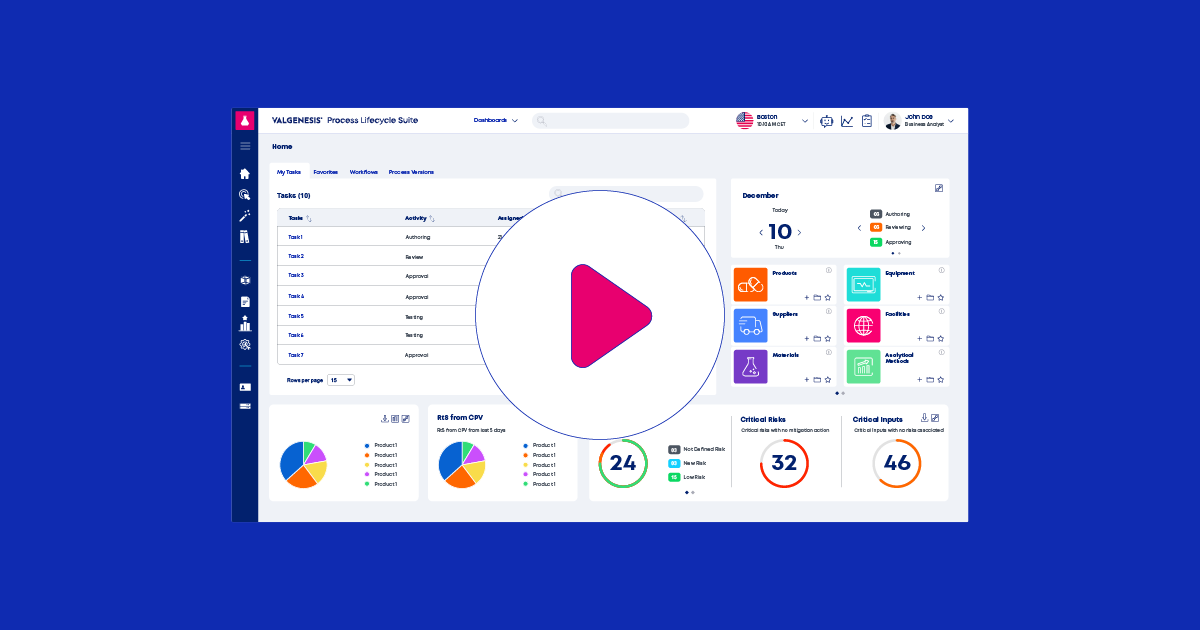
CMC development works best when product targets, process and method knowledge, risk decisions, controls, and transfer requirements remain connected. This continuity helps teams reuse evidence, explain scientific rationale, manage change, and move knowledge into manufacturing without rebuilding the development story. The next step is to map one current CMC workflow and identify where data is re-entered, rationale becomes detached from decisions, or actions are difficult to trace. Use the video on moving CMC development beyond spreadsheets to start a cross-functional discussion about the knowledge model and governance needed for a more connected lifecycle.