Quality Risk Management
Explore how risk assessment, digital risk management, and root-cause analysis support consistent, data-driven quality decisions across the product lifecycle.
Last Updated: August 06, 2026
Quality Risk Management in Life Sciences
Quality Risk Management (QRM) gives life sciences teams a structured way to identify, assess, control, communicate, and review risks across the product lifecycle. It helps teams focus effort where failures could have the greatest effect on product quality and patient safety, while preserving the rationale behind each decision. This guide explains how risk assessment, risk management digitalization, and root-cause analysis work together to support consistent CMC decisions, stronger control strategies, and continuous improvement.
Building a connected quality risk management lifecycle
Quality Risk Management is a decision-making discipline, not a single assessment or scoring exercise. It provides a repeatable framework for understanding what could go wrong, how significant the impact may be, what controls are needed, and whether those controls remain effective as new information becomes available. The three main categories of QRM tools support different parts of that work: identification tools help teams surface risks, analysis tools explore cause-and-effect relationships, and evaluation tools prioritize risks for action.
The method should match the question. A mind map or process map can help a cross-functional team define a problem and identify possible failure points. The 5 Whys and fishbone diagrams can explore potential causes. Cause-and-effect matrices help compare the influence of different inputs. Preliminary Hazard Analysis and Failure Mode and Effects Analysis provide more formal ways to evaluate and prioritize risk. Selecting a tool simply because it is familiar can lead to unnecessary complexity or an assessment that does not answer the decision at hand.
Risk assessment also depends on the quality of the knowledge used. Subject-matter expertise, development data, process history, analytical results, deviations, and monitoring trends may all inform the assessment. The editorial on risk and data as knowledge enablers explains why structured information and defined workflows are needed to turn data into usable knowledge. Without context and traceability, a risk score may look precise while the rationale behind it remains unclear.
QRM should therefore be iterative. Teams establish an initial risk baseline using the knowledge available at that stage, implement controls, and revisit the assessment when new data or experience changes the understanding of risk. The webinar on data-driven risk management describes an approach in which risks are recalculated as knowledge develops, supporting an updated control strategy rather than a static record.
Manual risk management makes this lifecycle difficult to sustain. Spreadsheets and documents can separate risks from requirements, process parameters, analytical methods, mitigations, owners, evidence, and decisions. Version differences make it harder to determine which assessment is current, while report preparation can become a reconciliation exercise. Guidance on using QRM software for ICH Q9(R1) frames digitalization as a way to support consistent, science-based risk decisions across the lifecycle.
Root-cause analysis closes the loop when an issue occurs or a trend requires investigation. The objective is to understand the causal pathway rather than document the first plausible explanation. Investigation outputs should update the relevant risk assessment, control strategy, actions, and monitoring plan. The webinar on turning CPV trends into risk, RCA, and defensible change shows how connected process data can help teams move from retrospective reporting to timely investigation and improvement.
Together, risk assessment, digital execution, and root-cause analysis create a learning system. Risks guide where teams focus. Data tests the assumptions behind those risks. Investigations explain unexpected outcomes. Actions strengthen controls, and the updated knowledge improves the next assessment.




Risk Assessment
Risk assessment is the structured evaluation of hazards, failure modes, causes, consequences, and existing controls. A useful assessment starts with a clearly defined decision or process scope. Teams should identify what is being assessed, the quality objective, the available evidence, the assumptions being made, and the criteria that will be used to prioritize risk.
Tool selection follows from that purpose. Identification tools are useful when the main need is to surface and organize risks. Analysis tools help teams understand relationships between causes and effects. Evaluation tools support ranking and prioritization. The video on the three types of QRM tools illustrates how process maps, the 5 Whys, fishbone diagrams, cause-and-effect matrices, Preliminary Hazard Analysis, and FMEA serve different questions.
The assessment should draw on both prior knowledge and current data. Cross-functional participation helps ensure that development, manufacturing, analytical, quality, engineering, and regulatory perspectives are considered where relevant. Teams should document the evidence and rationale behind ratings rather than treating the final score as the whole assessment. This is particularly important when judgments about severity, occurrence, or detectability could vary between assessors.
Risk-based work can also focus effort at a more granular level. Requirement-level risk assessment shows how risk can guide the depth of assurance and testing rather than applying the same effort to every requirement. Within CMC development, the same principle supports proportional investigation and control of attributes, parameters, methods, and process steps.
An assessment remains useful only while it reflects current knowledge. Define review triggers such as new development results, deviations, transfer findings, process trends, method changes, or control failures. After mitigation, confirm whether actions changed the risk as intended. When new evidence challenges the original assumptions, update the rationale, not only the score.
Risk assessment can also support broader product decisions. A structured benefit-risk assessment helps teams organize evidence and maintain a clear rationale when evaluating benefits, uncertainties, and potential harms across the lifecycle.
Risk Management Digitalization
Risk management digitalization moves QRM from disconnected files into a governed workflow where risks remain linked to their context, evidence, controls, actions, and review history. The aim is not to reproduce a spreadsheet on screen. It is to improve consistency, traceability, collaboration, and the ability to reuse knowledge across development programs and lifecycle stages.
Manual QRM often creates familiar problems: duplicated assessments, inconsistent terminology, unclear ownership, version conflicts, delayed reviews, and mitigation actions that become separated from the risk that created them. The webinar Moving Beyond Excel for CMC Development examines how conventional tools can slow collaboration and make CMC workflows more error-prone.
A digital model should standardize the parts of QRM that benefit from consistency while preserving scientific judgment. Common taxonomies, approved methodologies, rating scales, templates, review stages, and role-based workflows can help teams apply the process in a comparable way. Links between risks, CQAs, CPPs, analytical methods, controls, studies, and actions preserve the decision chain. Dashboards and reports then reflect controlled data rather than manually reconciled copies.
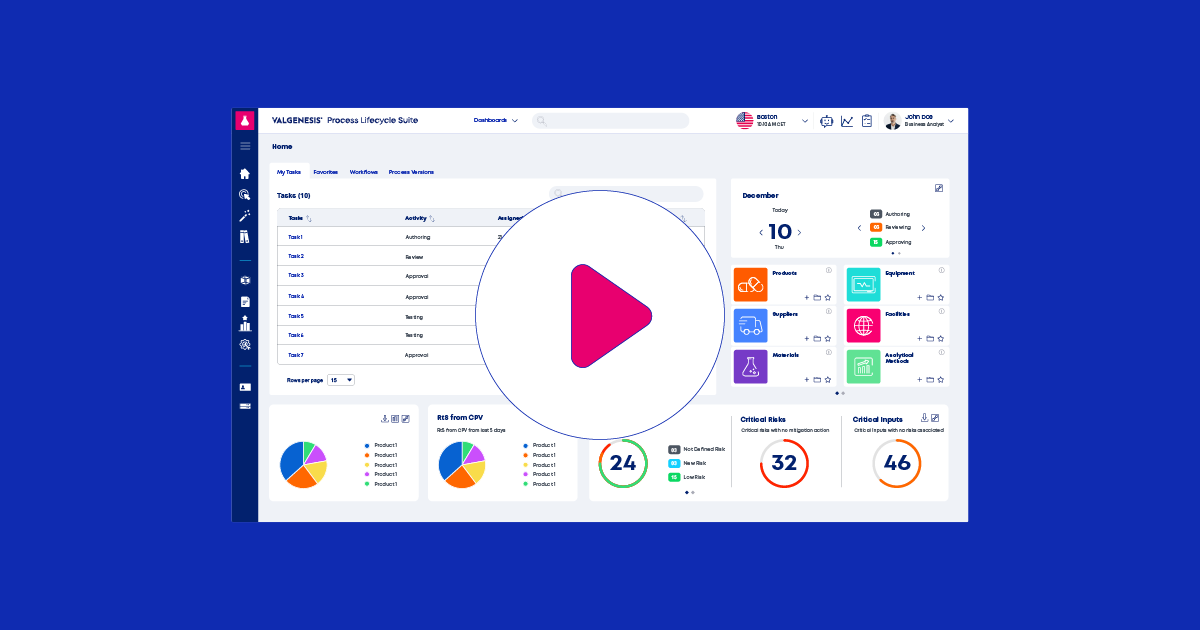
Digitalization also enables risk review to respond to new knowledge. Data can be connected to an established risk baseline, prompting reassessment when a trend, result, or investigation changes the understanding of likelihood or control effectiveness. Structured QbD and QRM workflows show how guided execution can align with existing procedures while improving knowledge management and cross-functional consistency.
Teams should begin with governance. Define the process owner, approved methods, scoring rules, access rights, review triggers, action tracking, and reporting needs. Pilot a high-value workflow where fragmented risk information creates visible rework. The article on applying a QbD framework with ValGenesis iCMC provides an example of connecting quality targets, critical attributes, process parameters, risks, and control strategy decisions in one development model.
Root-Cause Analysis
Root-cause analysis (RCA) is a structured investigation used to understand why an undesired outcome occurred and what must change to prevent recurrence. In a QRM lifecycle, RCA is the bridge between an observed signal and an improved risk and control model. It is used when deviations, recurring failures, adverse trends, or unexpected performance indicate that the current understanding or controls may be incomplete.
The first step is to define the problem accurately. Teams should distinguish the observed event from its causes, establish the time and process boundaries, and gather relevant data before settling on an explanation. Tools such as the 5 Whys help probe causal chains, while fishbone diagrams organize potential causes across categories. Process mapping can reveal where a failure entered the workflow, and cause-and-effect matrices can help prioritize factors for deeper evaluation. These methods are most effective when they are supported by evidence rather than used to validate an early assumption.
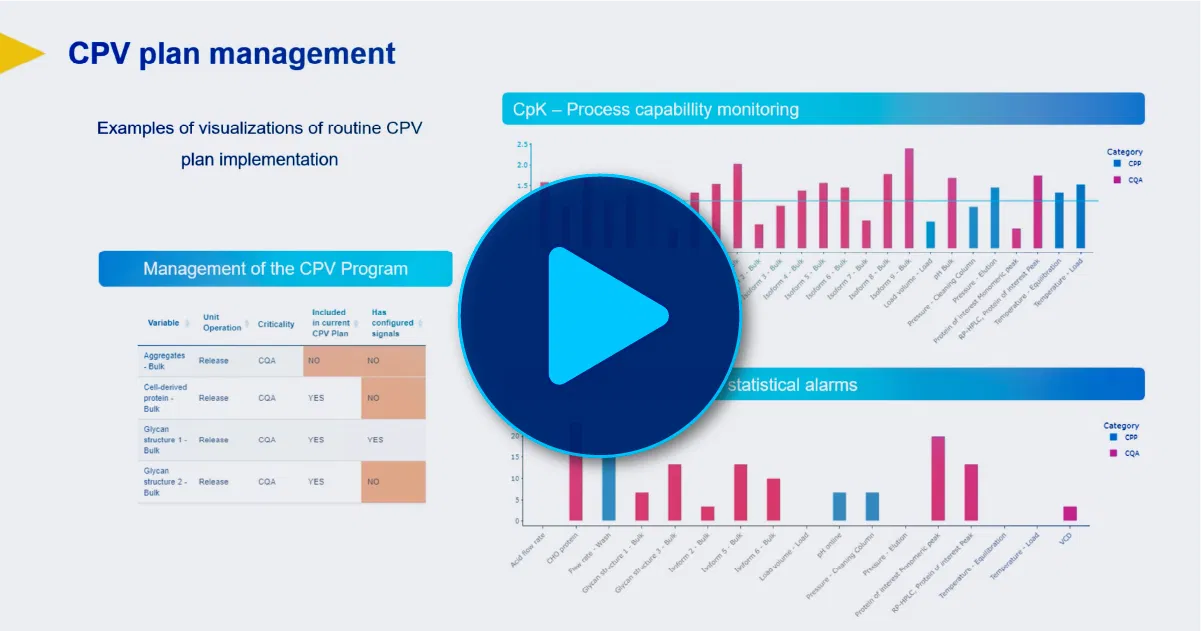
Digital process data can make investigations faster and more defensible. Real-time or near-real-time trends help teams identify when performance began to shift, which variables changed together, and whether the issue is isolated or recurring. Real-time monitoring in pharmaceutical manufacturing provides a practical view of how timely data can support process understanding. The digital CPV approach further illustrates the move from manual data collection and retrospective analysis toward automated monitoring and earlier action.
RCA should not end with a report. Confirm the causal evidence, define corrective or preventive actions, assign ownership, and verify effectiveness. Then update the affected risk assessment, control strategy, monitoring plan, and knowledge base. A webinar on turning CMC risk decisions into traceable action plans addresses the common gap between identifying a risk and maintaining clear rationale, ownership, follow-through, and traceability.
Frequently Asked Questions
QRM is a systematic process for identifying, assessing, controlling, communicating, and reviewing risks that may affect product quality across development, manufacturing, and the product lifecycle.
Choose the tool based on the decision. Use identification tools to surface risks, analysis tools to explore causes and relationships, and evaluation tools to prioritize risks and mitigation. Complexity should be proportionate to the problem and available knowledge.
Define common criteria, document the evidence behind ratings, use cross-functional review, connect assessments to current data, and revisit risks when new knowledge becomes available. Digital workflows can also standardize methods and preserve the decision history.
Risk assessment anticipates what could go wrong and prioritizes preventive controls. RCA investigates why an observed issue occurred. RCA findings should feed back into the relevant assessment and control strategy.
It should connect the risk to its product or process context, evidence, rationale, controls, mitigation actions, owners, approvals, review triggers, and change history. In CMC, links to CQAs, CPPs, methods, and control strategies are especially useful.
Review it when new data, deviations, process trends, method changes, transfer findings, control failures, or investigation results change the understanding of risk or the effectiveness of existing controls.
Conclusion
Effective QRM connects anticipation, evidence, investigation, and action. Risk assessment focuses attention, digitalization preserves context and governance, and RCA turns observed issues into better controls and updated knowledge. The most useful first step is to select one high-value risk workflow, define its decision criteria and review triggers, and connect every risk to evidence, controls, actions, and outcomes. For a practical starting point, explore how digital QRM can support consistent ICH Q9(R1) execution.