Moving process knowledge from development to manufacturing
Technology transfer is the controlled movement of product, process, analytical, and manufacturing knowledge from a sending unit to a receiving unit. It may support scale-up from development to commercial manufacturing, a transfer between internal sites, or a sponsor-CDMO relationship. In every case, the receiving team needs enough context to reproduce the process, understand its limits, manage risk, and explain the basis for critical decisions.
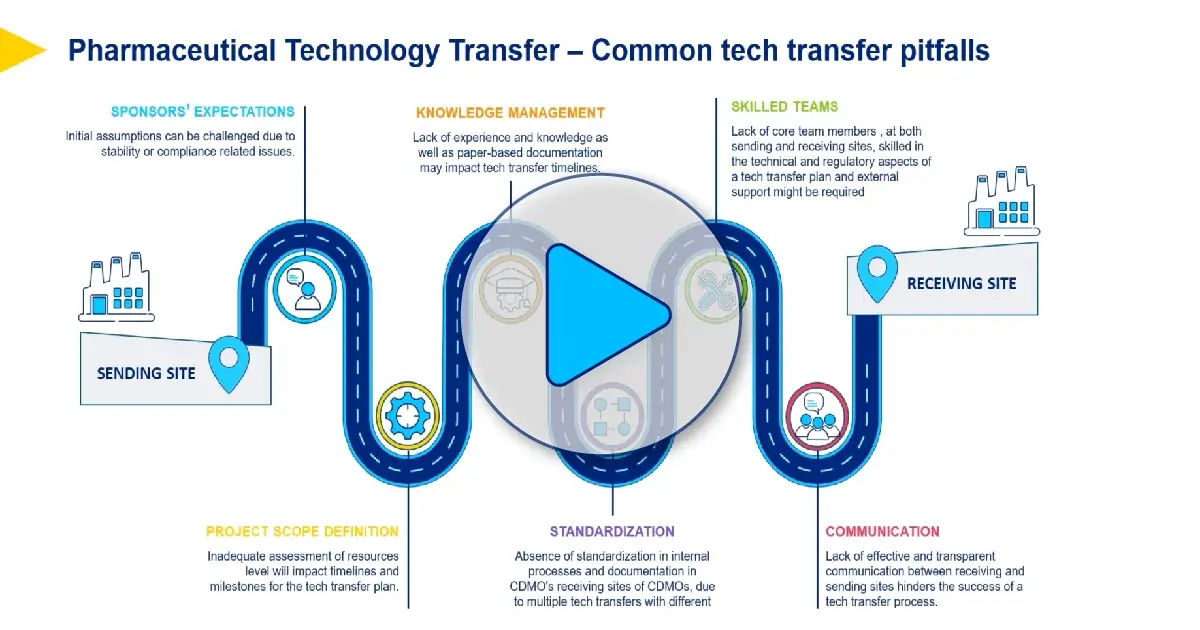
Many transfer problems begin before the formal handoff. When development knowledge is fragmented across spreadsheets, reports, email threads, and individual experts, the transfer package may contain results without the rationale that produced them. The article on how technology transfer inefficiencies drive up costs describes how incomplete knowledge flow, manual data handling, and weak traceability create delays and repeated work. The video on hidden technology transfer risks reinforces the same issue: static documents provide a snapshot, while the receiving team needs a shared understanding of the process.
Scale-up adds another layer of uncertainty. Equipment, batch size, operating conditions, sampling, and process dynamics may change as the process moves toward commercial manufacturing. Teams need to identify which material attributes and process parameters may influence quality at the new scale, assess the associated risks, and confirm that the control strategy remains appropriate. A structured Quality by Design framework connects the quality target, CQAs, CPPs, risk assessments, studies, and controls so that scale-up decisions remain tied to development knowledge.
Readiness should therefore be evaluated before execution. A transfer plan can define scope, roles, deliverables, data requirements, risk-review points, method transfer needs, training, engineering or demonstration activities, acceptance criteria, and escalation paths. The digital toolbox for effective technology transfer highlights how integrated digital methods can improve process design, control, monitoring, and consistent execution. The webinar on the toolbox for an effective transfer provides additional guidance on bringing those capabilities together.
Risk management keeps the plan focused. Teams can use quality risk management tools to identify failure points, analyze cause-and-effect relationships, and prioritize controls. Risks should remain linked to owners, actions, evidence, and decisions. The webinar on turning CMC risk decisions into traceable action plans addresses the common gap between identifying a risk and maintaining visible follow-through across development, scale-up, and transfer. ![NEW-[BP]-Digitalizing-QbD-Frameworks-Setting-Tech-Transfers-Up-for-Success](https://www.valgenesis.com/hs-fs/hubfs/test%20images_2025/blog%20post_Phase%202/NEW-%5BBP%5D-Digitalizing-QbD-Frameworks-Setting-Tech-Transfers-Up-for-Success.png?width=303&height=159&name=NEW-%5BBP%5D-Digitalizing-QbD-Frameworks-Setting-Tech-Transfers-Up-for-Success.png)
Digital workflows improve continuity by maintaining one governed knowledge base for the sending and receiving teams. Moving CMC development beyond Excel can reduce version conflicts and manual reconciliation, while digital transformation in sponsor-CDMO transfers supports communication and collaboration across organizational boundaries. The goal is a traceable flow of knowledge, not a larger collection of files.
Transfer continues after initial execution. Findings from engineering runs, qualification, investigations, and routine manufacturing should update the risk assessment, control strategy, and knowledge base. Real-time process monitoring and digital continued process verification help teams detect trends and compare performance as process experience grows. This closes the loop between development, scale-up, transfer, and commercial control.
.webp)