Process & Analytical Method Development

Explore how QbD, AQbD, knowledge management, and post-approval change management support connected, risk-based process and analytical development across the product lifecycle.

Last Updated: August 04, 2026

Process & Analytical Method Development in Life Sciences

Process and analytical method development turns a product concept into a controlled, transferable, and maintainable manufacturing strategy. The work is most effective when teams define quality objectives early, connect process and analytical decisions to risk, preserve the knowledge behind those decisions, and plan for change across the product lifecycle. This guide explains how Analytical Quality by Design (AQbD), knowledge management, post-approval change management, and Quality by Design (QbD) work together to create clearer development decisions and more consistent execution.

Connecting process knowledge, analytical performance, and lifecycle control

Process and analytical method development is not a sequence of isolated studies. It is a connected body of scientific knowledge that explains how material attributes, process parameters, analytical methods, and control measures work together to deliver the intended product quality. When that knowledge is scattered across spreadsheets, documents, and individual teams, development decisions become harder to trace, compare, and reuse. The same fragmentation can create rework during scale-up, technology transfer, submission preparation, and lifecycle change.

A more effective approach begins with predefined objectives. Quality by Design provides the overarching framework: teams identify the quality target, determine which attributes and parameters matter, assess risk, generate evidence, and establish a control strategy. For analytical procedures, Analytical Quality by Design applies those principles to method development by defining expected performance before experiments begin. This creates a direct line from the analytical target profile (ATP) to method evaluation, risk assessment, experimental work, the method operable design region (MODR), the analytical control strategy, validation, and ongoing monitoring.

Risk assessment makes that work more focused. Instead of treating every variable as equally important, development teams can use prior knowledge and experimental evidence to identify the factors most likely to affect quality or analytical performance. Quality risk management tools help structure this evaluation and document the rationale behind controls. As evidence grows, risk assessments should be reviewed rather than archived as static records. The updated assessment then informs the control strategy and defines where monitoring, acceptance criteria, or further study are needed. [BP]-The-3-Types-of-Quality-Risk-Management-Tools-and-What-They-Do-Best

Knowledge management connects each stage. A structured environment links objectives, risks, studies, results, decisions, and controls so that teams can understand not only what was decided, but why. The editorial on risk and data as knowledge enablers describes the value of combining structured data, unstructured information, infrastructure, and guided workflows. That foundation supports horizontal understanding across an end-to-end process and vertical understanding across the product lifecycle. It also makes knowledge easier to reuse across products, sites, and development programs.

The lifecycle view matters because development does not stop at approval. Process improvements, analytical method updates, new equipment, scale changes, and manufacturing network changes may all require evaluation. A planned approach to ICH Q12 implementation helps teams connect established conditions, change categories, supporting evidence, and regulatory strategy. When the development record is traceable and the control strategy remains current, post-approval change can draw on a coherent evidence base instead of reconstructing decisions from disconnected files. 

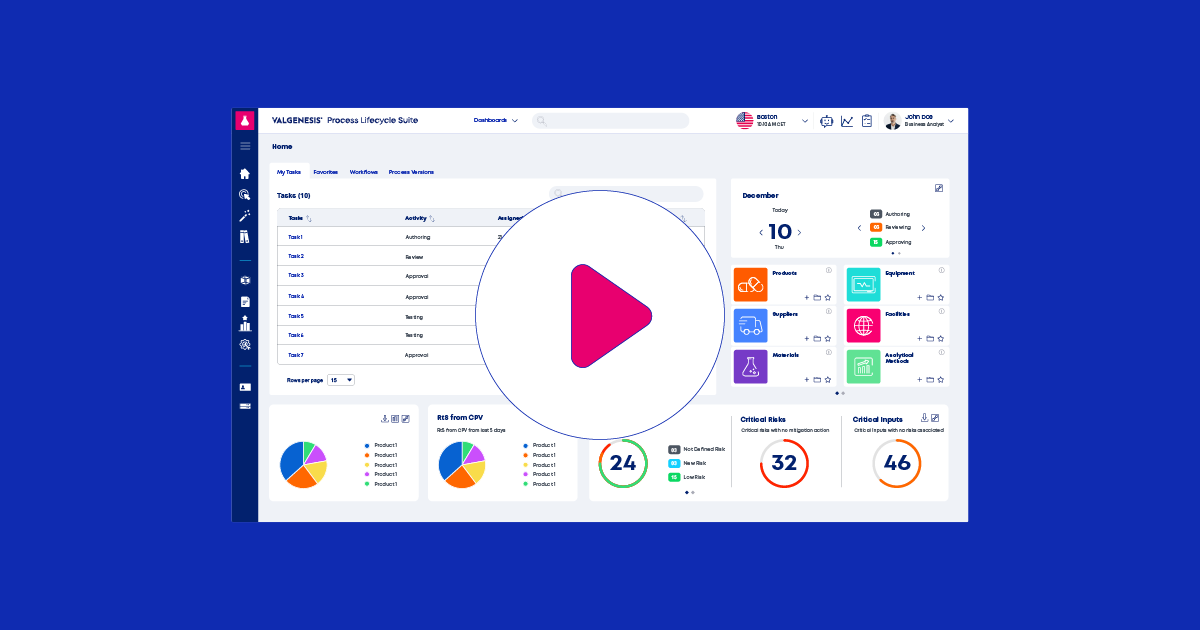
Digital workflows can reinforce this operating model. They can centralize CMC knowledge, guide consistent risk assessments, maintain version history, and keep actions connected to the decisions that created them. The objective is not simply to replace paper. It is to make process and analytical knowledge usable throughout development, transfer, commercial manufacturing, and change management.

Analytical Quality by Design

Analytical Quality by Design applies QbD principles to analytical procedure development. It starts by defining what the method must measure and how well it must perform. This analytical target profile gives method selection and development a clear purpose. It also provides objective criteria for validation and a stable reference point when the method is reviewed or changed later.

From the ATP, teams evaluate candidate technologies and use initial risk assessment to identify critical method attributes and critical method parameters. Prior knowledge and scientific understanding help narrow the investigation, while Design of Experiments and multivariate analysis can be used to study interactions and define the MODR. The AQbD implementation roadmap places these activities in a lifecycle sequence: define the ATP, evaluate the method, assess risk, establish the MODR, review risk, design the analytical control strategy, validate, and monitor performance.

The analytical control strategy translates method understanding into practical controls. It should address known sources of variability and define how they will be minimized, detected, or managed. Because new knowledge can change the assessment of method risk, both the strategy and its supporting rationale require review over time. Practical AQbD guidance on ATP, MODR, and ICH Q14 helps clarify how these concepts fit together.

Teams should begin with a method that has a clear intended purpose, accessible prior knowledge, and a manageable risk profile. Bring analytical development, quality control, quality assurance, regulatory, process development, and statistics into the discussion early. Keep each requirement, risk, experiment, result, and control connected. This makes the method easier to defend, transfer, validate, and maintain. The webinar on improving analytical method development with specialized risk management provides a useful next step for teams moving from disconnected risk records to a structured analytical workflow.

Knowledge Management

Knowledge management is the discipline that turns development data and expert experience into information that can guide future decisions. In process and analytical development, this includes objectives, material and process understanding, risk assessments, protocols, experimental results, deviations, assumptions, decision rationales, controls, and lessons learned. Some of that knowledge is structured; some sits in reports, notes, images, discussions, and the experience of subject-matter experts.

The operational challenge is to preserve context. A result without its method, conditions, version, and decision history is difficult to reuse. A risk score without its rationale or linked action is equally limited. Effective knowledge management therefore needs more than a document repository. It requires defined relationships between data, decisions, risks, and controls, supported by workflows that guide how information is reviewed and applied. A lifecycle approach to risk and data outlines four useful foundations: digitalization, structure, infrastructure, and an approach for turning information into consistent decisions.

Teams can start by defining a common information model for products, processes, methods, attributes, parameters, risks, studies, and controls. Standard terminology and reusable templates reduce ambiguity. Ownership and review rules help ensure that knowledge remains current as development progresses. Just as important, lessons from one program should be searchable and reusable where scientifically appropriate, rather than copied without context.

This becomes especially valuable at development handoffs. Inefficiencies in technology transfer often surface when receiving teams must interpret fragmented records or recreate the logic behind a control strategy. A digital toolbox for technology transfer can help maintain the flow of process knowledge between development, scale-up, and manufacturing. The webinar on preventing CMC rework and delays further shows how structured workflows and knowledge reuse can support cross-functional development programs.

Post-Approval Change Management

Post-approval change management provides a planned way to evaluate, support, and implement changes after a product has been approved. Those changes may affect a manufacturing process, analytical procedure, control strategy, site, equipment train, or another element of the approved CMC package. The quality of the original development knowledge directly affects how efficiently a change can be assessed.

ICH Q12 provides a framework for more predictable product lifecycle management. A practical implementation connects product and process understanding with established conditions, change categorization, supporting studies, approval pathways, and ongoing oversight. The ValGenesis guide to enhancing PACM agility through ICH Q12 emphasizes the need for a structured framework rather than isolated change documents.

A post-approval change management protocol can define how a specified future change will be developed, evaluated, and reported. The protocol should make the proposed change clear, identify the studies and acceptance criteria needed to support it, and establish how results will be assessed. Guidance on creating a PACM protocol helps teams frame this work consistently.

Strong PACM starts during development. Teams should preserve the assumptions behind ranges, specifications, and control measures; maintain traceability between risk and evidence; and keep the control strategy aligned with current knowledge. When a change is proposed, the impact assessment can then identify affected requirements, risks, methods, studies, and regulatory commitments. Actions should have clear ownership and remain linked to the decision rationale.

AQbD also supports change management because the ATP and MODR provide a scientific basis for evaluating analytical procedure changes. If a proposed adjustment remains within established knowledge and continues to meet the ATP, teams have a clearer foundation for assessing its effect. The same principle applies to process development: a well-defined design space and control strategy make the boundaries and implications of change easier to understand.

Quality by Design

Quality by Design is the organizing framework that connects product objectives, scientific understanding, quality risk management, experimentation, and control. It begins with predefined quality goals and builds evidence for how material attributes and process parameters affect those goals. The result is a control strategy grounded in product and process understanding rather than a collection of disconnected specifications.

In practice, teams define the target product profile and identify critical quality attributes. Risk assessment helps prioritize the material attributes and process parameters that may influence those CQAs. Experimental work then tests assumptions and refines understanding. As evidence develops, teams update the risk assessment and establish controls that are proportionate to the identified risks. The article on applying a QbD framework with ValGenesis iCMC provides a practical view of this progression.

The control strategy is where QbD decisions become operational. It brings together input-material controls, process controls, analytical procedures, monitoring, and acceptance criteria. Digitalizing pharmaceutical control strategies can improve the traceability of these relationships, while building control strategies in a digital environment can help teams maintain the strategy as evidence and risks change.

QbD depends on disciplined execution. Teams need common risk criteria, controlled terminology, review points, and clear ownership. Otherwise, the framework can fragment into spreadsheets and documents that are difficult to compare or keep synchronized. Operationalizing QbD and QRM through structured workflows shows how guided execution can fit established procedures while improving consistency and collaboration.

The lifecycle benefit is continuity. The same knowledge used to justify development decisions supports analytical development, technology transfer, validation, commercial monitoring, investigations, and post-approval change. A digital QbD environment should therefore preserve relationships and rationale, not only final reports. This turns the development record into a working knowledge base for the product.

Frequently Asked Questions

It is the coordinated work used to understand and control how a product is manufactured and tested. It connects product objectives, process parameters, material attributes, analytical performance, risk assessments, experimental evidence, and control strategies across the lifecycle.

QbD is the broader development framework for building product and process understanding. AQbD applies the same objective-driven, risk-based principles specifically to analytical procedures, beginning with the ATP and progressing through method understanding, control, validation, and lifecycle monitoring.

Start with the analytical target profile. It describes what must be measured, where and when the measurement is needed, and the performance the procedure must achieve. It guides method selection, risk assessment, development, and validation.

It keeps data, assumptions, decisions, risks, and controls connected. That context allows teams to reuse knowledge, explain why decisions were made, transfer processes and methods more effectively, and assess future changes without reconstructing the development history.

A traceable development record shows the basis for ranges, specifications, methods, and controls. When a change is proposed, teams can identify what is affected, evaluate the risk, define the evidence required, and connect the change to the current control strategy.

Choose a focused development workflow, define the common data and decision model, standardize risk criteria and terminology, assign ownership, and connect requirements, studies, results, risks, actions, and controls. Expand after the workflow is stable and reusable.

Conclusion

Process and analytical method development works best as one connected lifecycle. QbD establishes the development framework, AQbD defines analytical performance and control, knowledge management preserves the rationale behind decisions, and PACM carries that understanding into post-approval change. The practical next step is to identify where development knowledge currently breaks between teams or systems, then pilot a structured workflow that connects objectives, risks, evidence, controls, and actions. To explore the digital CMC approach further, review the case for a connected ValGenesis iCMC environment.

Talk to an Expert