Risk and Data as Knowledge Enablers: A Lifecycle Approach
Summary
Industry 4.0 aims to establish integrated, end-to-end digital process monitoring across the full product lifecycle. In this context, a complete data knowledge dimension combines tacit knowledge from personnel with explicit knowledge generated by processes. This requires managing both structured data, such as relational databases, and unstructured data, including images, logs, and shop-floor communications, within a unified system.
As digitalization expands in pharma and biopharma, regulators and industry continue to debate how stored data should be used. The FDA’s Knowledge-aided Assessment & Structured Application (KASA) initiative proposes a structured, computer-aided framework for lifecycle data management, risk assessment, and regulatory review. Applying KASA principles internally requires digitalization, defined data structure, centralized infrastructure, and rule-based analytical workflows to consistently turn data into knowledge.
Key takeaways
-
A “complete data knowledge dimension” combines tacit knowledge (people) with explicit knowledge (process-generated data).
-
Both structured and unstructured data need to be managed and connected to improve product and process understanding.
-
Beyond KASA, the paper lists four needs for industry: digitalization, structure (mapped data with timestamp/place/owner), infrastructure (centralized with relationships), and an approach (workflows for analysis and decisions).
Who is this for
- Regulatory affairs (CMC) lead managing submissions and responses
- Quality assurance director or quality systems manager
- Process development or MSAT lead responsible for process understanding
- Data governance lead for structured/unstructured data management
- Manufacturing IT/OT architect building centralized data platforms (including data lakes)
- Validation / computerized systems validation (CSV) lead
- QC/analytical lead integrating test data with manufacturing history
Download your Industry Insight
Risk and Data as Knowledge Enablers: A Lifecycle Approach
One of the goals of industry 4.0 is to have an integrated end-to-end digital-based process monitoring, control and understanding, from the early development phase towards a mature product with a complete data knowledge dimension.
When referring to a complete data knowledge dimension, one is referring to the tacit knowledge that is acquired from the people working on the product and process daily, and the explicit knowledge which includes the data that is generated from the process itself.
In database terms, two data types must be managed in this situation: structured and unstructured data:
- Structured data may be referred as the tabular and relational data that is standard in a SQL database, for instance.
- Alternatively, unstructured data may be comprised by all formats of data, from images to logs to shop floor communications and notes.
Having these two categories of data connected may present a considerable number of challenges, though it is truly desired, as it leverages product and process understanding and, consequently, corresponding knowledge.
As digitalization gains more and more ground on pharma and biopharma industries, the subject on how to take the most out of the stored data is still debated nowadays both within the industry and regulators. The demand for an objective and targeted guideline for this purpose is higher than ever.
Having a unified method of gathering and analyzing process and product information would allow the systematization required to facilitate the scalability of a process that would provide companies with a simpler way to hand over the necessary information to regulators, both on regulatory submission (pre and post approval) and inspection scenarios.
FDA approached the subject in 2019, with the "Knowledge-aided Assessment & Structured Application" initiative, also known as KASA. This initiative aims to establish a common ground for the essential requirements that a computerized platform should have to properly assess the regulatory submission information and a way to connect similar processes and products.
The KASA main goals are to:
- Capture and manage information and data during a product’s lifecycle.
- Establish rules and algorithms for risk assessment, control, and communication.
- Perform computer-aided application analysis to compare regulatory standards and quality risks across applications and facilities.
- Provide a structured assessment that minimizes text-based narratives and summarization of provided information.
- The Risk Assessment - accessing risk to quality.
- Risk Control: Product Design and Quality Standards - assessing product design and understanding.
- Risk Control: Manufacturing, Facilities, and Inspections - accessing manufacturing and facility and performing approval inspections.
If one had to collapse the KASA three pillars into just two strong foundations one would dare to suggest data-driven and risk-driven or even unstructured data and structured data. These two main house pillars would then be subdivided into the three presented by KASA initiative.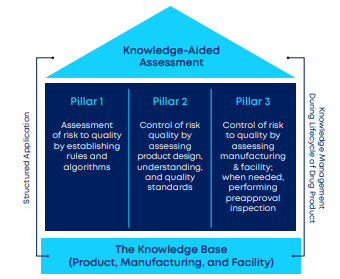
(Fig. 1 - KASA initiative structure by FDA
Bearing KASA requirements in mind and bringing them for the company’s reality, probability one may be referring to an initiative that would also enable a way to take the most advantage of the available information. On top of KASA’s requirements four essential aspects are probably required on the industry side:
Digitalization
All the information must be stored and acquired in a digital format.
Structure
All digitalized information must be in a structured and mapped format. One must know the backbone of the data: it should be centered in the process itself which allows the mapping of variables and information all connected to it. This aspect is especially relevant when referring to the unstructured data that is generated in the daily process routines, all information gathered must have a clear connection to a timestamp, a place and a responsible.
Infrastructure
The different types of data should be gathered in a centralized place with all the interconnections defined. All types of data must have a relation between them, so that it can be properly queried to give the user the full spectrum of information and the full picture available. In this section data lakes and its design can take a leading position on the added value it can offer.
Approach
The data gathered needs to have a set of workflows to anchor and guide the analysis and decisions made. This is valid for data acquisition and storage and for decision making based on the available data.
This figure may be the most important one, if one has all the previously mentioned but is missing the set of rules that must govern how the structured data is turned into knowledge, one may be unable to leverage on information and turn it into knowledge. This methodology enables the consistency over time.
This complete, structured, and integrated access to information would drive horizontal integration (process mapping and analysis from end-to-end) and vertical integration (history aggregation for lifecycle management). This approach gains a third dimension when gathering the same information across the product portfolio, facilities and companies.
It is possible to take the most out of KASA concept for industry side as well, not only bringing industry and regulators to a closer communication in terms of data storage workflow (including its application on risk assessment activities) but also potentiate an enhanced knowledge management within the company portfolio.
Table of Contents


