

Validation

Connecting Software Assurance, AI-Powered Workflows, and Data Integrity.

Last Updated: August 10, 2026

Validation in Life Science

Validation is the documented, lifecycle-based demonstration that systems, equipment, processes, methods, and procedures are fit for their intended use and perform consistently. Effective validation connects requirements, risk, testing, evidence, approvals, change control, electronic records, and ongoing review. As life sciences organizations replace paper and disconnected files with digital and AI-assisted workflows, the challenge is to improve speed without weakening control. This guide explains how Computer System Validation and Software Assurance, Digital and AI-Powered Validation, and Digital Records and Data Integrity work together within a modern validation strategy.

Building a connected validation lifecycle

Validation applies across the pharmaceutical product and manufacturing lifecycle. The exact activities depend on what is being validated, its intended use, its quality or patient impact, and the evidence needed to show that it performs as expected. The overview of validation types in the pharmaceutical industry illustrates the range of validation activities used for processes, cleaning, equipment, computer systems, and analytical methods.

A strong program begins with intended use and clear requirements. Requirements provide the basis for design, risk assessment, verification, and acceptance. They should be specific, testable, unambiguous, and traceable to evidence. Practical guidance on writing effective system requirements explains why quality at this stage affects the rest of the lifecycle. If requirements are vague or duplicated, testing becomes harder to plan and the final evidence may not demonstrate what the system must do.

Risk helps teams scale the validation effort. The depth of specification, testing, review, and documentation should reflect intended use and the potential impact of failure. This is particularly important for software, where a one-size-fits-all approach can produce large volumes of documentation without improving assurance. The discussion of requirement-level risk assessment shows how teams can focus effort on functions that matter most.

Traceability connects the parts of the validation story. A reviewer should be able to follow a requirement through risk assessment, design or configuration, testing, deviations, approval, and change. The benefits of automating the requirements traceability matrix include clearer coverage and less manual reconciliation. Traceability should remain active after go-live so changes can be assessed against the approved basis and affected evidence.

Execution and records need the same level of control. Paper protocols, wet-ink signatures, spreadsheets, email approvals, and manually assembled binders can create delays and version confusion. Paperless validation replaces those handoffs with controlled authoring, routing, execution, review, approval, and reporting. Digitalization is most useful when it improves the workflow and data model, rather than simply storing static documents electronically.

Data integrity is therefore part of validation, not an appendix to it. Records must be trustworthy throughout their lifecycle, with appropriate attribution, legibility, contemporaneous capture, originality, accuracy, completeness, consistency, endurance, and availability. The ALCOA data-integrity best practices provide a practical framework for reliable GMP records. Electronic records and signatures also need controls that support authenticity, integrity, and reliability, as summarized in the guide to FDA 21 CFR Part 11 compliance.

Digital and AI-assisted capabilities can make validation more efficient by reducing repetitive work, highlighting inconsistencies, and maintaining connected evidence. Their use still requires defined scope, validated operation, controlled inputs, review, and human accountability. The goal is a validation lifecycle in which automation supports critical thinking, traceability, and reliable records rather than obscuring how conclusions were reached.

Computer System Validation & Software Assurance

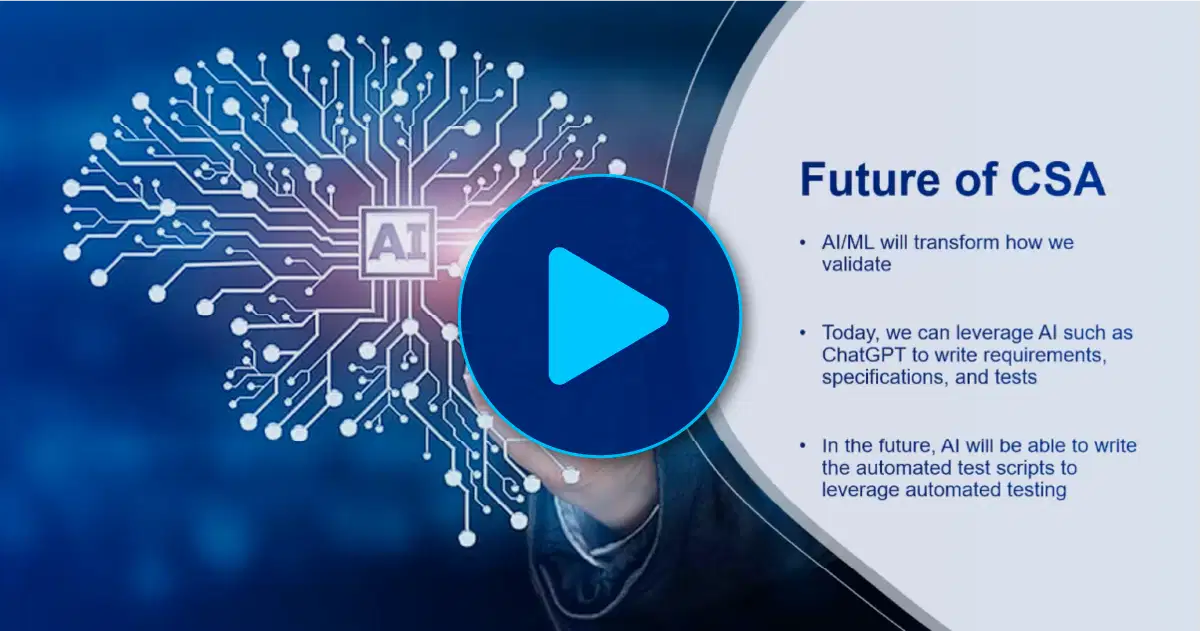
Computer System Validation (CSV) and Computer Software Assurance (CSA) provide structured ways to show that software used in production or quality activities is fit for its intended use. CSV has often been associated with extensive scripted testing and documentation. CSA shifts attention toward critical thinking, intended use, and risk-proportionate assurance so teams can concentrate evidence on functions with the greatest quality impact.

The work begins with system scope and intended use. Teams identify business processes, users, interfaces, data, records, security needs, and regulated functions. Requirements should describe what the system must achieve, while risk assessment identifies where failure could affect quality or the integrity of records. Testing can then be selected to provide sufficient assurance. Higher-risk functions may need detailed scripted evidence; lower-risk functions may be evaluated using less prescriptive methods when appropriate to the assurance need.

The article on aligning with the FDA's CSA methodology describes the transition from documentation-led activity to a risk-based assurance approach. The comparison of CSA guidance and GAMP 5 further explains how intended use and risk can guide the scale of testing and documentation. A deeper discussion of CSA assurance needs places critical thinking and assurance ahead of document volume.

Lifecycle control remains necessary after implementation. Changes, incidents, periodic reviews, access, supplier information, and configuration need governance. Vendor testing may provide useful evidence when its scope, quality, and applicability are assessed; the article on leveraging vendor testing considers how teams can avoid unnecessary duplication. Digital workflows can keep requirements, risks, tests, deviations, approvals, and changes connected so the assurance case stays current as the system evolves.

Digital & AI-Powered Validation

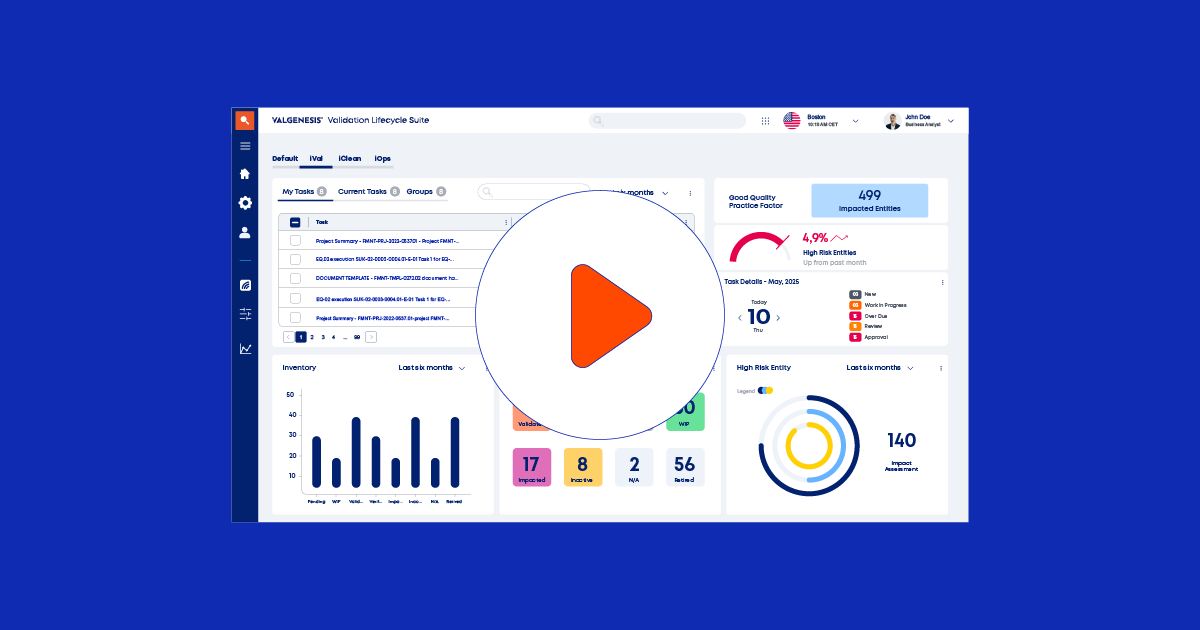
Digital validation replaces manual, document-heavy handoffs with controlled workflows for planning, authoring, execution, review, approval, traceability, reporting, and change. AI-powered validation adds assistive capabilities such as content generation, anomaly detection, and consistency checks within that digital environment. The useful distinction is governance: automation should operate within approved processes, using controlled data and review rules, with accountable users making final decisions.

A digital foundation comes first. Standardized templates, reusable objects, role-based workflows, electronic signatures, audit trails, and real-time status can reduce duplicated work and make exceptions visible earlier. The article on intelligent automation in CQV workflows shows how automated document and workflow activities can address delays created by manual execution. A broader critique of manual validation and paper-on-glass approaches explains why static files and fragmented systems limit reuse and traceability.

AI can assist with repetitive or high-volume tasks, but teams need a defined use case and control model. They should understand the source information, expected output, review requirements, versioning, and the consequences of an incorrect result. Generated documents or suggested content still require appropriate verification and approval. The webinar on AI-powered validation document generation provides a focused example of AI-assisted authoring within validation.

Implementation should be incremental. Map the current workflow, identify bottlenecks and control gaps, standardize data and templates, define governance, validate the solution, and train users. The webinar on AI-powered validation that is smarter, faster, and more reliable frames the transition from manual checks toward intelligent automation. The objective is not maximum automation. It is reliable execution, clearer oversight, and more time for risk assessment, exception handling, and scientific or engineering judgment.

Digital Records & Data Integrity

Digital records are the evidence produced, captured, reviewed, approved, and retained within electronic workflows. Their value depends on data integrity: records must accurately represent the activity or decision they document and remain trustworthy throughout creation, use, change, retention, and retrieval. Validation teams therefore need to design record controls into the workflow rather than verify them only at the end.

The record lifecycle begins with authorized access and controlled data capture. Users should have appropriate roles, and actions should be attributable. Entries should be made at the time of the activity, with corrections and changes preserved through audit trails where applicable. Records need version control, secure storage, reliable retrieval, and retention practices consistent with their intended use. Electronic signatures should remain linked to the record and convey the meaning of the signature.

Spreadsheets and uncontrolled files can create particular challenges because formulas, data, and versions may be changed or copied without sufficient visibility. The article on spreadsheet compliance risks examines why regulated spreadsheet use requires validation and control. Digital logbooks provide another practical example: the transition from paper to digital logbook management can improve accuracy and traceability when forms, workflows, access, and audit trails are properly designed.

Data-integrity controls also need to work across integrations and reports. Validation should confirm that data moves completely and accurately between systems, calculations produce expected results, and displayed or reported information can be traced to the source. The video on SOP-driven digital records and traceability illustrates how guided workflows, real-time capture, and audit trails can support operational records. Periodic review, change control, incident management, and user training help maintain those controls after implementation.

Frequently Asked Questions

Validation is documented evidence that a process, system, method, procedure, or item of equipment is fit for its intended use and performs consistently. The specific lifecycle and evidence depend on what is being validated and its risk.

CSV is the established approach to validating computerized systems. CSA emphasizes critical thinking and risk-proportionate assurance for production and quality-system software, focusing effort on functions that matter most to quality and intended use.

No. CSA helps teams select the right level and type of evidence based on risk and assurance needs. Requirements, risk rationale, testing, issues, and approvals still need to be documented sufficiently to support the conclusion.

AI can assist with tasks such as document generation, consistency review, and anomaly detection within controlled workflows. Its use should have defined inputs, expected outputs, validation, review, auditability, and accountable human approval.

Trustworthy records have controlled access, attribution, contemporaneous capture, version history, reliable audit trails where applicable, secure retention, and traceability to the activity, data, review, and approval they represent.

An RTM links requirements to risk, design, tests, results, and issues. It shows coverage, identifies gaps, and helps teams assess the impact of changes without manually reconciling multiple documents.

Start with a validation workflow where manual handoffs, duplicate entry, version confusion, or slow review create clear operational and compliance risk. Standardize the process and data before adding automation or AI.

Conclusion

Modern validation connects intended use, requirements, risk, evidence, records, approvals, and change throughout the lifecycle. CSV and CSA provide the assurance framework; digital and AI-assisted workflows reduce repetitive work and make traceability easier to maintain; and data-integrity controls keep the resulting records trustworthy. The next step is to map one validation process from requirement through approval and identify where evidence becomes disconnected, manual effort is repeated, or record controls are unclear. Use the AI-powered validation lifecycle overview to begin a cross-functional discussion about the digital foundation and governance needed before scaling automation.

Talk to a Validation Expert