Digital Records & Data Integrity
Explore how ALCOA+ principles, electronic logbooks, 21 CFR Part 11, and requirements traceability help ensure trustworthy, compliant, and audit-ready digital records.
Last Updated: August 04, 2026
Digital Records & Data Integrity in Life Sciences
Digital records and data integrity practices help life sciences organizations ensure that regulated information remains trustworthy throughout its lifecycle. That means records must be attributable, legible, contemporaneous, original, accurate, and supported by the additional ALCOA+ qualities needed for sustained control. This guide explains how ALCOA+ principles, electronic logbooks, FDA 21 CFR Part 11 controls, and requirements traceability work together to protect evidence, streamline review, and make the history of a process easier to reconstruct.
Building trustworthy records across the regulated data lifecycle
Data integrity is not a single software feature or a final quality check. It is the result of designing processes, systems, responsibilities, and controls so that data remains complete, consistent, and reliable from creation through review, use, retention, and eventual disposition. The article on ALCOA data integrity practices presents ALCOA as a framework for maintaining trustworthy GMP records as digital systems become more significant.
A sound program starts with the record’s purpose. Teams should know which activity the record documents, who creates or changes it, when entries must be made, which source is authoritative, how corrections are handled, and how the complete history will be retrieved. These decisions should be built into procedures and system workflows. When data is generated in disconnected files, paper forms, and spreadsheets, context can be lost and review becomes more difficult. The discussion of spreadsheet compliance risks highlights the control challenges that spreadsheets can create in regulated environments.
Digitalization can strengthen the record when it introduces structure rather than merely reproducing paper on a screen. The editorial on risk and data as knowledge enablers describes the value of connecting structured and unstructured information with timestamps, locations, responsible people, and governed workflows. This context turns isolated entries into usable lifecycle knowledge.
The same lifecycle discipline applies to specialized digital systems. The roadmap for PAT implementation emphasizes data management, system interfaces, validation, documentation, change control, and continuing oversight as part of a controlled implementation.
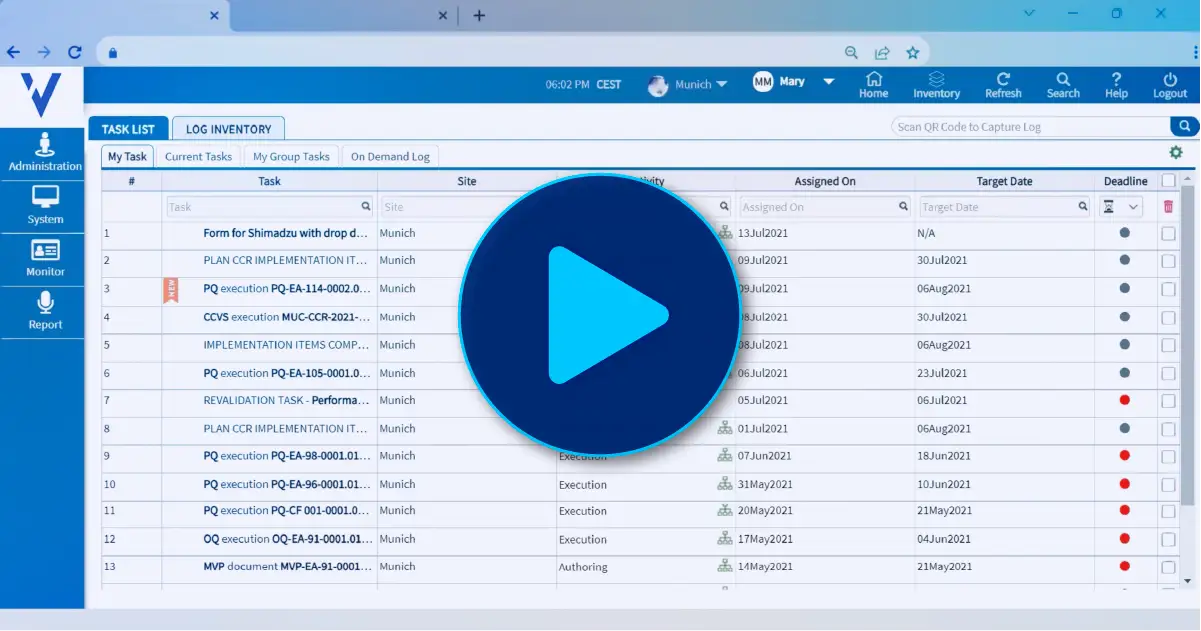
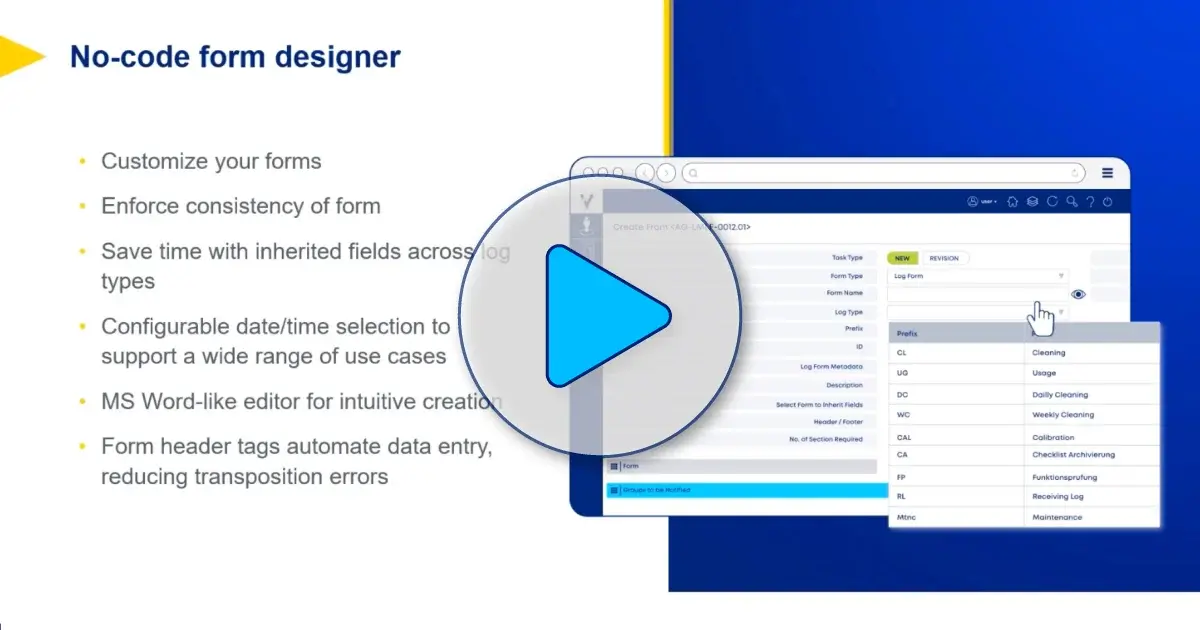
Electronic logbooks are a practical example. A digital logbook can guide data capture through controlled forms, apply verification and approval rules, and make current records easier to find. The webinar on managing logbooks electronically covers equipment information capture, conversion of paper forms, scheduling, verification, approvals, and QR-enabled access. The shift is valuable only when the configured workflow reflects approved procedures and preserves the identity, timing, and history of each entry.
For FDA-regulated uses, 21 CFR Part 11 compliance is a central consideration for electronic records and electronic signatures. Compliance depends on the intended use of the system and the applicable predicate requirements. Validation, access controls, audit trails, record protection, and signature controls must work together; purchasing a system with individual technical capabilities does not by itself establish a compliant process. ![NEW-[BP]-the-benefits-automating-your-requirements-traceability-matrix-repost](https://www.valgenesis.com/hs-fs/hubfs/NEW-%5BBP%5D-the-benefits-automating-your-requirements-traceability-matrix-repost.webp?width=413&height=217&name=NEW-%5BBP%5D-the-benefits-automating-your-requirements-traceability-matrix-repost.webp)
Traceability provides another layer of confidence. A requirements traceability matrix connects requirements with corresponding verification evidence. The guide to automating the requirements traceability matrix explains how this relationship helps teams verify system requirements. When requirements, tests, results, deviations, and approvals remain linked, gaps are easier to identify and changes are easier to assess.
These practices reinforce one another. ALCOA+ defines the qualities expected of trustworthy data. Electronic logbooks apply those qualities to recurring operational records. Part 11 provides controls for relevant electronic records and signatures. The RTM shows that system requirements, including data integrity and compliance requirements, were verified. Together they create a record environment that is easier to operate, review, defend, and maintain.
ALCOA+ Data Integrity Principles
ALCOA+ is a practical way to evaluate whether regulated data can be trusted. The core qualities are attributable, legible, contemporaneous, original, and accurate. The “plus” expands the framework with expectations that records remain complete, consistent, enduring, and available. These qualities apply throughout the data lifecycle, not only when a record is first created.
Attributable data identifies the person or system responsible for an action. Legible data can be read and understood throughout its retention period. Contemporaneous records are created when the work occurs, preserving the sequence of events. Original data retains the first capture or a controlled true copy. Accurate data reflects the observation or activity without unauthorized alteration. Completeness includes the full history, including relevant changes and repeat activities. Consistency preserves logical order and timestamps. Enduring records remain protected in a suitable medium, and available records can be retrieved for review and inspection.
Teams should translate these principles into specific controls. Define who may create, review, approve, correct, or administer records. Require unique user identities where attribution matters. Configure required fields, permissible values, date and time controls, and reason-for-change prompts according to the process. Preserve audit trails and establish how they will be reviewed. Protect records against inappropriate deletion or overwriting, and verify that retention, backup, and retrieval arrangements meet operational and regulatory needs.
The six best practices for ALCOA data integrity provide a useful starting point for reviewing procedures and systems. The ValGenesis Validation Lifecycle Suite overview also describes ALCOA+ data integrity and role-based access within a connected digital validation environment.
ALCOA+ should be used during design and periodic review. Ask whether the workflow makes correct behavior straightforward, whether exceptions remain visible, and whether a reviewer can reconstruct what happened without relying on memory or separate files. This turns the principles into observable, testable expectations.
Electronic Logbook Management
Electronic logbook management replaces uncontrolled or fragmented paper recording with governed digital workflows for recurring operational activities. Relevant uses can include equipment, cleaning, calibration, maintenance, environmental, and other activity logs. A well-designed electronic logbook provides a controlled place to enter, review, approve, search, and retain records while preserving who did what and when.
The transition should begin with the process, not the form. Inventory current logbooks, identify their owners and users, determine the events that create an entry, and document review and approval requirements. Decide which fields are required, where reference data comes from, how late or corrected entries are handled, and when alerts or schedules are needed. The webinar How to Manage Logbooks Electronically illustrates how paper forms can be converted while adding verification rules, approvals, schedules, expiry dates, and QR-code access.
Configuration should support data integrity. Users need unique identities and permissions aligned with their responsibilities. Entries should carry reliable date and time context. Corrections should preserve the previous value and the reason for change. Audit trails should be accessible for appropriate review. The system should protect approved records, retain them for the required period, and make retrieval practical. Business continuity and offline-use needs should also be addressed where operations cannot depend on uninterrupted connectivity.
The article on transitioning from paper to digital logbooks connects the change with efficiency, accuracy, compliance, collaboration, and enhanced data integrity. The webinar Beyond Binders explores common paper-record issues and electronic record accessibility. Paper to Glass adds practical transition considerations.
Digital logbooks must remain part of the quality system. Procedures, training, periodic review, access recertification, change control, and incident handling still matter. The goal is not simply faster entry; it is a controlled operational record whose context and history remain available.
FDA 21 CFR Part 11
FDA 21 CFR Part 11 establishes criteria for electronic records and electronic signatures used in relevant FDA-regulated activities. The ValGenesis overview of 21 CFR Part 11 compliance describes its role in supporting the authenticity, integrity, and reliability of electronic records and signatures. Teams should interpret Part 11 together with the applicable predicate rules and the intended use of each system.
A practical assessment begins by identifying which records and signatures are regulated, where they are created or maintained, and which system functions affect them. System validation demonstrates that the configured application performs as intended. Access controls restrict functions to authorized individuals. Audit trails preserve a history of relevant actions and changes. Record protection supports accurate and ready retrieval throughout retention. Electronic signature controls connect a signature to the correct individual and record, while operational checks and written policies support accountable use.
These controls are interdependent. An audit trail is less useful if administrator access is poorly governed. A secure signature does not compensate for ambiguous workflows or incomplete records. Validation evidence is incomplete if it does not cover the actual configuration, interfaces, data transfers, user roles, and procedures used in production. The article on spreadsheet compliance risks shows why tools that are easy to alter or difficult to control require careful scrutiny in regulated use.
Teams should document applicability and control decisions, then connect them to requirements and verification. Include security, data handling, audit trail, signature, retention, backup, and retrieval expectations where relevant. Test the configured behavior and retain evidence. After release, assess patches, upgrades, integrations, role changes, and process changes for their effect on validated status.
Paperless validation can improve access to current records and lifecycle evidence, but digitalization must remain governed. Part 11 readiness is therefore an ongoing combination of validated technology, controlled procedures, trained users, and lifecycle oversight.
Requirements Traceability Matrix
A requirements traceability matrix (RTM) links system requirements to the evidence used to verify them. In validation, it helps demonstrate that relevant requirements have been addressed and tested. It can also connect requirements to risks, design or configuration elements, test cases, results, deviations, and approvals, giving reviewers a coherent view of coverage.
Traceability begins with good requirements. The article Requirements Management 101 emphasizes that clear requirements are foundational. Each requirement should express one understandable need, be testable, and use a stable identifier. Data integrity requirements should describe expected behavior—for example, attribution, access, record retention, audit trail handling, or signature controls—rather than relying on broad statements such as “the system must be compliant.”
The RTM should be created early and maintained as the system evolves. When a requirement is added or changed, its linked risk assessment and test coverage should be reviewed. When a test fails or a deviation is raised, the affected requirement should remain visible. When a requirement is removed, the rationale and impact should be controlled. The article on automating requirements traceability explains how the RTM links requirements to test protocols and helps verify coverage.
Manual matrices can become stale when requirements and tests live in separate documents. Automated traceability can update relationships as controlled records change, flag missing links, and reduce end-of-project reconciliation. It also improves change impact assessment: teams can follow a changed requirement to the related tests and evidence instead of searching across files.
Risk can further refine the matrix. Requirement-level risk assessment supports focused assurance by identifying which requirements warrant greater testing depth. The RTM then becomes more than a completion checklist; it documents how intended use, risk, requirements, and verification fit together.
Frequently Asked Questions
Data integrity is the degree to which regulated information remains complete, consistent, accurate, and trustworthy throughout its lifecycle. It depends on the process, people, procedures, and technical controls used to create, change, review, retain, and retrieve records.
ALCOA means attributable, legible, contemporaneous, original, and accurate. ALCOA+ adds complete, consistent, enduring, and available. Together, these qualities provide a practical framework for evaluating regulated records.
Electronic logbooks can guide users through controlled forms, require key information, preserve timestamps and attribution, apply review workflows, protect approved records, and retain an audit trail. The benefits depend on appropriate configuration, validation, access control, procedures, and training.
No. Compliance depends on intended use and the full control environment. The system must be appropriately validated and configured, while access, audit trails, signatures, procedures, training, retention, and operational governance must work together.
Part 11 applies to electronic records and electronic signatures within its scope. Organizations should identify the regulated records and signatures involved, evaluate applicable predicate requirements, and document the controls needed for the system’s intended use.
At minimum, the RTM should identify each relevant requirement and its corresponding verification evidence. Depending on the validation approach, it may also link risks, design or configuration elements, test results, deviations, approvals, and changes.
Automation helps keep links current as requirements and tests change, exposes missing coverage, and supports faster impact assessment. It reduces the risk of rebuilding a manual matrix from disconnected documents at the end of a project.
Start with a representative record process. Map how data is created, corrected, reviewed, approved, retained, and retrieved; identify integrity risks and applicable requirements; then define a controlled digital workflow and the evidence needed to validate it.
Conclusion
Trustworthy digital records require connected controls. ALCOA+ defines the qualities the data should preserve, electronic logbooks apply those qualities to operational work, Part 11 guides controls for relevant electronic records and signatures, and the RTM connects requirements to evidence. A practical next step is to map one high-value record workflow, identify its data integrity and regulatory requirements, and assess whether current records preserve complete context and traceability. Explore how electronic logbook management can support that transition.