



Continued Process Verification
From Digital Process Monitoring to Product Quality Review.
Last Updated: August 10, 2026
CPV in Life Sciences
Continued Process Verification (CPV) is the lifecycle activity used to monitor manufacturing data and product quality after process qualification. It helps teams understand variability, confirm that a process remains in control, detect emerging signals, and identify opportunities for improvement. A strong CPV program links critical process parameters, critical quality attributes, statistical methods, review rules, investigations, changes, and product-quality reporting. This guide explains the foundations of CPV and shows how Digital CPV and Product Quality Review can work together as a connected system for ongoing process and product oversight.
Maintaining process control through continued verification
Continued Process Verification is the third stage of the process-validation lifecycle, following process design and process qualification. Its purpose is to use routine manufacturing and quality data to determine whether the process continues to perform as expected. A CPV plan defines what will be monitored, where the data will come from, how it will be analyzed, when it will be reviewed, and what actions should follow when signals or trends appear.
The monitoring strategy should reflect process understanding and the control strategy. Critical process parameters, critical quality attributes, material attributes, in-process controls, and other relevant measures can provide evidence about process performance and product quality. Teams need clear definitions, approved limits or alert criteria, appropriate statistical methods, and a consistent way to interpret results. The practical overview of real-time monitoring in pharmaceutical manufacturing explains how timely monitoring can strengthen visibility and process control.
Data quality is central to the program. If values are copied from multiple systems into spreadsheets, teams may spend more time collecting, cleaning, and reconciling information than evaluating it. Manual handling can also separate a chart from its source data, analysis method, or review history. The discussion of how digital CPV saves time and resources describes the limits of resource-intensive, retrospective monitoring and the shift toward automated collection and analysis.
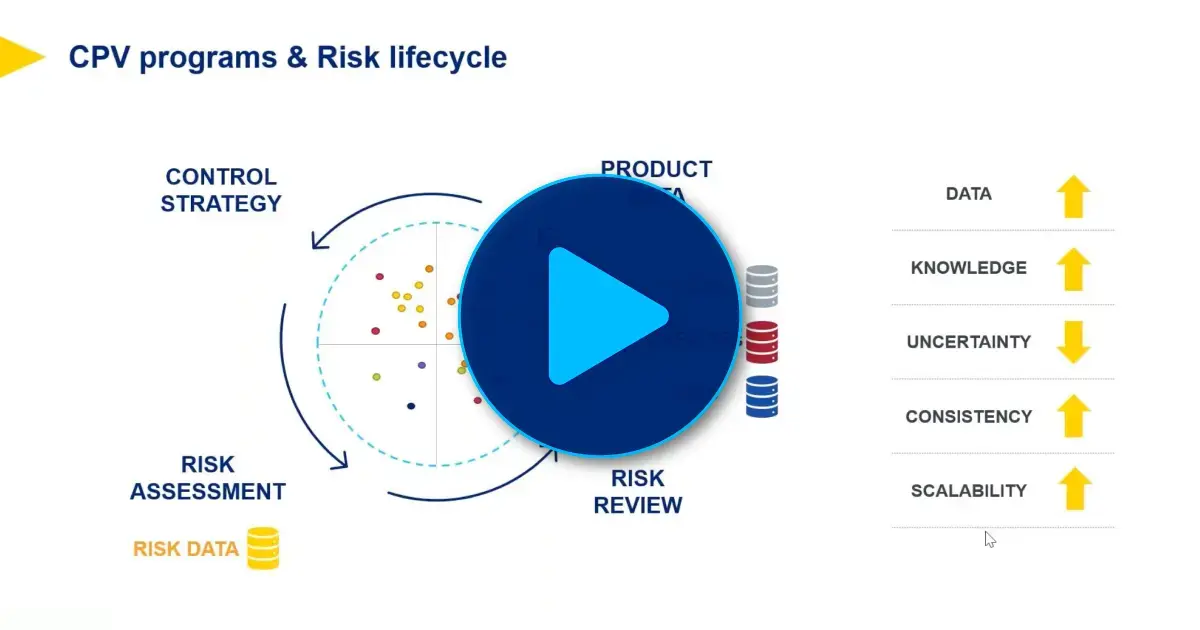
CPV should support action, not only reporting. Signals need defined review paths so teams can determine whether they represent common variation, an emerging trend, a data issue, or a potential change in process performance. Investigations, root-cause work, risk assessments, and changes should remain connected to the original signal and its supporting data. The webinar on turning CPV trends into risk, root cause, and defensible change focuses on this connection between monitoring and lifecycle decisions.
The frequency and depth of review should match the process, product, data availability, and risk. Some information may be assessed continuously or close to real time, while other measures are reviewed by batch, campaign, period, or product. Process Analytical Technology can support real-time measurement and control in suitable manufacturing environments; the article on PAT in continuous manufacturing illustrates the role of modern monitoring and analytics in continuous processes.
Periodic product-quality review provides a broader view. It brings together quality and performance information to evaluate consistency, identify recurring issues, and support improvement. The guidance on optimizing Annual Product Quality Reviews shows why data collection, analysis, and reporting need an efficient and repeatable process. When CPV and PQR use connected data and metrics, the annual review can build on current process knowledge instead of reconstructing the year from separate records.
Digital CPV
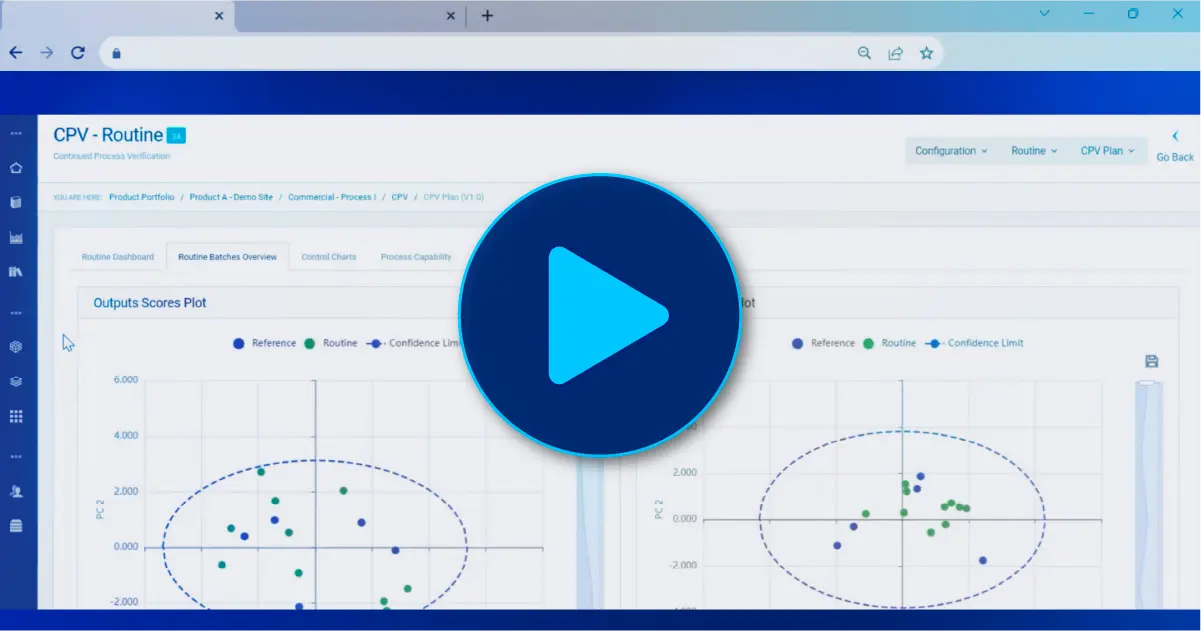
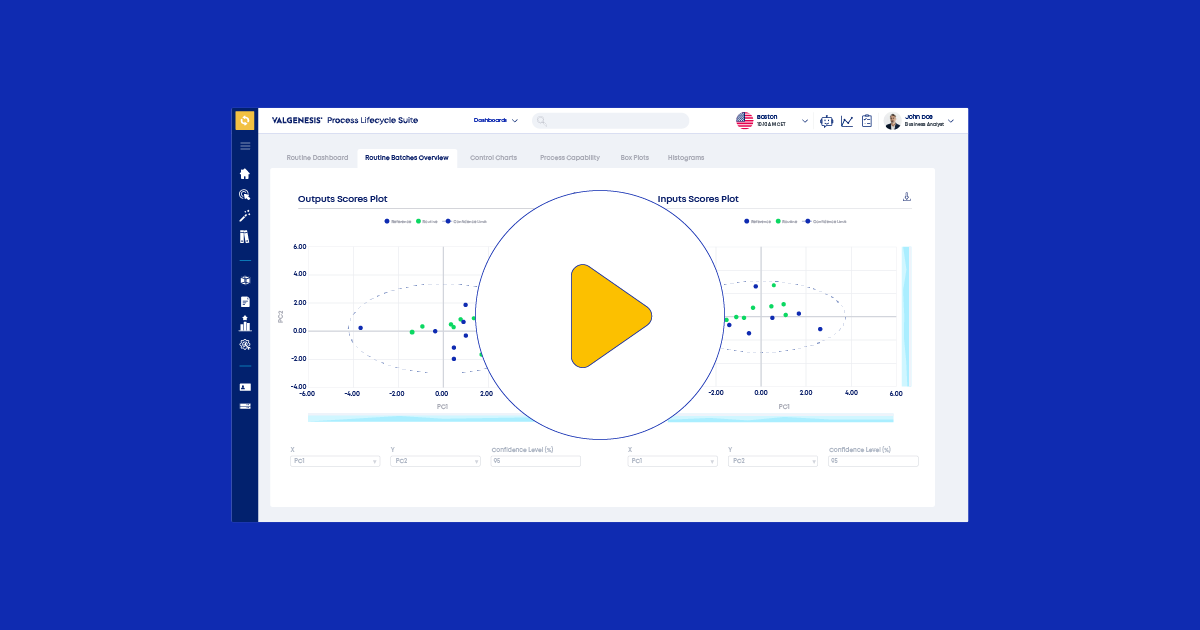
Digital CPV uses connected data, automated workflows, and statistical analysis to manage continued process monitoring. It replaces manually updated spreadsheets and periodic chart-building with a governed process for collecting data, applying approved methods, detecting signals, reviewing trends, and producing reports. The objective is timely, traceable oversight rather than a faster version of the same manual reporting cycle.
A digital CPV program starts with the CPV plan. Teams define the products and processes in scope, select CPPs, CQAs, material attributes, in-process controls, and other measures, and document data sources, sampling or aggregation rules, statistical methods, limits, review frequency, and responsibilities. The Digital CPV for continuous manufacturing editorial explains how continuous data collection and multivariate analysis can improve process understanding and support earlier fault detection.
Integration reduces repetitive work, but data governance remains essential. Each measure should have a consistent definition and a controlled connection to its source. Access controls, audit trails, version history, and review records help preserve data integrity. Dashboards and alerts can direct attention to emerging signals, while automated reporting can provide a consistent record of what was evaluated. The webinar on running CPV in real time addresses the move from delayed reporting toward current process visibility.
Digitalization also changes how teams use their time. Instead of extracting data and rebuilding charts, subject-matter experts can evaluate trends, compare products, sites, or scales, investigate signals, and document decisions. The video comparing manual CPV with Digital CPV summarizes the shift from reactive, batch-based review to proactive monitoring. Implementation should still be phased: map the current process, confirm data readiness, standardize methods, validate the solution, train users, and establish governance for alerts, investigations, and changes.
Product Quality Review (PQR)
Product Quality Review is a periodic evaluation of product and process information used to assess manufacturing consistency and identify opportunities for improvement. Annual Product Quality Review is a common form of this activity. A PQR can include quality and performance metrics, deviations, complaints, changes, investigations, stability information, process trends, and other relevant evidence available within the organization’s review framework.
The main operational challenge is assembling a complete and coherent view. When source information is distributed across systems, spreadsheets, and documents, teams spend significant effort collecting and reconciling data. Definitions may vary, versions may drift, and reviewers may receive static summaries without a clear path back to the evidence. A repeatable process should define the data required, ownership, review periods, methods, approval path, and the actions expected when recurring trends or gaps are identified.
CPV can provide an important input to PQR by supplying structured process and product-quality trends. Instead of creating a separate annual analysis, the review can use the metrics, signals, and interpretations maintained through the CPV program. The webinar on avoiding the pitfalls of APQRs explores how CPV plan metrics can support a more useful product-lifecycle review.
A digital PQR workflow can automate data gathering and standardize the report structure, but its greater value is continuity. Reviewers can connect annual conclusions to current trends, investigations, risks, and changes. Actions can be assigned and tracked rather than disappearing into a final report. This turns PQR into an input for quality oversight and continuous improvement. Teams should begin by harmonizing metric definitions and ownership between CPV and PQR, then establish a controlled data flow so both processes use the same authoritative information and documented interpretations.
Frequently Asked Questions
Continued Process Verification is the third stage of the process-validation lifecycle. It uses ongoing manufacturing and product-quality data to confirm that the process remains in a state of control and to identify variability, trends, or opportunities for improvement.
A CPV plan should define the process and products in scope, measures to monitor, data sources, statistical methods, limits or alert criteria, review frequency, responsibilities, reporting, and the response path for signals and trends.
CPV is the broader lifecycle program for ongoing process verification. Real-time or near-real-time monitoring is one way to provide timely data within that program. Not every CPV measure needs the same review frequency.
Digital CPV can automate data collection, standardize analysis, detect trends earlier, route reviews, preserve audit trails, and generate reports. The short introduction to smarter, proactive CPV shows how connected data and automated workflows improve visibility.
Teams apply predefined review rules, evaluate the data and context, determine whether investigation or risk assessment is needed, and connect any resulting actions or changes to the original signal. The webinar on catching CPV deviations early focuses on earlier detection and response.
CPV provides ongoing process and product-quality trends that can feed the periodic PQR. Sharing authoritative data, metric definitions, and interpretations reduces duplicate analysis and gives the PQR a current view of process performance.
Start with data collection and the recurring analyses that consume the most manual effort or create the greatest traceability risk. Standardize the data definitions and review rules before automating dashboards and reports.
Conclusion
Continued Process Verification gives teams an ongoing view of whether manufacturing processes remain in control. Digital CPV makes that view more timely and traceable, while PQR turns current process and product knowledge into a broader periodic assessment. Connecting the two reduces repeated data handling and helps quality teams move from retrospective reporting toward earlier action. The next step is to map the data, measures, and review activities shared by CPV and PQR, then identify where one authoritative digital workflow can replace duplicate collection, analysis, and reporting. The video on gaining efficiency with Digital CPV provides a practical starting point for that discussion.