Integrating Digital Transformation and Quality by Design for Enhanced Pharmaceutical Development


Summary
Pharma teams face tighter timelines, greater complexity, and rising regulatory expectations. This paper explains why moving from spreadsheets to centralized digital platforms can reduce silos, automate workflows, and support faster, more reliable decisions in development.
It connects that shift to Quality by Design (QbD): defining QTPP, identifying CQAs, and setting lifecycle control strategies. Two case studies show how ValGenesis iCMC™ standardized risk work, improved documentation and collaboration, and supported ICH guideline alignment.
Key takeaways
- Digital platforms centralize data and automate QbD tasks (risk assessments, analysis, documentation) that are error-prone when done manually.
- QbD focuses on building quality into development via QTPP, CQAs, and control strategies rather than relying on end-product testing alone.
- Case studies report more consistent, centralized risk management and smoother regulatory compliance after adopting ValGenesis iCMC™.
Who is this for
- CMC process development scientists and managers
- Quality assurance (QA) and quality systems leaders
- Regulatory affairs professionals (CMC and submissions)
- Analytical development and method validation teams (ICH Q14)
- Quality risk management (QRM) leads and process owners
- Digital transformation / operational excellence leaders in pharma
- Informatics/IT leaders supporting GMP systems and data governance
Download your Industry Insight
Integrating Digital Transformation and Quality by Design for Enhanced Pharmaceutical Development
The pharmaceutical industry is undergoing a significant transformation, driven by the demand for faster, more efficient drug development. Traditional approaches often fail to meet the needs of modern production, particularly as regulatory expectations and product complexity grow. In response, many companies are adopting digital platforms to streamline operations, elevate quality, and ensure compliance.
This shift is especially impactful when paired with Quality by Design (QbD), a framework that embeds quality into every phase of development rather than relying solely on end-product testing. QbD encourages a deeper understanding of product and process variables and promotes more robust control strategies.
When combined, digital transformation and QbD offer a powerful approach to accelerating pharmaceutical development while reducing risks and maintaining regulatory alignment. This paper explores the value of these two strategies and presents case studies demonstrating their application in real-world settings.
Why digital transformation matters in pharma development
The challenges of developing new drugs, combined with stricter regulatory demands, are prompting pharmaceutical companies to re-evaluate traditional tools, such as spreadsheets, which often fall short in managing the volume and complexity inherent in contemporary drug development. These outdated methods frequently lead to data silos, delaying projects and increasing costs.
Digital platforms, by contrast, offer a robust alternative by centralizing data management, streamlining risk management activities in pharmaceutical development, and automating tasks. These platforms align with good manufacturing practice (GMP) requirements, enabling faster and more reliable decision-making.
Refining industry standards
Quality by Design takes a proactive approach to pharmaceutical development, incorporating scientific knowledge and risk management to ensure the quality of the final product. Rather than relying solely on end-product testing, QbD emphasizes designing processes that consistently deliver high-quality outcomes.
This approach is built on a deep understanding of the relationship between critical quality attributes (CQAs), process parameters, and the final product’s performance (Singh, 2015).
Key steps in QbD include:
- Defining the quality target product profile (QTPP)
- Identifying CQAs
- Establishing control strategies to reduce variability and maintain consistent quality throughout a product’s lifecycle
Digital platforms transform QbD from a conceptual strategy into a practical, efficient process. They can automate many of the manual tasks involved in QbD, such as risk assessments and data analysis. By doing so, these tools enhance the efficiency of process development in the pharmaceutical industry, allowing companies to bring products to market more quickly while maintaining or even improving quality.
As a result, QbD principles are increasingly being integrated into regulatory frameworks, such as the International Council for Harmonisation (ICH) guidelines, which outline standards for pharmaceutical development and manufacturing (ICH, 2009).
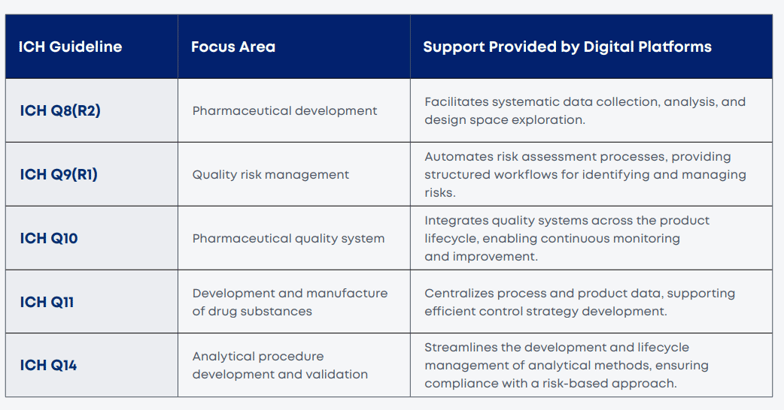
Maintaining regulatory compliance is one of the biggest challenges in pharmaceutical development. The ICH guidelines Q8(R2), Q9(R1), Q10, Q11, and Q14 provide a comprehensive framework for ensuring product quality throughout its lifecycle (ICH, 2009, 2023, 2008, 2012, 2023). Digital platforms are playing an increasingly important role in helping companies meet these standards, as shown in Table 1.
Table 1. How ICH guidelines are supported by digital platforms.
Case studies of digital transformation in pharmaceutical development
Case study 1: Adapting to new risk management guidelines
A large pharmaceutical company needed to align with new guidelines from the national regulatory authority. These updated requirements called for a comprehensive review of processes and practices, expanding good practices (GxP) expectations and establishing a stringent timeline for achieving compliance.
The company faced several challenges in meeting these new standards. Different departments used varying approaches, and reliance on manual documentation made compliance efforts more complex. At the same time, the organization was advancing broader digitalization and automation initiatives to modernize workflows and improve efficiency.
As illustrated in Figure 1, the company launched a project focused on integrating these efforts with a robust QbD approach, which included:
-
Aligning the internal processes with legislative requirements.
-
Building a strong risk management culture across the organization.
-
Enhancing performance in risk-related processes by fostering awareness of regulatory requirements and ensuring consistent application of standard operating procedures (SOPs).
-
Driving the digitalization of risk-based processes through a structured, knowledge-driven platform that supports QbD and process lifecycle management.
-
Providing tailored training to teams.
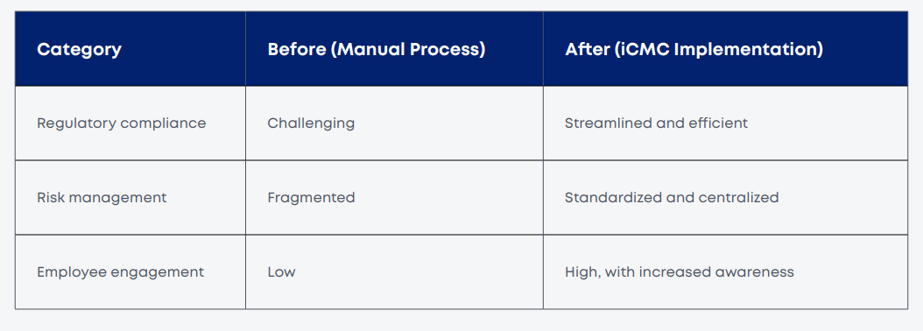
Within ten months, the company successfully implemented ValGenesis iCMC™, a structured digital platform built to support risk-based decision-making, QbD execution, and lifecycle knowledge management. The implementation led to a variety of measurable outcomes, as shown in Table 2.
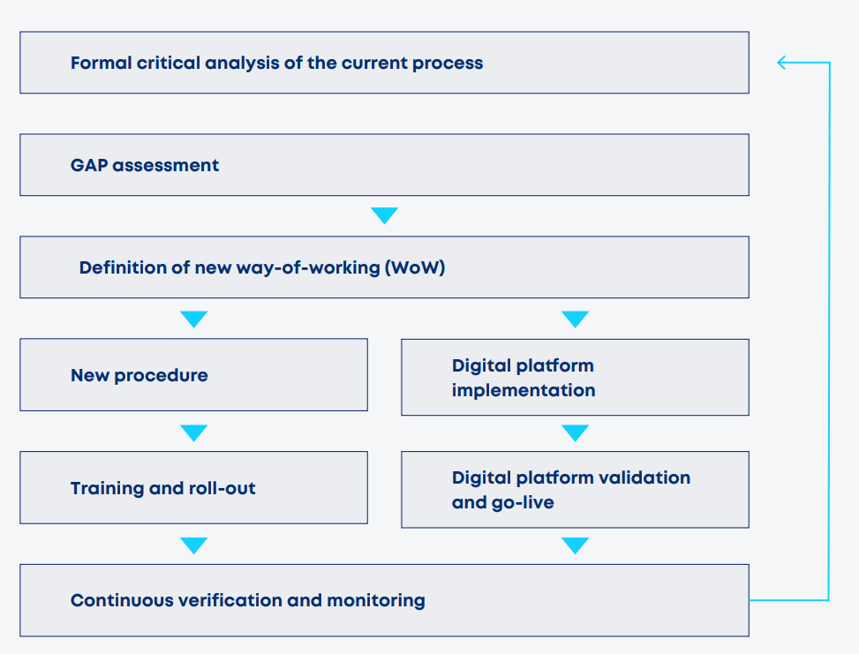
Figure 1. Overview of the company’s project approach
Table 2. Summary of changes before and after ValGenesis iCMC™ implementation.
Case study 2: Optimizing analytical method development
A pharmaceutical company encountered challenges in applying QbD principles to analytical method development, particularly for compliance with ICH Q14. Its manual processes for risk management were inconsistent and insufficient for handling the complex data associated with analytical methods, making regulatory compliance difficult.
The company identified several key issues. Conducting risk assessments manually often led to inconsistencies and errors. Managing large volumes of documentation without a centralized system consumed time and created inefficiencies. Additionally, data silos across different teams limited collaboration and made it difficult to maintain a comprehensive view of the analytical process.
To address these issues, the company adopted ValGenesis iCMC™, to simplify QbD-based risk management in analytical method development.
The implementation process began with a workshop to assess the customer’s specific needs and requirements. This was followed by a structured customization phase, during which the user requirements specification (URS) document was finalized to align precisely with project goals. New features were developed iteratively, shaped by ongoing feedback and detailed testing from subject matter experts to meet real-world demands. The final steps involved deploying the system and establishing plans for future enhancements, enabling the platform to adapt to evolving needs and support additional functionalities over time (Figure 2).
By implementing iCMC, the company improved alignment with ICH Q14 guidelines. Automated risk assessments and centralized data management reduced errors and increased consistency across analytical method development. The solution simplified documentation, improved collaboration, and enhanced efficiency—resulting in a more compliant and scalable analytical development process (Table 3).
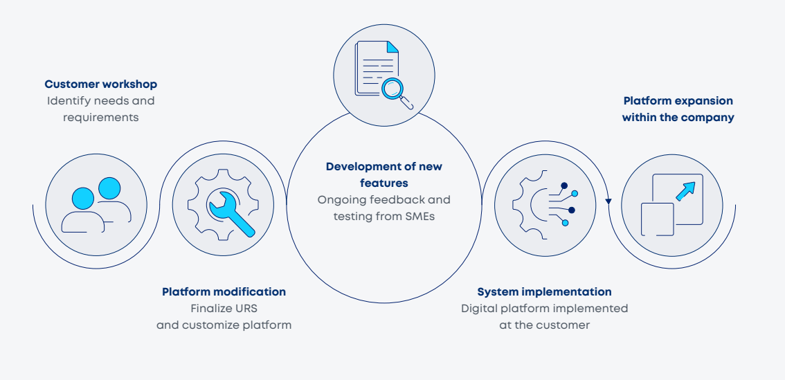
Figure 2. Digital platform implementation journey.
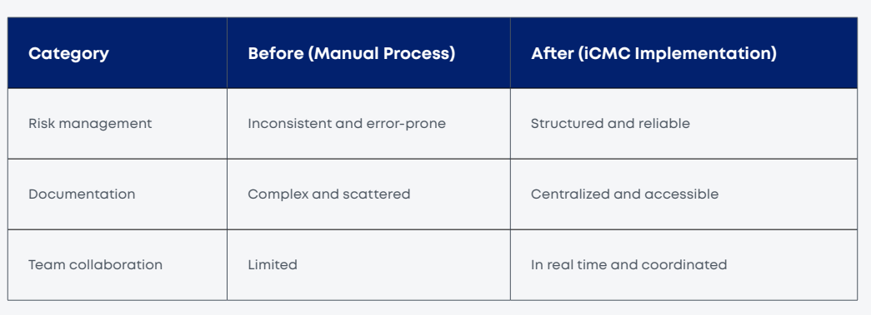
Table 3. Summary of changes before and after ValGenesis iCMC™ implementation.
The future of digital transformation in pharma
As demonstrated in the case studies, pharmaceutical companies are increasingly recognizing the value of moving away from traditional manual approaches and embracing digital solutions in drug development. The benefits of digital platforms span multiple areas of biopharmaceutical development, from risk management to process control (Khalil et al., 2023). It is evident that digital platforms will play a pivotal role in the development of new drugs in the future.
However, to fully capitalize on the benefits of digital transformation, companies must address several challenges, including system integration, data security, and employee engagement. Overcoming these hurdles will be essential for fully leveraging these technologies.
Conclusion
Digital transformation is no longer a future goal for pharmaceutical companies; it is a present necessity. The advantages of digital platforms are undeniable, and their influence on drug development, manufacturing, and regulation will continue to grow.
Looking ahead, companies must invest in various technologies to stay competitive. These tools will enhance their ability to analyze large datasets, predict outcomes, and optimize processes (Finelli & Narasimhan, 2020). However, as outlined earlier, several challenges must still be addressed.
The industry is at a turning point. The future of process development in the pharmaceutical industry will be defined by how well companies can leverage digital platforms to enhance scalability, reduce risk, and bring safe, effective products to market faster.
As regulatory agencies adapt to these changes, collaboration between industry and regulators will be essential to ensuring that digital transformation proceeds smoothly and safely. By working together, both sides can help shape a more efficient, compliant, and innovative future for pharmaceutical development—one in which QbD principles and digital platforms work in tandem to ensure product quality from the start.
References
- Finelli, L. A., & Narasimhan, V. (2020). Leading a digital transformation in the pharmaceutical industry: Reimagining the way we work in global drug development. Clinical Pharmacology and Therapeutics, 108(4), 756–761.
- International Conference on Harmonisation of Technical Requirements for Registration of Pharmaceuticals for Human Use. (2008). Pharmaceutical quality system Q10.
- International Conference on Harmonisation of Technical Requirements for Registration of Pharmaceuticals for Human Use. (2009). Pharmaceutical development Q8(R2).
- International Conference on Harmonisation of Technical Requirements for Registration of Pharmaceuticals for Human Use. (2012). ICH harmonised tripartite guideline: Development and manufacture of drug substances (chemical entities and biotechnological/biological entities) Q11. (URL in original PDF.)
- International Council for Harmonisation of Technical Requirements for Pharmaceuticals for Human Use. (2023). ICH harmonised guideline: Quality risk management Q9(R1).
- International Council for Harmonisation of Technical Requirements for Pharmaceuticals for Human Use. (2023). ICH harmonised tripartite guideline: Analytical procedure development Q14.
- Khalil, R., Macdonald, J. C., Gustafson, A., Aljuburi, L., Bisordi, F., & Beakes-Read, G. (2023). Walking the talk in digital transformation of regulatory review. Frontiers in Medicine, 10, Article 12345.
- Singh, J. (2015). International conference on harmonization of technical requirements for registration of pharmaceuticals for human use. Journal of Pharmacology and Pharmacotherapeutics, 6(3), 185–187.
- Step Committee for Medicinal Products for Human Use. (2023). ICH Q14 guideline on analytical procedure development [Internet]. Retrieved from EMA contact page .
Table of Contents


