Digital Transformation in CDMOs: Streamlining Tech Transfer Processes
Summary
This paper explains why CDMOs and sponsors need faster, cleaner technology transfer as biologics pipelines grow and costs rise. It maps where transfer happens across the product lifecycle and why document-driven work slows execution and adds risk.
It lists common pitfalls, then shows how teams, QbD plus risk assessment, and digital tools such as PLM platforms and digital twins can reduce miscommunication, improve data integrity, and speed scale-up.
Key takeaways
-
Tech transfer is not a one-time handoff. It repeats across sites and phases, making consistent process knowledge hard to maintain.
-
Transfers often slip due to unclear scope, weak knowledge capture, low standardization at receiving sites, skills gaps, and poor communication.
-
Digitalization (PLM, digital twins, MES/EBR) supports better data transparency, fewer batch failures, and faster scale-up decisions.
Who is this for
-
Tech transfer managers and MSAT leads at CDMOs and sponsors
-
Process development scientists and manufacturing engineers
-
Quality assurance, GMP compliance, and data integrity leaders
-
Regulatory affairs and CMC documentation teams
-
Manufacturing IT and digital manufacturing leaders (MES, EBR, data platforms)
-
Supply chain and operations planners who need real-time status and reporting
-
Program and project managers running cross-site transfers
Download your Industry Insight
Digital Transformation in CDMOs: Streamlining Tech Transfer Processes
Fostering transparent and collaborative partnership between sponsors and Contract Development and Manufacturing Organizations (CDMOs) is essential for maximizing benefits in pharmaceutical manufacturing.
Through a well-devised technology transfer strategy manufacturers can access expedited process scale-up and industrialization. This not only leads to a notable reduction in Right-First-Time (RFT) errors and time-to-market but also ensures the alignment of production capabilities with market demands and regulatory expectations.
The Cost of Drug Development
The journey from drug development to commercialization typically takes about 10 years and entails a financial investment of approximately $1 billion – Pharmaceutical commonplace knowledge.
The data shown (Fig.1) reveals the average expenditure for researching and developing a pharmaceutical compound from discovery to launch between 2010 and 2020. In this data, which includes large-capital biopharma companies, the mean cost of developing a compound doubled from the 2000s to 2010s and quadrupled from the 1990s to 2000s. The escalating development cost poses challenges for both emerging and well-established bio(pharmaceutical) companies, as the capital market contracts, restricting the availability of investment funds.
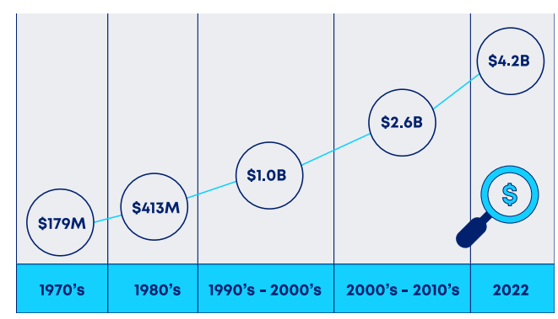
Fig. 1 - The cost of drug development throughout the years
The biotechnology industry’s progress has led to the emergence of various niche biotherapeutic classes, creating substantial opportunities for contract service providers. A multitude of new drug candidates is presently in the R&D discovery and preclinical stages, featuring bispecific antibodies, antibody, gene therapy, and cell therapy drug candidates. Projections indicate that these segments are poised for an annual growth rate exceeding 20 percent by 2027 (Fig.2).
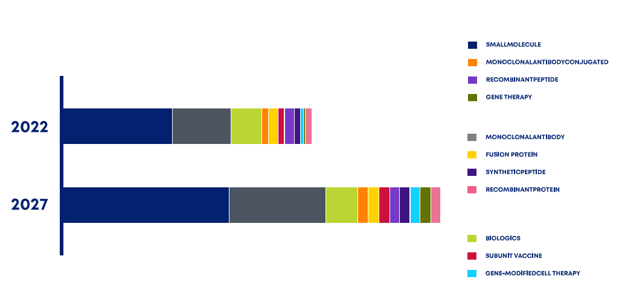
Fig. 2 – Annual growth rate projections per market segment by 2027.
Antibody-based therapeutics dominate about 60 percent of the entire biologics market, with 70 percent of the pipeline sourced from small biotech companies facing challenges related to inadequate facilities and infrastructure for manufacturing. As a result, outsourcing becomes a clear solution, driving a growing trend in outsourcing operations to Contract Development and Manufacturing Organizations (CDMOs) in the biopharmaceutical product development and manufacturing realm.
The pace of development and production lags behind discovery, contributing to the ongoing increase in outsourcing to CDMOs.
Currently constituting 20% of the industry’s manufacturing capacity, CDMOs are projected to reach 30% of global manufacturing volume by 2025, with the construction of these facilities coming with a hefty price tag, making them an attractive service option for companies lacking their own biologics facilities.
The global pharmaceutical CDMO market achieved an estimated value of USD 135.88 billion in 2022 and is expected to surpass approximately USD 246.34 billion by 2032, reflecting a Compound Annual Growth Rate (CAGR) of 6.13% from 2023 to 2032. With the pharmaceutical industry currently facing substantial pressure to meet the general expectations of both customers and regulators, and with the rapidly evolving market dynamics, it becomes crucial for product development strategies to adapt to these changes.
One effective approach involves expediting the process scale-up and industrialization through a well-devised technology transfer strategy, leading to a significant reduction in time-to-market for pharmaceutical products4.
Pharmaceutical Technology Transfer
Accelerating the commercialization of new medicines hinges on the effective transfer of product knowledge across all phases of its lifecycle
The concept of technology transfer involves the sharing of product and/or process knowledge between two organizations. In this exchange, the entity originally possessing the information is commonly known as the sponsor or marketing authorization holder (MAH), while the recipient is often referred to as the transferee.
This comprehensive process includes the transfer of knowledge related to product formulation, production processes, quality control testing, regulatory requirements, and other pertinent aspects. The primary goal is to replicate the same level of product quality and efficacy observed during the development and clinical trial phases.
Ensuring the seamless transition of manufacturing from the laboratory scale to large-scale commercial production is a critical endeavor in the pharmaceutical industry. This effort is guided by established guidelines from global health organizations to uphold the integrity of the transferred technology and maintain consistent standards of quality and efficacy.
Understanding Tech Transfers in the Drug Development Lifecycle
In the context of product development journeys, particularly when collaborating with a CDMO for all or part of a project, tech transfers involve inherent risks related to business, regulatory compliance, product quality, and technical aspects. It’s essential to clarify that the transfer doesn’t involve the physical transfer of an asset but rather the capability to create a product. Defining and specifying this capability, or knowledge, can be a challenging task.
In the pharmaceutical industry, technology transfer is often discussed as a single step in the product lifecycle, typically occurring when the Process Development group within Research and Development (R&D) transfers the process to commercial manufacturing. However, technology transfer occurs repeatedly throughout the product lifecycle (Fig.3), whenever production relocates from one site to another, whether within the same plant or between different facilities. Each transfer introduces complexities to process knowledge management, making it challenging to maintain a “single version of the truth.” The outsourcing of production to a contract manufacturer adds an additional layer of intricacy. The core challenge remains consistent across all scenarios: ensuring that the receiving party fully understands the process for successful implementation in production facilities. While this might appear straightforward on paper, the reliance on both physical and electronic documents, often referred to as “paper on glass,” presents a significant hurdle.
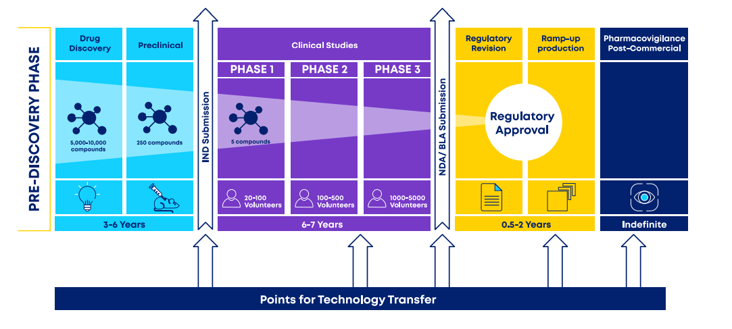
Fig. 3 – Points throughout the product lifecycle where tech transfer typically occurs
How to Accelerate an Effective Tech Transfer
A successful tech transfer at the receiving unit (internal or external) is directly correlated with an in-depth process understanding.
During a technology transfer process, both the originating and receiving sites must navigate numerous potential challenges to ensure its success. The tasks involved in tech transfers are difficult to define, especially when dealing with inherently complex manufacturing processes that may have various iterations based on the discontinuities that need to be addressed.
Pharmaceutical Technology Transfer – Common Tech Transfer Pitfalls
Companies undertaking a technology transfer commonly face key challenges (Fig. 4), which include:
- Sponsors’ expectations: serve as a determinant for the project and technology transfer endeavors. As the project advances through the developmental stages, the initial and optimistic product information may encounter challenges, particularly concerning stability issues or compliance-related requirements like nitrosamines and elemental impurities guidelines. These challenges have the potential to result in delays, necessitating rework, and ultimately leading to escalated costs for both development and commercialization.
- Project Scope Definition: Fail to accurately assess the required resource levels to adequately prepare the involved parties for meeting both commercial and regulatory requirements, along with associated timelines for crucial milestones in the technology transfer plan.
- Knowledge Management: contributes to various aspects, such as in the case of legacy or early-phase products where technical knowledge may be limited, hindering a robust and successful technology transfer. It is also relevant for less experienced sending sites that may lack an understanding of the crucial information needed by the receiving site. Lastly, for sending sites where process knowledge capture relies on paper-based methods, there may be a misalignment with good documentation practices, resulting in the potential withholding of technical knowledge or know-how. This, in turn, can impact technology transfer timelines.
- Standardization at receiving site: CDMO receiving sites frequently face difficulties stemming from the lack of standardization in their internal processes and documentation. This challenge emerges due to engagement in multiple technology transfers with various sponsors, each presenting distinct requirements. Introducing standardization in these aspects will ultimately boost project advancement and timelines, promoting enhancements in productivity and operational excellence.
- Skilled teams: creating dedicated teams to supervise and coordinate technology transfers can present another challenge. The originating site, particularly if it is a small start-up, might lack team members with specialized expertise in the technical and regulatory aspects of a technology transfer. In the case of complex or innovative projects, the receiving site may find it essential to expand beyond its core technology transfer team and involve other colleagues or consultants with specialized knowledge to help formulate and execute an appropriate technology transfer plan.
- Communication: efficient and open communication between the originating and receiving sites is vital for the success of any technology transfer process. Cultural alignment holds paramount significance, requiring both sites to nurture a shared understanding that encourages a positive, constructive, and supportive relationship, fostering a sense of team spirit.
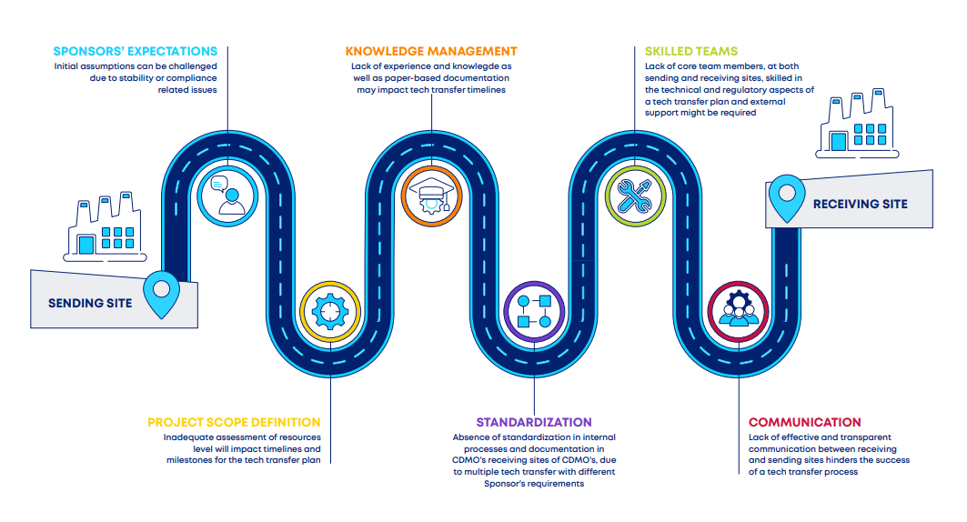
Fig. 4 – Tech Transfer pitfalls roadmap
How to Accelerate an Effective Tech Transfer
While it may appear to be a straightforward process at first glance, the intricacies of the pharmaceutical industry environment, coupled with the increasing complexity of industrial processes and technologies, can pose challenges for an effective Tech Transfer.
Solutions and approaches are presented below that can be embraced by both the sponsor and CDMO to mitigate the risks and challenges outlined earlier.
Dedicated Project Team
-
One essential solution involves establishing a dedicated multidisciplinary project management team tasked with handling all communications among stakeholders to execute a successful technology transfer.
-
It is critical to include experienced individuals in this team who possess project management, technical, and manufacturing skills, enabling them to promptly identify risks and roadblocks, thereby enhancing the overall success of the process.
-
Additionally, when a sponsor is selecting a CDMO, it is imperative to choose a company that possesses both the necessary project management and technical expertise required for the specific process being transferred within the designated timelines.
Quality by Design Framework in Your Tech Transfer Process
-
The success of a technology transfer hinges on the comprehensive exchange of extensive product and process knowledge.
-
The implementation of the Quality by Design (QbD) framework, along with the incorporation of Risk Assessment principles at every stage of drug development, elevates the tech transfer process. This approach ensures the systematic generation, evaluation, and documentation of extensive knowledge throughout the entire product lifecycle.
-
Furthermore, this method is beneficial in the selection of equipment and materials, establishing connections between critical process parameters (CPPs) and critical quality attributes (CQAs), and defining the design space (DS).
Digital Transformation of Tech Transfer
-
In the era of Industry 4.0, many companies continue to depend on conventional tools like PDFs and spreadsheets for their tech transfer projects. However, these traditional tools lack robust interconnectivity and reliability. The digital transformation of tech transfer offers numerous benefits by optimizing the exchange of data, information, and knowledge.
-
At present, there are two main tools that can contribute for this digitalization:
8.1. Product lifecycle management (PLM) platforms offer the mentioned interconnectivity of data, establishing a unified and collaborative source of product and process information. This enhances communication among various departments involved in the tech transfer process, ultimately preventing the formation of information silos.
8.2. Digital twins of functioning plants and processes are progressively emerging as crucial tools that bolster tech transfer processes. To maximize the benefits provided by tools like accelerating time to first manufacturing, it is imperative to map out the entire process within a flexible digital model. Employing this model allows the receiving unit to kickstart production more seamlessly, instilling additional confidence and directly addressing critical conditions for testing. This approach helps bypass extensive testing in their specific processes or equipment at a larger scale.
Essentially, this digital transformation streamlines information access in a user-friendly format within a collaborative setting, reducing the risk of failure associated with miscommunication — a common issue when relying on documents or systems. All these factors collectively contribute to expediting the manufacturing and commercialization of drug products.
Digital Transformation in CDMOs
Many CDMOs have already embraced digital manufacturing.
From 2017 to 2022, the FDA issued over 160 Warning Letters that highlighted deficiencies in Data Integrity, and in the single year 2022, 13 Warning Letters were specifically issued for this reason. In 2018, nearly half (49 out of 85) of the GMP Warning Letters from the FDA included a component related to Data Integrity8.
The increasing scrutiny underscores the critical importance of maintaining data integrity throughout the pharmaceutical manufacturing lifecycle. Accumulation of information on products, processes, and various data occurs at different stages, including early R&D, development, commercial manufacturing, and clinical trials. While lab research and specific product characterization data may be digitally recorded, a persistent “digital data gap” tends to emerge after the selection of a product candidate and before commercial manufacturing (Fig. 5).
This gap arises due to reliance on spreadsheets and paper records before the integration of digital systems like Manufacturing Execution Systems (MES) and Electronic Batch Records (EBRs) in a mature manufacturing IT environment. To expedite commercialization, meet Cost of Goods Sold (COGS) targets, and comply with the increasing demands for data integrity and transparency across the supply chain, effective technology transfer becomes crucial to bridge this gap.
The adoption of digital tools plays a pivotal role in mitigating risks and enhancing manufacturing management to prevent common batch failures. This involves elevating process monitoring and Process Analytical Technology (PAT), improving failure analysis, and enhancing root cause analysis.
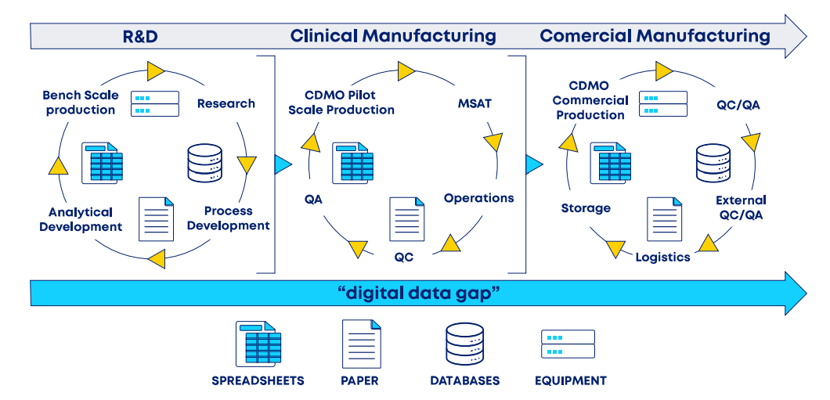
Fig. 5 – The “digital gap” during the product lifecycle
The Value in Digital Transformation for CDMOs
Many CDMOs are actively embracing Pharma 4.0 principles by integrating various technological pillars such as the Industrial Internet of Things, modelling and simulation, extended reality (XR), big data and analytics, artificial intelligence, cloud computing, blockchain, cybersecurity, industrial automation, and robotics into every phase of their manufacturing processes. The surge in the adoption of Pharma 4.0 technologies is driven by the escalating demands from both regulators and customers for transparency and integrity in manufacturing data.
Some Contract Manufacturing Organizations (CMOs) and Contract Development and Manufacturing Organizations (CDMOs) are taking a step further by initiating the transformation of their production floors into smart factories. They achieve this by deploying digital tools and systems early in the process development stage. The incorporation of these advanced digital technologies tools empowers companies seeking to establish an initial “single source of truth” and reflects a strategic move by CDMOs to stay ahead in meeting regulatory expectations and fulfilling customer requirements for a more transparent and technologically advanced manufacturing ecosystem.
Why is Data Transparency so Fundamental?
- Historically, when dealing with less intricate processes and products, the exchange of information between a sponsor and CDMO was simpler and less frequent.
- In today’s landscape, the volume of generated and collected data has grown exponentially, being captured at earlier stages in the product lifecycle.
- Sound business practices and regulatory requirements necessitate seamless and reliable data transparency throughout process development, tech transfer, and manufacturing.
- The objective is to establish an early “single source of data truth” in product development and to cultivate and sustain that knowledge throughout the entire product lifecycle.
- This approach ensures compliance for sponsors and CDMOs, contributing to a consistent end-to-end customer experience.
Data Fragmentation Needs to be Avoided!
- Effectively managing diverse data types—continuous, discrete, replicate, and especially paper—has consistently posed a challenge, even within captive manufacturing operations.
- The primary obstacle involves consolidating data from various proprietary systems and incorporating essential paper data related to development or batch information.
- A secondary challenge is preserving or providing the necessary context to ensure the reliability and analysis of data for creating the required quality, production, and regulatory reports.
- The complexity of these processes is heightened by the frequent generation of data across multiple sites, various companies, and differing levels of IT automation.
- While smaller drug companies and CDMOs may operate with less complex IT systems, a significant portion of the industry still relies extensively on paper for critical data.
- This reliance on paper makes access challenging for cross-functional teams.
CDMOs With Innovation in their DNA – Unlocking the Value of Data
- Apart from the varied nature of collected data, substantial differences persist in the state-of-the-art of CDMO data sharing.
- CDMOs considered their scale-up and manufacturing expertise as something to safeguard, often extending that protection to the associated generated data.
- Reports sent to sponsors typically contained only summary data, omitting many in-process parameters and critical quality attributes (CQAs). These reports were often transmitted in PDF format due to time and resource constraints, posing challenges for sponsors in terms of reusability and analysis of their data.
- As sponsor expectations rise, many CDMOs are endeavouring to broaden their data sharing practices.
- However, they are constrained by existing technology limitations and a reliance on paper records.
- The most forward-thinking CDMOs recognize that data integrity and transparency are not merely regulatory obligations but also represent good practices.
- These CDMOs actively collaborate with sponsors to implement new data sharing technologies that provide immediate business value for both parties.
Discovering New Opportunities – Value-Added Proposition
- New technologies bring forth fresh possibilities. Companies that are actively enhancing data transparency and fostering collaboration in their production processes are not only securing contracts of higher value but also earning acknowledgment as innovators in the industry, thereby expanding their sales pipeline.
- CDMOs are mitigating enterprise risks for their sponsors/customers by offering improved data visibility and reporting. Sponsors seeking strategic, long-term partnerships are inclined to favor CDMOs capable of delivering these advantageous features
How Digital Transformation Streamlines Technology Transfer Hurdles
First, there is resistance to the adoption of digital tools within the pharmaceutical and clinical provider sectors, primarily due to the widespread use of paper and manual processes in the industry. This first challenge becomes particularly pronounced when pharmaceutical companies aim to gain real-time insights into their supply chain.
A second challenge revolves around ensuring exceptional customer service experience by CDMOs, regardless of whether they are serving commercially-led pharmaceutical companies or clinical clients.
Supply chain issues constitute the third obstacle, accentuated during the COVID-19 pandemic. Similar to other industries, the pharmaceutical sector faces unprecedented shortages in the supply chain, impeding the swift delivery of products to the market. Recent industry research indicates that over half of companies lack end-to-end supply chain visibility, prompting them to enhance oversight to mitigate disruption risks.
A fourth hurdle to digitalization lies in the disconnection of real-time information prevalent in today’s pharma manufacturing and supply chain environments. Although CDMO clients desire the same real-time insights and data available to connected consumers, they often must rely on email, SMS, and scheduled calls to obtain the latest information on suppliers and production11.
Benefits
- Initially, embracing a digital-first approach signifies a dedication to strategic partnering and contributes to the cultivation of enduring relationships. By investing in data platforms, CDMOs can align with the requirements of their clients and acquire more profound insights. This, in turn, enables CDMOs to utilize customer feedback for the improvement and optimization of their processes.
- Another benefit is the capability to automate everyday processes. Digital platforms empower CDMOs to provide information directly to front-line supply chain and operations staff, enabling them to make timely decisions. This includes accessing real-time inventory status and being informed about the shipment and arrival details of their products.
- Digitalization also can build more data literacy and more data integrity in commercial pharmaceutical or clinical R&D organizations.
- Employing end-to-end integration is also a possibility: Currently, there is a lack of integration in the exchange of information between CDMOs, pharmaceutical partners, and the end customer. This disconnects results in operational inefficiencies and suboptimal execution. Digital transformation has the capacity to eliminate these silos through integration, granting users real-time access to current operational data. This enhanced visibility and data insights empower both CDMOs and partners to deliver high-level service to end customers.
- Adopting electronic batch records: In the pharmaceutical industry, records primarily exist in physical form, and it is often seen as one of the pinnacles for a CDMO with a digital focus. Nonetheless, this transformation is a time-consuming process, usually spanning multiple years.
- Integrating cybersecurity into the organizational culture is paramount, going beyond merely adding it as an IT component. CDMOs adopting a digital-first approach emphasize cyber awareness, recognizing that significant cyber threats often stem from behavior.
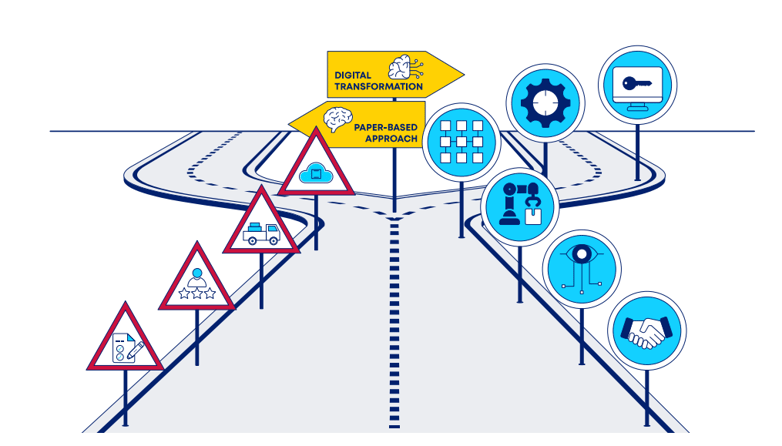
Fig. 7 – Hurdles and Benefits on the path towards Digital Transformations for CDMOs’
Assessing the Digital Capabilities of a CDMO
Identifying a CDMO with a digital transformation that is most suited for a pharmaceutical company’s project digital implementation can be a complex and lengthy task and companies might face challenges in determining the key criteria to consider when assessing a CDMO’s capabilities (see Table 1).
As a suggestion, here are some questions pharma companies might consider asking when assessing a CDMO’s stage in their digital transformation:
- Do they practice what they preach?
- How does the budget for Digitalization compare to the broader IT initiatives?
- What is the CDMO’s willingness to engage in co-innovation?
- What is the level of integration for digital transformation across the CDMO?
A CDMO that is savvy in digital transformation, particularly for technology transfer, should, and will, be able to provide answers to these typical questions.
Final Remarks
- In a digitized ecosystem of pharma manufacturing, integration of internal and external data sources enables technology transfer processes with real-time data access, monitoring and control.
- Expediting the process scale-up and industrialization through a well-devised technology transfer strategy, resulting in a notable reduction in Right-First-Time (RFT) and time-to-market, meeting market demands as well as expectations of both customers and regulators.
- Digital transformation of technology transfer activities facilitates information access in a user-friendly format within a collaborative setting, thereby diminishing the risk of failure arising from miscommunication, a common occurrence when relying on paper.
- Utilizing digital tools aids in prevention of data integrity issues, risk mitigation and enhances manufacturing management to prevent common batch failures.
- As important as the digital tools and platforms, is having a sponsor-CDMO partnership based on transparency and knowledge sharing.
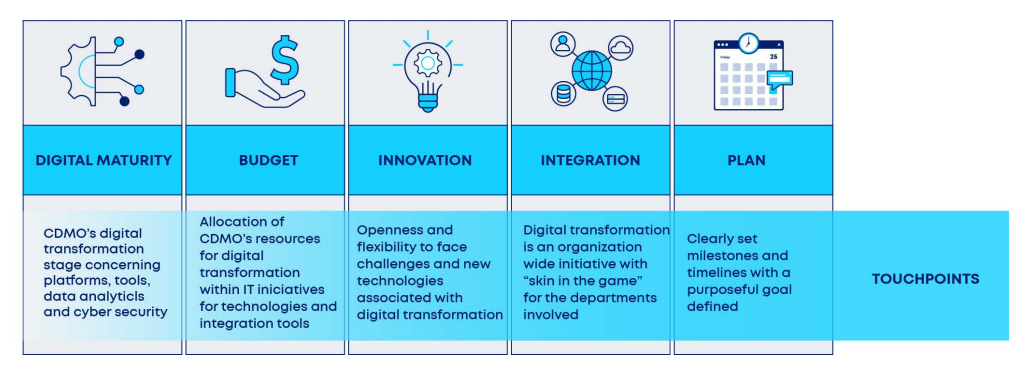
Table 1 – Touchpoints when assessing digital transformation maturity of a CDMO
References
-
Pharmaceutical CDMO Market Size, Share & Trends Analysis Report By Product (API, Drug Product), By Workflow (Clinical, Commercial), By Application (Oncology, Infectious Diseases, Neurological Disorders), By Region, And Segment Forecasts, 2024 - 2030.
-
A Billion Here, A Billion There: The Cost Of Making A Drug Revisited (2014, November 21).
-
High biologics demand spurs the need for greater contract manufacturing (2023, April 24).
-
Pharmaceutical CDMO Market (By Product: API, Drug Product; By Workflow: Clinical, Commercial; By Application: Oncology) - Global Industry Analysis, Size, Share, Growth, Trends, Revenue, Regional Outlook and Forecast 2023-2032 (2023, May).
-
Tech transfer: The starting point for full digital transformation (2019, Oct 10).
-
Addressing the Key Pitfalls Hindering Technology Transfer Success (2022, Nov 3).
-
Sofia Santos (2023, March 22), How to Accelerate Process Scale-up With Effective Tech.
-
Data Integrity in Pharmaceuticals: Empowering Trustworthy Decisions from Source to Success via Registration Dossier (2023, Aug 16).
-
The New CDMO Challenge: Data Access & Data Sharing (2019, March 4).
-
Digital Transformation: A Critical Component for CDMOs in the Pharmaceutical Industry.
Table of Contents


