A Roadmap to Digitalize your Control Strategy


Summary
This Industry Insight outlines how pharmaceutical companies can digitalize control strategies to improve process understanding, quality, and efficiency while meeting regulatory expectations. It frames control strategy development through ICH guidance and shows how QbD, PAT, and risk management shape more data-driven controls.
It then provides a practical, phased approach to digitalization, explains lifecycle change management steps, and describes how digital Continued Process Verification (CPV) supports monitoring, reporting, and data integrity using connected technologies such as analytics, AI/ML, IoT, and digital twins.
Key takeaways
- ICH Q10 defines a control strategy as planned controls based on product and process understanding; it can follow a Minimum approach (testing) or an Enhanced QbD approach (risk-based control, potential real-time release).
- A four-phase digitalization plan is proposed: assessment and planning, design and strategy development, implementation (pilots and scaling), and optimization with KPIs and CPV.
- A structured change management workflow (identify, assess impact, plan, execute, approve, review, implement) helps evolve the control strategy across the product lifecycle.
Who is this for
- Pharmaceutical Quality Assurance (QA) leaders and PQS owners
- CMC and process development scientists
- Manufacturing and MSAT (Manufacturing Science and Technology) teams
- Validation and computerized system validation (CSV) professionals
- CPV / process monitoring program owners and statisticians
- Quality risk management (QRM) practitioners
- Regulatory affairs and submission teams (CMC dossier contributors)
- Data integrity, digital transformation, and manufacturing IT leads
Download your Industry Insight
A Digital Roadmap for Your Control Strategy
For companies in the pharmaceutical industry, adopting digital transformation is key to staying competitive by enhancing product quality and process efficiency.
The transition to digital control strategies involves a fundamental change in how processes are understood and managed while adopting new technologies. Therefore, it requires effective knowledge management and a commitment to continuous improvement.
In an era when the ability to quickly adapt and respond to market demands is vital, digitalizing control strategies provides a competitive edge by offering a structured and data-driven approach to pharmaceutical manufacturing. It empowers pharmaceutical companies to consistently produce high-quality products, effectively mitigate risks, support continuous improvement, and promptly respond to regulatory requirements.
This Industry Insight provides a roadmap for digitalizing control strategies and the process to conduct change management while ensuring compliance with regulatory requirements.
Regulatory Overview
Understanding the regulatory landscape is crucial for successfully digitalizing control strategies in the pharmaceutical industry. Key regulatory concepts and guidelines provide the foundation for ensuring product quality and compliance throughout the manufacturing process.
ICH Q10 focuses on establishing and maintaining a state of control of process performance and product quality through knowledge management, quality risk management (QRM), and continuous improvement throughout the product lifecycle (ICH Q10, 2015).
How to Build a Control Strategy
According to ICH Q10, a control strategy is “a planned set of controls, derived from current product and process understanding, that assures process performance and product quality.” These controls can include parameters and attributes related to drug substance and drug product materials and components, facility and equipment operating conditions, in-process controls, finished product specifications, and the associated methods and frequency of monitoring and control.”
A control strategy is a requirement that plays a pivotal role in ensuring product quality while allowing for process consistency and optimization.
Moreover, its concept has evolved with the use of Quality by Design (QbD) and science- and risk-based approaches (ICH Q10, 2015; ICH Q8, 2009).
Derived from product and process knowledge, the control strategy is built throughout pharmaceutical development and becomes the reference for ensuring product quality. Quality risk management and knowledge management are enablers of the robustness of the control strategy, as supported by regulatory guidelines, particularly ICH Q10 (ICH Q10, 2015).
The regulatory framework allows for two approaches to control strategy: the Minimum Approach and the Enhanced (QbD) Approach. The Minimum Approach ensures quality by testing intermediates and final products, while the Enhanced Approach uses a risk-based control strategy for well understood products and processes, potentially enabling real-time release testing or reducing final product testing.
Understand Digital Control Strategies
Digital control strategies allow for a significant advancement in enhancing quality, efficiency, and compliance. Principles of QbD and Process Analytical Technology (PAT) establish a more proactive and data-driven framework to ensure robust and flexible control strategies and manufacturing processes.
Stage One: Fundamental Pillars of a Robust Control Strategy
A comprehensive pharmaceutical development approach generates an understanding of the process and the product, identifying and controlling sources of variability that can affect product quality. By understanding the impact of variability sources and integrating QRM, the need for extensive final product testing is reduced, and process control is improved. Therefore, consistent final product quality is ensured by enabling adaptive process control.
Aligning process development with QbD principles further enables the possibility of real-time release testing, replacing final product testing with online and inline testing, thus accelerating product release and enhancing stability testing.
Applying the QbD approach to the development of a pharmaceutical product requires several steps (Figure 1):
-
Definition of the Quality Target Product Profile (QTPP), where the drug’s intended use, as well as quality objectives such as clinical relevance, efficacy, and safety, are defined.
-
In the prior knowledge assessment phase, unit operations are defined, and an initial risk analysis is carried out to identify the critical quality attributes (CQAs) and the critical process parameters (CPPs).
-
This information feeds into process development, in which new scientific knowledge is armed with a solid scientific basis through QbD principles. The focus is always on ensuring the quality of the final product.
-
It is now possible to define the process design space, the multidimensional quality assurance space of the process, using PAT, QbD, and risk analysis tools.
-
Together these steps enable the establishment of the control strategy that should operate within the manufacturing routine. The focus is on continuous improvement and process robustness, which may trigger adjustments to the process.
-
Based on scientific product and process knowledge, as well as QRM methodologies, regulatory flexibility is gained.
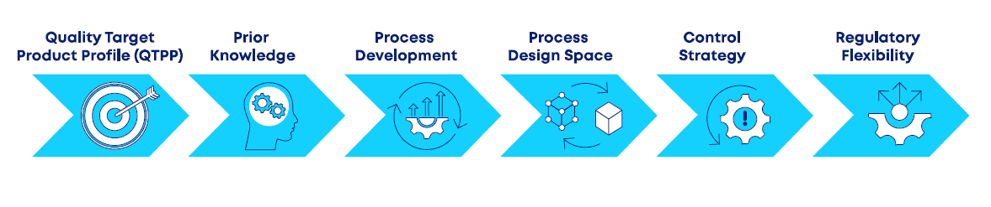
Figure 1 - Application of the QbD approach to the development of a pharmaceutical product.
Stage Two: Evolution of the Control Strategy During the Product Lifecycle
The control strategy is an essential part of the chemical, manufacturing, and controls (CMC) regulatory dossier and serves as the basis for commercial manufacturing to ensure product quality.
As explained in the previous section, the control strategy is built during the final stages of pharmaceutical development. However, it can evolve during the product lifecycle based on feedback from process monitoring and the change management process (Figure 2).
Risk assessments are conducted throughout the product lifecycle, including during control strategy development. Performing ongoing risk assessments is essential for developing and formalizing a control strategy that is acceptable to health authorities for the commercial phase process.
Stage Three: Implement a Continued Process Verification Program. Where We Are and Where We Want to Be
According to the FDA Process Validation: General Principles and Practices Guidance issued in 2011, Continued Process Verification (CPV) is described as “a system of systems for detecting unplanned departures from the process as designed” ... “providing continual assurance that the process remains in a state of control (the validated state) during commercial manufacture.” Thus, CPV acts as a “surveillance program,” bringing quality management and compliance to the pharmaceutical and biopharmaceutical industries (FDA, 2011).
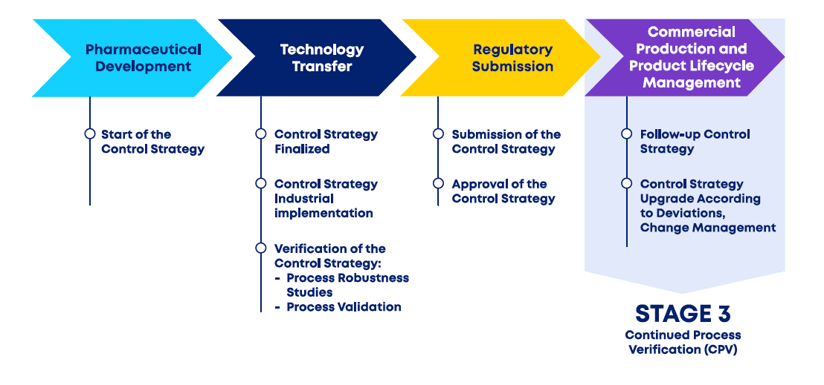
Figure 2 - Evolution of the control strategy during the product lifecycle.
A digital CPV plan is desirable, as performing manual CPV requires overcoming several challenges that can compromise its effectiveness, such as a high risk of data integrity failures and heavy reliance on manual activities. Consequently, excessive effort is spent on aggregating, organizing, and compiling data, rather than analyzing it and implementing improvements.
A digital and online CPV system aims to ensure data integrity through a scalable, simple, robust, and repeatable workflow. Additionally, it integrates systems for real-time data acquisition and storage, enabling the evaluation of the process state at any time through routine monitoring dashboards and the acceleration of periodic reporting.
To implement a digital CPV plan, it is necessary to ensure compliance with guidelines and recommendations such as GAMP 5 (ISPE, 2022), the FDA’s Process Validation Guidance (FDA, 2011), and PDA’s TR60 (PDA, 2013).
It is essential to move away from paper-based formats to fully embrace digital transition. Additionally, integrating data across platforms, rather than keeping it in isolated silos, allows for real-time trend assessment. This integration enhances data accessibility, supports timely decision-making, promotes collaboration, improves overall process understanding, and facilitates continuous improvement.
A digital and online CPV system improves operational effectiveness and regulatory adherence by promoting a proactive approach to problem-solving.
Step-by-Step Digitalization Process
Digitalizing control strategies in the pharmaceutical industry requires a structured and systematic approach that ensures every aspect of the manufacturing process is optimized and aligned with regulatory requirements. This can be achieved through a four-phase plan: Assessment and Planning, Design and Strategy Development, Implementation, and Optimization and Continuous Improvement.
By following this structured approach, pharmaceutical companies can enhance efficiency, ensure compliance, and maintain high-quality standards in their manufacturing processes through the digitalization of their control strategy. This step-by-step approach is briefly described below:
Step One: Assessment and Planning
-
Evaluate existing control systems and processes through adequate risk management.
-
Identify gaps and areas for improvement.
-
Assess current technology infrastructure.
-
Perform digital readiness assessment:
• Determine organizational readiness for digital transformation.
• Conduct stakeholder analysis to understand needs and expectations. -
Define clear objectives for digitalization, aligned with business and regulatory requirements.
Step Two: Design and Strategy Development
-
Research and select appropriate digital tools and technologies that can integrate with existing systems.
-
Develop a comprehensive data management strategy.
-
Ensure data integrity, security, and compliance.
-
Redesign the process as needed to leverage digital technologies to focus on automation and real-time monitoring.
Step Three: Implementation
-
Start with small-scale pilot projects to test digital solutions.
-
Monitor performance and gather feedback.
-
Based on pilot results, plan for scaling up digital initiatives.
-
Ensure robust change management practices.
-
Ensure cultural fit in the organization:
• Provide comprehensive training for staff on new digital tools and processes.
• Foster a culture of continuous learning and adaptation.
Step Four: Optimization and Continuous Improvement
-
Establish KPIs to monitor the performance of digital systems.
-
Implement CPV to ensure ongoing process control and quality.
-
Utilize digital tools for real-time data collection and analysis.
-
Create mechanisms for regular feedback and continuous improvement.
-
Adapt and refine digital strategies based on feedback and evolving industry standards.
Change Management of a Control Strategy
Implementing a digital control strategy in pharmaceutical manufacturing requires meticulous change management to ensure continuous improvement and robustness throughout the product’s lifecycle. This is a critical step in maintaining product quality and process integrity.
Change is inevitable throughout the product’s lifecycle and can occur proactively or reactively.
Proactive changes occur for commercial or technical reasons and are part of continuous improvement initiatives, such as sourcing from a new supplier, changing batch size, or incorporating new equipment.
Reactive changes are a result of corrective and preventive actions (CAPAs) in response to deviations, out-of-specification (OOS) results, or batch rejections.
To effectively manage these changes, the Pharmaceutical Quality System (PQS) must include a robust change management system. This system should leverage knowledge and QRM to ensure seamless adaptation and compliance while improving the control strategy to address product quality risks as a result of the change impact assessment.
Finally, continuous improvement should be part of daily operations, supported by data-driven insights like data trends and statistical process control. It should also foster a culture driven by people committed to improvement.
Change Management in the Context of ICH Q10 and ICH Q12
The change management process is a structured approach that ensures changes are implemented smoothly and successfully.
This roadmap outlines the key steps involved in managing changes within a control strategy (Figure 3):
-
Change Identification: This should answer the question, “What needs to be developed?” to identify the changes needed in the process. The identification should be based on prior knowledge, deviations, process improvements, or external requirements.
-
Evaluation of the Impact of Change: This should answer the questions, “What is the potential impact? How will it be measured? What data needs to be developed?” to assess the potential impact of the proposed change on the process, product quality, and compliance. This step involves defining statistical parameters, setting control limits, and estimating the risk of the proposed change.
-
Action Plan: Develop a detailed plan outlining the required steps to implement the proposed change.
-
Execution of Technical Steps: The steps outlined in the action plan should be carried out, ensuring that all technical requirements are met and that compliance with regulatory bodies is maintained.
-
Change Approval: Obtain approval for the change, considering that regulatory approval may be required depending on the nature of the change. Ensure that all documentation regarding results and approval for the proposed change is completed and compliant with regulatory bodies.
-
Efficacy Review: Review the efficacy of the change after implementation by monitoring key metrics and performance indicators to ensure the desired effect of the change without adverse effects.
-
Change Implementation: Implement the proposed change according to the action plan, ensuring all operating conditions meet specified requirements and that personnel are informed and trained to effectively adapt to and manage the new process.
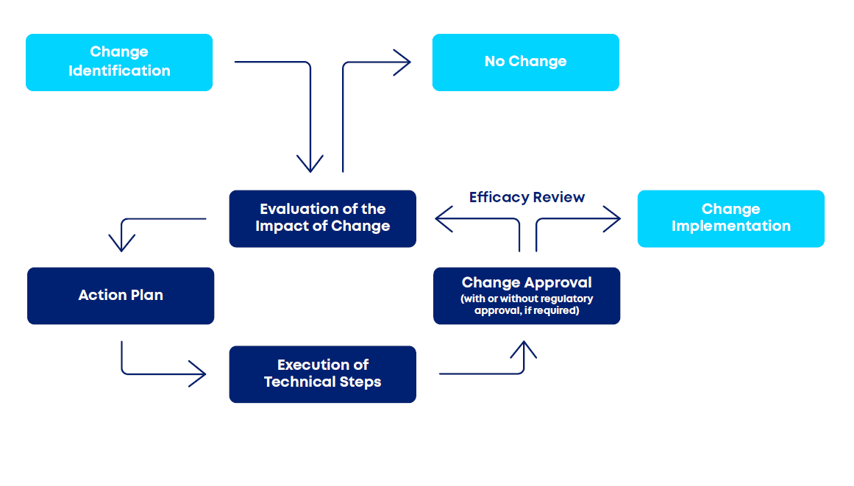
Figure 3 - Roadmap of a change management process.
All the steps in the change management process should be well documented to ensure transparency and traceability.
This structured approach to change management ensures that changes are systematically evaluated, implemented, and reviewed, thereby promoting continuous improvement while maintaining the integrity and quality of the manufacturing process.
Industry Trends
The push to adopt Artificial Intelligence (AI) and Machine Learning (ML) aligns with the evolving landscape of regulatory guidelines, reflecting a shift towards advanced technologies in drug development and manufacturing.
Digital Transformation Drivers
The need for digital transformation has taken on a more existential dimension in response to key trends shaping the life sciences landscape, including pricing pressures, a move towards prevention, diagnosis, effective medicines, rising development costs, competition, and growing patient centricity.
Digital transformation turns these challenges into competitive advantages by applying digital technologies to products or services. Consequently, it simplifies and enhances current business processes, facilitates modernization, improves efficiency, speeds up processing times, reduces errors and costs, and improves profitability while offering a better user experience and customer satisfaction.
Validation 4.0 places data at the core of validation and decision-making, shifting the focus to managing data that supports GxP decisions through a QbD perspective. This approach promotes the early definition and use of data to ensure desired product quality attributes. Consequently, validation evolves from qualification testing to real-time verification of product quality and continuous assurance that controls are in place and operating correctly. Digital tools enable instantaneous reporting and notifications, providing primary evidence that the process is maintained in a state of control (Vuolo & Margetts, 2021).
Pharma 4.0, derived from Industry 4.0 and introduced in 2017 by ISPE, describes the integration of advanced digital technologies within the pharmaceutical industry, such as Big Data Analytics, AI, and Internet of Things (IoT) using Smart Machines (Figure 4).
This integration fosters innovation by simplifying compliance, achieving cost savings, and reducing downtime and waste. Moreover, the global Pharma 4.0 market is expected to reach $62.7 billion by 2032 (Boel, 2023).
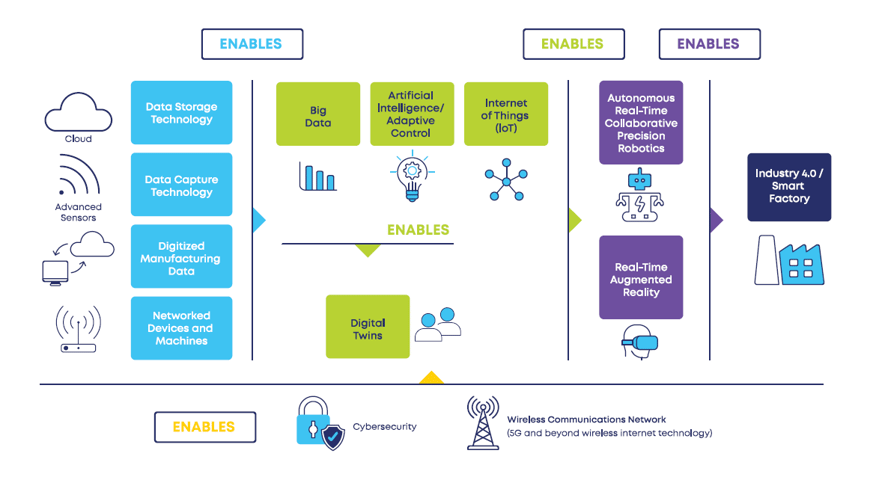
Figure 4 - Pharma 4.0 overview.
Zooming in on the technical aspects, the key technologies contributing to the development of an integrated and autonomous manufacturing system include:
• Cloud-based Computing and Storage allow pharmaceutical companies to store and manage various data types. It is the foundation of advanced technologies like AI, ML, and IoT. Authorized devices with an internet connection can access and analyze large amounts of data in real time. In Pharma 4.0, cloud storage is usually protected with cybersecurity measures to prevent unauthorized access or breaches.
• Data Analytics play a crucial role as automation and digitalization generate vast amounts of data during manufacturing. To handle this data influx, increased storage capacities are necessary. Big Data Analytics process and analyze these large amounts of data to extract insights that can optimize the manufacturing process.
• Artificial Intelligence (AI) simulates human intelligence in machines programmed to think and learn like humans. AI enhances decision-making through advanced analytics, predictive modeling, and automation. It excels in analyzing vast datasets, identifying patterns, and making predictions, making it a powerful tool for risk assessment and management.
Machine Learning (ML), a subset of AI, focuses on developing algorithms that enable systems to learn from data and improve their performance over time. The impact of AI and ML within ICH Q9(R1) is transformative, aligning with systematic risk management principles and empowering organizations to proactively ensure product quality and patient safety.
Artificial Intelligence and ML tools can develop decision support systems that provide real-time risk assessment and decision-making capabilities. These systems integrate data from various sources to evaluate risks, prioritize actions, and recommend risk mitigation strategies. However, human expertise and judgment should always be involved in the decision-making process.
Using AI/ML in real-time monitoring transforms data into actionable insights, ensuring product quality and compliance with unprecedented precision and efficiency.
• Industrial Internet of Things (IoT) describes the network of physical objects equipped with sensors, software, and other technologies that connect and exchange data with other devices and systems over the internet. These IoT devices monitor and control critical aspects of the manufacturing process, such as temperature, humidity, pressure, and many others. IoT enables real-time data collection, which AI algorithms (relying heavily on data digitization) analyze to detect potential issues proactively.
• Digital Twin Technology is “defined as a digital copy of a physical asset, collecting real-time data from the asset and deriving information not being measured directly in the hardware.”
A digital twin is a dynamic simulation of a living model that continuously updates and changes synchronously with its physical counterpart, existing side by side, sharing all inputs and operations using real-time data communications and information transfer.
Acting as a mirror of the real world, digital twins provide a platform for simulating scenarios, conducting “what if” analyses, and evaluating the impact of changes before implementing them in the physical environment, optimizing physical manufacturing systems and processes. This digital simulation capability enhances process understanding, facilitates process improvements, and reduces risks. Therefore, it plays a pivotal role in the vision of smart manufacturing as it enables a detailed visualization of the manufacturing process from single components to the whole assembly.
By incorporating these digital elements and threading these digital tools together, it is possible to build an enhanced control strategy that is data-driven, proactive, and optimized. Manufacturers can gain deeper insights, make informed decisions, improve process efficiency, and ensure consistent product quality while complying with regulatory requirements.
• Augmented reality-based systems, still in the early stages, offer diverse functionalities, such as delivering repair instructions via mobile devices. In the future, these systems will provide real-time information, enhancing decision-making processes and optimizing work procedures.
• Cybersecurity is the integration of standard communication protocols and enhanced connectivity with Industry 4.0. The need to protect critical data from cybersecurity risks has increased. Consequently, it has become indispensable to ensure reliable and secure communications and management channels.
Takeaways and Final Remarks
Digitalization of a control strategy offers numerous advantages:
Regulatory Compliance
• The concepts of development by QbD, process development and risk management (ICH Q8, ICH Q9), and product lifecycle management (ICH Q12) are key components in defining a product control strategy. Implementing digital tools and automatic validation can guarantee full compliance with ICH Q10 guidelines.
• The control strategy is a pivotal element in the construction of a CPV plan.
Holistic Control Strategy
• The control strategy involves a set of control elements that ultimately result in much higher levels of operational excellence: consistency, performance, and quality.
• The control strategy is evolutionary. It can be changed and improved throughout the product lifecycle by utilizing knowledge management and risk management.
Process Optimization
• Time and cost savings are achieved through more efficient and streamlined processes.
• Data is safely recorded and can be translated into knowledge for troubleshooting and future use. A digital approach allows for decreased risk levels, increased quality levels, and a reduced time to market.
• The use of structured datasets and automated compliance tools reduces manual efforts, enabling faster time to market.
Get Ready for the Digital Revolution
• The challenges of building and running a manual CPV program can be overcome by a digital approach with substantial productivity and scalability gains.
• Embracing digital transformation in the control strategy helps the industry stay competitive, responsive to market demands, and capable of delivering safe and effective products to patients.
• The holistic approach ensures a higher level of product quality, leading to improved patient safety and satisfaction.
References
• Boel, J. (2023). Pharma 4.0: The future of pharmaceutical manufacturing. DBL Group.
• International Council for Harmonisation of Technical Requirements for Pharmaceuticals for Human Use (ICH). (2015). Pharmaceutical quality system: ICH Q10.
• International Council for Harmonisation of Technical Requirements for Pharmaceuticals for Human Use (ICH). (2009). Pharmaceutical development: ICH Q8(R2).
• International Society for Pharmaceutical Engineering. (2022). GAMP 5: A risk-based approach to compliant GxP computerized systems (2nd ed.). ISPE.
• Innopharma Technology. (n.d.). To industry 4.0 and beyond. Retrieved May 23, 2024.
• Kidwai, A. (2021). The nine pillars of Industry 4.0: Technological advancements. Polestar. Retrieved May 24, 2024.
• Parenteral Drug Association. 2013. Technical Report No. 60 (TR60) Process Validation: A Lifecycle Approach. PDA.
• U.S. Food and Drug Administration. (2011). Guidance for industry: Process validation: General principles and practices.
• Vuolo, M., & Margetts, D. (2021). Breaking with tradition: Laying the foundation for validation 4.0. ISPE.
Table of Contents


