
A batch is complete. The equipment is empty, and cleaning has been scheduled. Then another changeover takes priority, the cleaning crew is reassigned, and several hours pass.
No deviation has occurred. No alarm has sounded. Yet the condition of the residue may already be changing. Material that is easy to remove immediately after production can dry, harden, settle, or move into difficult-to-clean areas. Once cleaning is complete, the concern changes. Instead of residue removal, the focus shifts to maintaining the validated clean state while equipment waits for its next use. Moisture, environmental exposure, handling, assembly, or storage conditions can all affect that state.
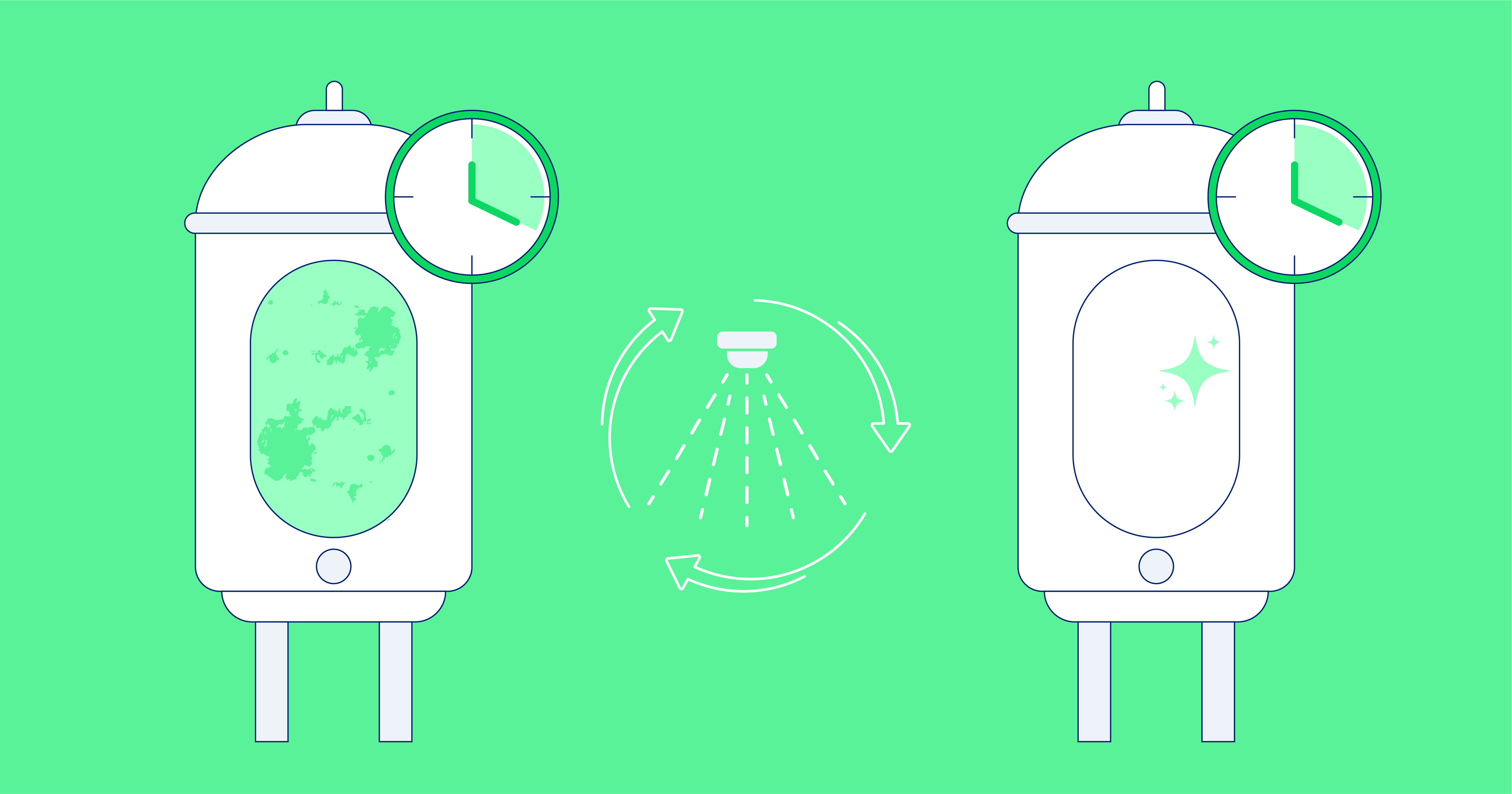
These two equipment states are managed through dirty hold time (DHT) and clean hold time (CHT). Dirty hold time is the period between the end of manufacturing and the start of cleaning. Clean hold time is the period between cleaning and the equipment’s next use.
The definitions sound simple. Applying them consistently is difficult.
A defensible hold-time strategy must do more than assign two maximum durations. It must define the events that start and stop each clock, the equipment condition covered by the limit, the products and cleaning processes represented by the study, and the response required when an approved limit is exceeded.
Two Clocks That Protect Different Equipment States
Dirty hold time addresses whether the approved procedure can still remove residue after equipment has remained soiled for a defined period. During that time, residue may dry, lose solubility, or settle around valves, hoses, and low points, such as vessel bottoms, drain outlets, and pipelines.
Clean hold time addresses whether cleaned equipment remains suitable for use until the next manufacturing operation. During storage, retained moisture, room exposure, assembly, or handling may affect the validated clean state.
EU GMP Annex 15 and the PIC/S Guide to Good Manufacturing Practice for Medicinal Products, Annex 15, Section 10.8, identify both periods when defining cleaning hold times. Each site must establish limits appropriate for its products, equipment, processes, and storage conditions.
Define the Clock Before Validating the Duration
Terms such as “end of manufacturing” and “cleaning complete” may refer to different operational events. Manufacturing may end with final product discharge or after transfer activities are complete. Likewise, cleaning may be considered complete at the end of the cleaning cycle, after drying, or only after quality assurance (QA) release.
If validation studies use one event while routine operations record another, equipment may appear to remain within an approved hold time even after the validated limit has been exceeded.
Validation protocols should define the start and stop events, equipment condition, and responsibility for recording timestamps. Those definitions should remain consistent across standard operating procedures (SOPs), batch documentation, and equipment records.
Design Studies Around the Actual Risk
A dirty hold-time study should challenge the longest anticipated soiled period under representative operating conditions. The product with the lowest carryover limit is not always the most challenging. A formulation with a less restrictive limit may dry into a persistent film, become sticky, or lose solubility, making it more difficult to remove. Worst-case selection should consider drying behavior, equipment geometry, surface materials, drainability, and the amount of manual cleaning required. Equipment should remain in the same condition encountered during routine operations, then be cleaned using the approved procedure without additional, uncontrolled cleaning steps.
A clean hold-time study should also clearly define what constitutes the clean state at time zero. The hold-time clock may begin immediately after cleaning or only after drainage, drying, inspection, assembly, and closure. Storage and protection conditions should reflect routine operations.
Testing should align with the most likely failure mode. Moisture or microbial assessment may be appropriate for wet or exposed equipment, while extensive microbiological testing may provide limited value for dry, closed equipment stored for short periods. The protocol must also specify whether the hold ends at first product contact or after a required pre-use activity.
Choose Separate Worst Cases Where Appropriate
Grouping and bracketing can reduce the number of studies required, but dirty and clean hold times may require different representative cases.
A product that forms a persistent residue may present the greatest dirty hold-time challenge, while equipment with poor drainage or frequent handling may represent the greatest clean hold-time challenge. Acceptance criteria and sampling locations should reflect those different risks.
Keep the Validated Maximum Out of the Routine Schedule
A validated hold-time limit should not become the routine production target. Instead, many organizations distinguish between four different operating thresholds:
-
Studied duration: The longest period directly evaluated during validation.
-
Approved maximum: The longest period permitted by procedure.
-
Routine target: The scheduling objective used during normal operations.
-
Alert point: The time at which responsible personnel are notified before the approved limit is reached.
For example, equipment successfully studied for 72 hours might receive an approved maximum hold time of 60 hours, be routinely scheduled for cleaning within 36 hours, and generate an alert after 48 hours. The same approach can be applied to clean hold time.
Procedures should also define the required response when a hold time expires. Dirty equipment may require restricted status, recovery cleaning, inspection, testing, or technical assessment. Clean equipment may require re-cleaning, re-sanitization, inspection, testing, or another approved pre-use activity.
A successful investigation following a single hold-time excursion may support disposition of that specific event, but it should not automatically justify extending the validated limit. Repeated excursions may instead indicate unrealistic scheduling targets, resource constraints, or an outdated strategy that should be reassessed.
Reassess the Strategy When Conditions Change
Changes to formulations, batches, replacement parts, cleaning chemistry, or storage conditions can affect the original validation rationale. Even when a new validation study is unnecessary, these changes should trigger a documented assessment. Trending information—including hold-time data, repeat cleaning events, microbial results, residue trends, and excursions—can help determine whether approved limits continue to reflect actual operating conditions.
Where Digital Cleaning Validation Management Helps
A digital system cannot determine the correct worst case or replace judgment. It can, however, connect approved limits to the relevant equipment, products, cleaning processes, studies, and storage conditions.
ValGenesis iClean™ supports digital management of dirty and clean hold times by maintaining timestamps, equipment status, alerts, and change workflows that help keep approved limits connected to their supporting rationale and required actions.
Explore these related resources to learn more about designing risk-based cleaning validation programs that support compliance and operational performance.


Table of Contents


Related Blog Posts
.webp)