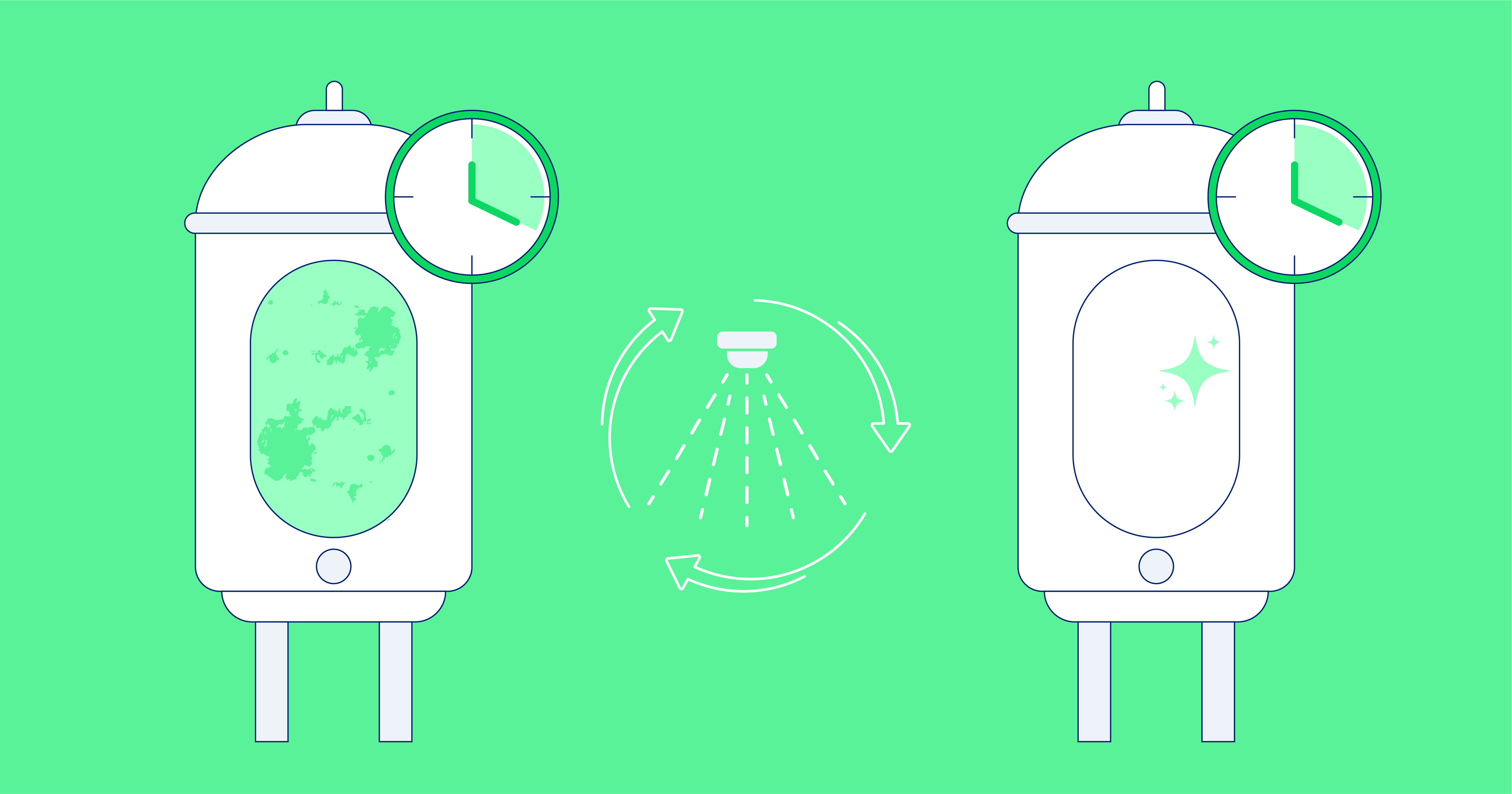

Cleaning validation limits were designed to reduce risk by controlling carryover and protecting both patient safety and product quality. But as product portfolios become more potent, shared equipment strategies become more complex, and manufacturing changeovers accelerate, limit-setting has also become harder to govern, verify, and apply consistently in practice.
On paper, cleaning validation limits can appear straightforward. In practice, the discussion often changes once teams move from a worksheet to an actual changeover, and “the limit” stops meaning one thing. In many programs, that single phrase gets used for three different checks built for three different risks: HBEL/MACO to control patient exposure, 10 ppm as a long-standing product-quality yardstick, and "visually clean" as the baseline expectation at the equipment surface.
The problem isn’t that teams use more than one criterion; it’s that those criteria are often treated as interchangeable — or selectively applied depending on what is easiest to justify, verify, or defend during review. Over time, the ambiguity can create inconsistencies across product sites, methods, and inspection practices, making cleaning validation harder to govern and more difficult to scale consistently.
Keeping the role of each criterion clear up front makes everything downstream more manageable — acceptance criteria, sampling strategy, method capability, the rationale reviewers need to see, and ongoing change control.
Stage-Setting: What a Cleaning Limit is Doing
A cleaning limit is fundamentally a translation exercise. The process starts with a risk question (patient exposure, product purity, or cleanliness expectations), then translates that risk into a measurable acceptance criterion tied to sampling and analytical capability.
One limit is rarely enough on its own. Cleaning programs are often expected to support toxicology-based exposure control, product-quality protection, equipment cleanliness expectations, and analytical method capabilities simultaneously.
A more defensible approach is usually a combination of criteria, each addressing a different failure mode, so a single number does not have to carry every justification.
Three Different Limits for Three Different Risks
#1. HBEL/MACO: The patient-safety limit
HBEL (health-based exposure limit) — often expressed as a PDE (permitted daily exposure) or ADE (acceptable daily exposure) — is a toxicology-based threshold used to set carryover limits for shared equipment. In many modern programs, HBEL/PDE serves as the primary basis for patient-safety carryover limits.
MACO (maximum allowable carryover) operationalizes HBEL by converting an exposure threshold into an allowable carryover limit based on defined assumptions (e.g., route, batch size, maximum daily dose, shared surface area, and more). The calculation is relatively straightforward; the harder part is managing the inputs and assumptions so that limits stay consistent over time.
What HBEL/MACO is good at:
-
Providing a consistent, science-based basis for limits across a portfolio
-
Supporting low-dose, high-potency, or sensitizing compounds
-
Informing shared equipment decisions
-
Supporting worst-case rationale
-
Producing traceable, reviewable justification
-
Helping prioritize control strategy and verification focus
Where teams get stuck:
-
Missing or outdated toxicology inputs
-
Inconsistent assumptions across sites/products (making MACOs hard to compare)
-
Limits that can’t be verified because LOQ (limit of quantitation) or sampling recovery cannot support them
#2. 10 ppm: The product-quality screen
The 10-ppm criterion is a commonly used screening limit for product quality and purity concerns, typically intended to keep carryover into the next product at a very low level. Many programs still use it as an additional check, but it is not a toxicology-based patient exposure limit.
What 10 ppm is good at:
-
A simple, conservative screen for purity-related carryover concerns
-
A practical cross-check alongside HBEL/MACO in some product families
-
A consistent, easy-to-communicate threshold for routine carryover screening within a defined product family
Where it can fail if used alone:
-
It can be too permissive for highly potent or toxic compounds
-
It can be overly restrictive (and operationally unrealistic) for low-risk scenarios
-
It does not directly reflect patient exposure risk
-
10 ppm is often most useful when it sits alongside other criteria, with a clear rationale for what it’s being used to address.
#3. "Visually clean": The GMP hygiene check
“Visually clean” is a qualitative criterion: no visible residues, films, or particles under defined viewing conditions. It’s valuable as a front-line check for obvious residue, but it isn’t designed to stand on its own as evidence of low-level chemical carryover control.
What visually clean is good at:
-
Flagging visible residue that targeted sampling may not capture (especially in hard-to-swab areas)
-
Setting consistent expectations for execution on the floor
Where it can fall short if used as “the limit”:
-
Visibility isn’t a limit: residues can be invisible yet still exceed mg/swab or mg/cm² acceptance criteria.
-
Risk hides in hard-to-reach spots: crevices, gaskets, valves, spray devices, and shadowed areas can retain residue even when they look clean.
-
“Clean” appearance shifts: surface finish and condition (rouging, scratches, staining, spotting) can mask residue or trigger false calls.
-
Not quantitative: “looks clean” can’t be tied to recovery, LOQ, calculated limits, or meaningful trending.
-
Consistency depends on the conditions: lighting, distance, angle, inspection time, and how residue vs. acceptable staining is defined.
To make “visually clean” consistent and repeatable, define inspection conditions (lighting, distance, angle, time) and training expectations, and position it as a complementary criterion alongside measurable residue limits.
Using All Three as Part of the Same Control Strategy
The easiest way to create confusion in a cleaning validation program is to expect one limit to answer every risk question. In practice, the three criteria serve different purposes: HBEL/MACO addresses patient exposure risk, 10 ppm addresses product-quality concerns, and "visually clean" confirms that obvious residue has been removed and basic GMP cleanliness expectations have been met.
The challenge is not deciding which approach is "right,” but defining how the criteria work together within the same program.
In many cases, the most defensible approach is to apply the most stringent applicable criterion — or a clearly justified subset — and then confirm that the sampling strategy and analytical method can support it through recovery, LOQ, and representative sampling capability.
That last point matters more than it sometimes appears on paper. One of the most common failure points in real cleaning validation programs is setting a patient-safety MACO that the analytical method cannot reliably measure, then informally relying on a looser surrogate limit without clearly documenting the rationale or tradeoff.
Where Limit-Setting Breaks Down in Real Programs
Most cleaning validation programs do not fail because teams misunderstand the equations. Problems typically emerge when limits become disconnected from the operational context that originally justified them.
One common issue is treating limits as fixed values after they are initially calculated, even though products, batch sizes, toxicity inputs, and equipment trains continue to evolve. HBEL-based limits are generally more effective when managed as living program data rather than static spreadsheet outputs.
Programs also become more difficult to review when “MACO” is reduced to a standalone number with limited visibility into the assumptions behind it. If the HBEL source, next-product parameters, surface area model, recovery factors, or other key inputs are not readily accessible, reviewers often end up reconstructing the rationale before determining whether the limit still applies.
Visual inspection introduces a different type of variability. Without clearly defined viewing conditions and training expectations, interpretations of “visually clean” can differ significantly based on lighting, angle, distance, and individual judgment. The criterion only becomes repeatable when those conditions are standardized and consistently applied.
Practical Takeaway: Building a Limit Strategy That Holds Up in Practice
In most programs, the goal is not to choose a single “correct” limit. The goal is to define how different criteria work together to control different types of risk while remaining practical to verify, review, and maintain over time.
When patient exposure is the primary concern, HBEL/PDE often provides the toxicology-based foundation for the cleaning limit, particularly for low-dose, high-potency, toxic, or sensitizing compounds. Many programs also use 10 ppm as an additional product-quality screen where it fits the product family and the specific changeover scenario.
“Visually clean” works best as a defined execution check rather than a standalone carryover limit. The value comes from applying consistent viewing conditions, inspection practices, and training expectations so the outcome remains repeatable across operators and sites.
Just as important, the acceptance approach has to be verifiable in the real sampling model. Recovery, LOQ, and representative sampling capability all determine whether a limit can actually be demonstrated in practice rather than merely documented on paper.
Finally, cleaning limits stay reliable when the underlying assumptions remain visible and current. Managing inputs such as HBEL sources, next-product assumptions, batch sizes, shared surface models, and method performance under change control helps keep limits aligned as products, equipment trains, and manufacturing conditions evolve. It’s the inputs — not the number — that usually change first.
Want to learn more? The resources below provide additional guidance on exposure-based limits, inspection strategy, and building a more defensible cleaning validation program.

Table of Contents


Related Blog Posts

.webp)