Content Video
Shift from Reactive to Proactive: A 2-Minute Intro to Smarter CPV
[00:03] Shift from Reactive to Proactive: A 2-Minute Intro to Smarter CPV.
[00:07] In biopharmaceutical manufacturing, when systems are disconnected and data is scattered, real-time visibility disappears, delays multiply, progress slows down, and every decision carries greater risk.
[00:18] And when legacy tools, static documents and manual reporting are still the norm, time and resources are wasted, while errors and inconsistencies increase and get harder to catch.
[00:29] The result? Teams are left without clear, timely insight into their processes, and by the time issues surface, it is often too late.
[00:38] To make things worse, the inconsistent application of methodologies across products and plants creates traceability gaps and compliance vulnerabilities.
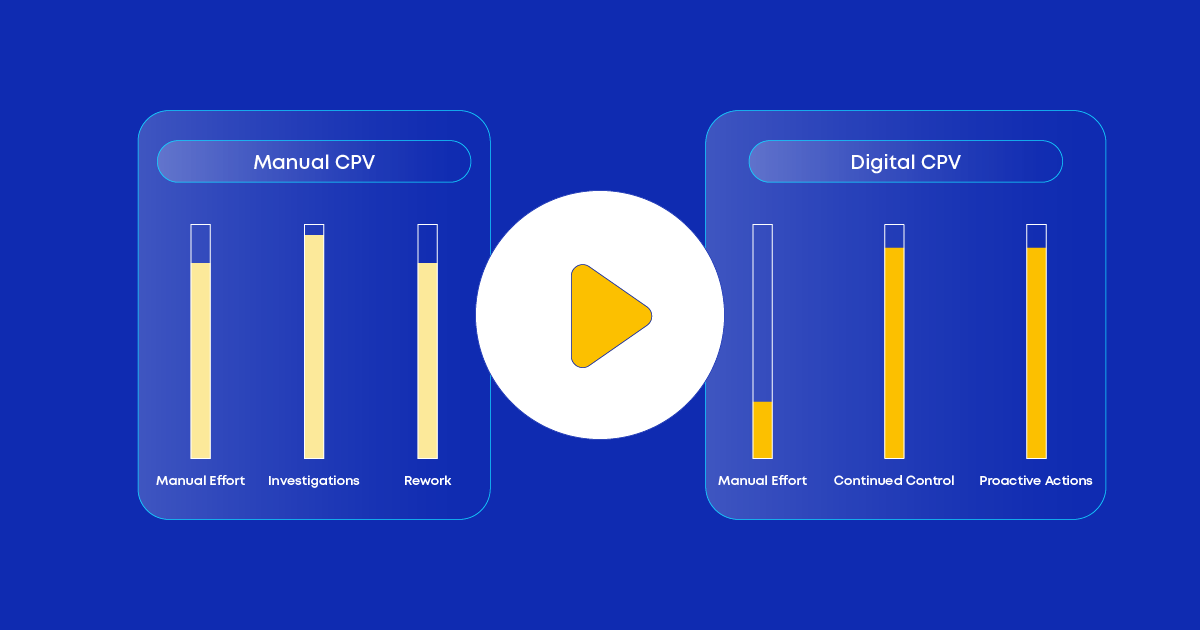
[00:46] Those are common challenges of a manual CPV program, where too much time is wasted collecting and compiling data instead of analyzing it and extracting insights to drive smarter decisions. This lack of focus on real-time analysis results in poor visibility, forcing teams into reactive mode.
[01:05] What if your CPV program could be smarter and fully digitalized? A connected, digital approach that transforms raw data into insights, ensuring continuous control and confidence.
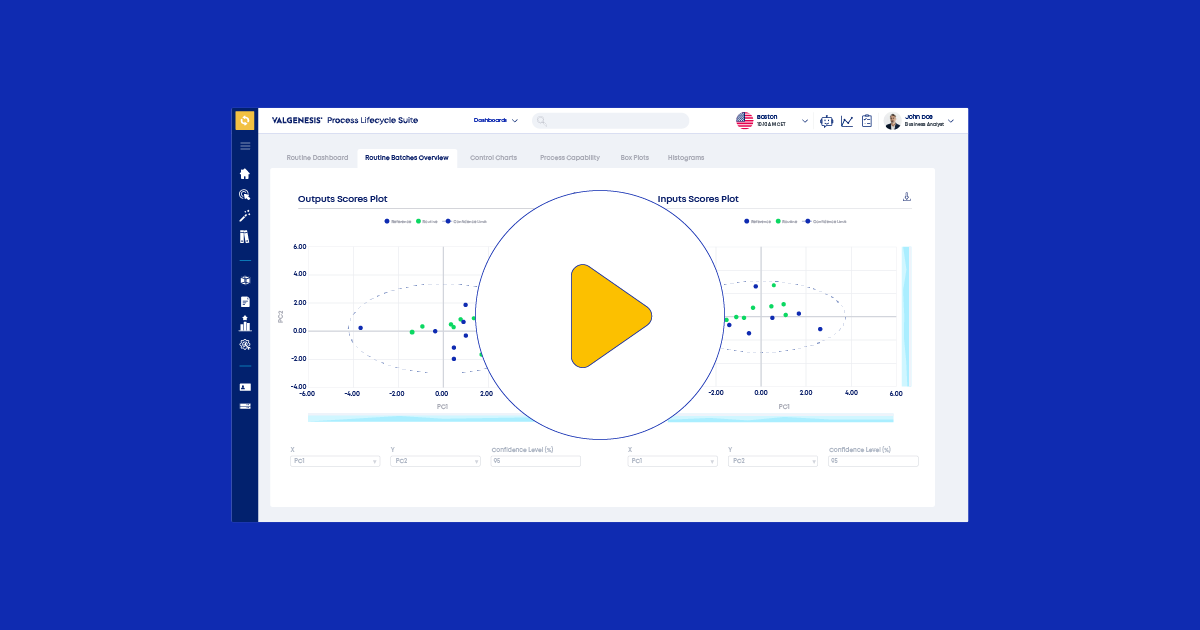
[01:15] This shift is more than a nice-to-have! It’s becoming essential as regulators are moving away from static documentation toward data-driven oversight. A smarter CPV system brings everything together: integrated data systems, real-time data trending, and automated workflows, ensuring traceability, consistency, and driving continuous improvement.
[01:33] The value of digital CPV goes far beyond efficiency. By enabling real-time visibility and centralized knowledge, it transforms CPV from a reactive task into a proactive strategy, improving compliance, accelerating decision-making, and strengthening process understanding across the organization.
[01:48] It’s time to move from reactive to proactive. Discover how digital, intelligent CPV can transform your quality strategy. Visit our website to learn more!
Summary
Disconnected systems and scattered data make it hard to see process performance in real time. Manual reporting and static documents add delays, errors, and late issue detection.
A fully digital CPV program connects data, trends performance in real time, and automates workflows for traceability and consistency. That shifts CPV toward proactive control and faster decisions.
Key takeaways
- Disconnected data and manual reporting reduce visibility and push CPV teams into reactive firefighting.
- Inconsistent methods across products and plants create traceability gaps and compliance risk.
- Digital CPV connects systems, enables real-time trending, and automates workflows to support continuous control.
Who is this for
- Manufacturing and operations leaders in biopharma
- Process engineers and MSAT teams
- Quality assurance and compliance managers
- CPV program owners and continuous improvement leads
- Data and digital transformation leaders in regulated manufacturing
- Site and plant leadership responsible for performance and oversight
Relevant entities and links
- FDA process validation guidance (process validation lifecycle, including ongoing verification): https://www.fda.gov/regulatory-information/search-fda-guidance-documents/process-validation-general-principles-and-practices
- ICH Q10 Pharmaceutical Quality System (lifecycle approach and continual improvement): https://www.ich.org/page/quality-guidelines
- ICH Q8, Q9, Q11 guideline set (quality by design and quality risk management references): https://www.ich.org/page/quality-guidelines
- 21 CFR Part 11 (electronic records and electronic signatures): https://www.ecfr.gov/current/title-21/chapter-I/subchapter-A/part-11
- EU GMP Annex 11 (computerized systems): https://health.ec.europa.eu/medicinal-products/eudralex/eudralex-volume-4_en
- ALCOA+ data integrity principles overview: https://www.who.int/publications/i/item/9789240012374