Content Video
Manual CPV vs Digital CPV: Why Should you Upgrade?
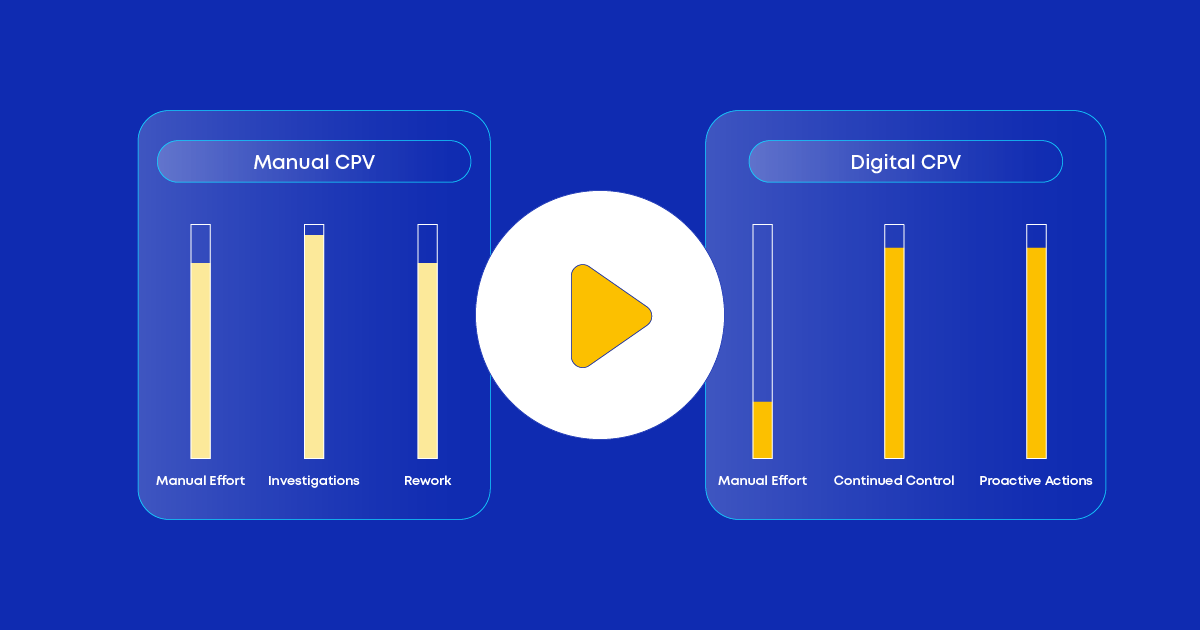
00:03 Should you switch from Manual to Digital Continued Process Verification? Maybe! Let’s compare the key differences.
00:10 Manual CPV relies on human observation and experience, making it time-consuming and resource-intensive.
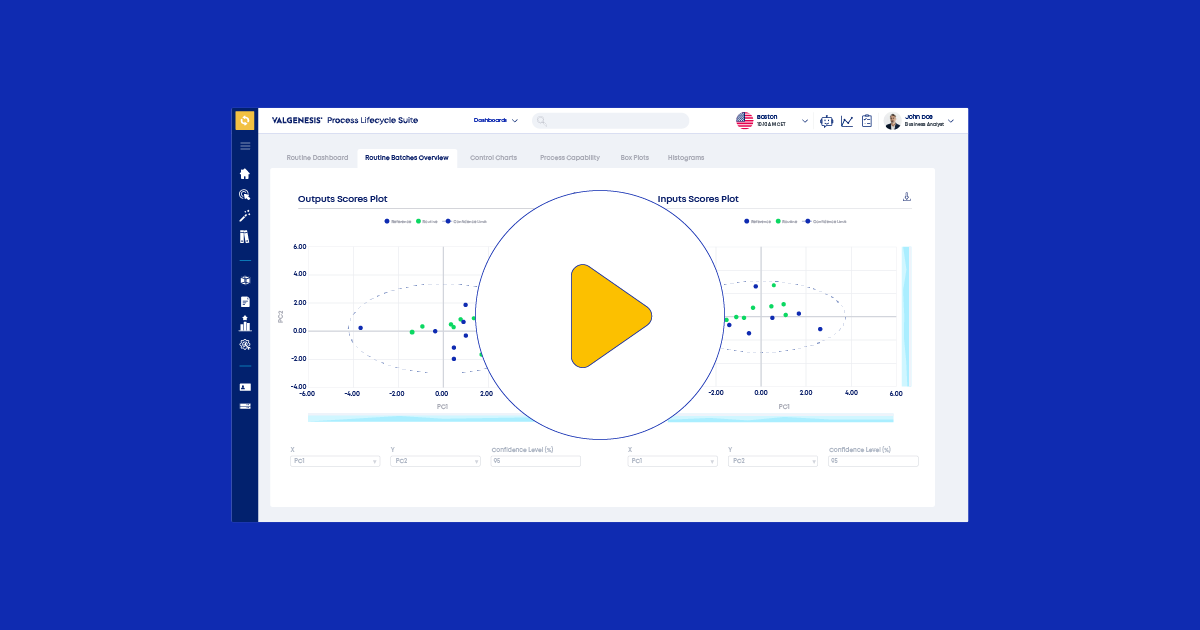
00:16 Digital CPV streamlines the process with automated data collection and multivariate analysis, reducing subjectivity in risk assessments.
00:24 Manual CPV relies on full-scale batches, limiting flexibility and focusing only on optimization and reproducibility.
00:31 Digital CPV runs continuously, adapts within the design space, and strengthens control strategies for a more robust process.
00:38 But what’s the biggest difference between these approaches?
00:42 Manual CPV relies on batch-based data, restricting quality control to intermediate checkpoints and end testing.
00:49 Digital CPV provides real-time, relevant data, ensuring optimal product performance through proactive quality management.
00:55 So, why stick with manual CPV when it’s time-consuming, reactive, and only alerts you to problems after they occur?
01:04 Not exactly ideal, right?
01:06 Digital CPV changes everything. Automatic, predictive, and proactive - it detects potential issues early, giving you time to act long before they escalate.
01:15 Want to know how digital CPV is helping companies avoid the pitfalls of APQRs? Check out our industry insight on avoiding the pitfalls of APQR to find out!
00:10 Manual CPV relies on human observation and experience, making it time-consuming and resource-intensive.
00:16 Digital CPV streamlines the process with automated data collection and multivariate analysis, reducing subjectivity in risk assessments.
00:24 Manual CPV relies on full-scale batches, limiting flexibility and focusing only on optimization and reproducibility.
00:31 Digital CPV runs continuously, adapts within the design space, and strengthens control strategies for a more robust process.
00:38 But what’s the biggest difference between these approaches?
00:42 Manual CPV relies on batch-based data, restricting quality control to intermediate checkpoints and end testing.
00:49 Digital CPV provides real-time, relevant data, ensuring optimal product performance through proactive quality management.
00:55 So, why stick with manual CPV when it’s time-consuming, reactive, and only alerts you to problems after they occur?
01:04 Not exactly ideal, right?
01:06 Digital CPV changes everything. Automatic, predictive, and proactive - it detects potential issues early, giving you time to act long before they escalate.
01:15 Want to know how digital CPV is helping companies avoid the pitfalls of APQRs? Check out our industry insight on avoiding the pitfalls of APQR to find out!
Summary
Manual continued process verification depends on human observation and batch data, so checks often happen at intermediate points and end testing. It can be slow and resource heavy.
Digital CPV automates data capture and multivariate analysis, runs continuously inside the design space, and supports proactive quality actions. It flags trends early instead of reacting after APQRs.
Key takeaways
- Manual CPV uses batch-based data and full-scale batches, which limits flexibility and can delay detection of issues.
- Digital CPV uses automated data collection and multivariate analysis to reduce subjectivity in risk assessment.
- Continuous monitoring supports stronger control strategies and earlier action, instead of reacting after problems occur.
Who is this for
- Manufacturing science and technology (MSAT) leads
- Process engineers and process development scientists
- Quality assurance (QA) managers and quality systems owners
- Validation engineers and process validation managers
- Manufacturing operations and production leaders
- Data scientists, statisticians, and analytics teams supporting manufacturing
Relevant entities and links
- Continued Process Verification (CPV) – FDA process validation guidance (PDF): https://www.fda.gov/files/drugs/published/Process-Validation--General-Principles-and-Practices.pdf
- Design space – ICH Q8(R2) guideline (PDF): https://database.ich.org/sites/default/files/Q8_R2_Guideline.pdf
- GMP guidance in the EU – EudraLex Volume 4: https://health.ec.europa.eu/medicinal-products/eudralex/eudralex-volume-4_en
- GMP guide (PIC/S) – Part I (PDF): https://picscheme.org/docview/6606