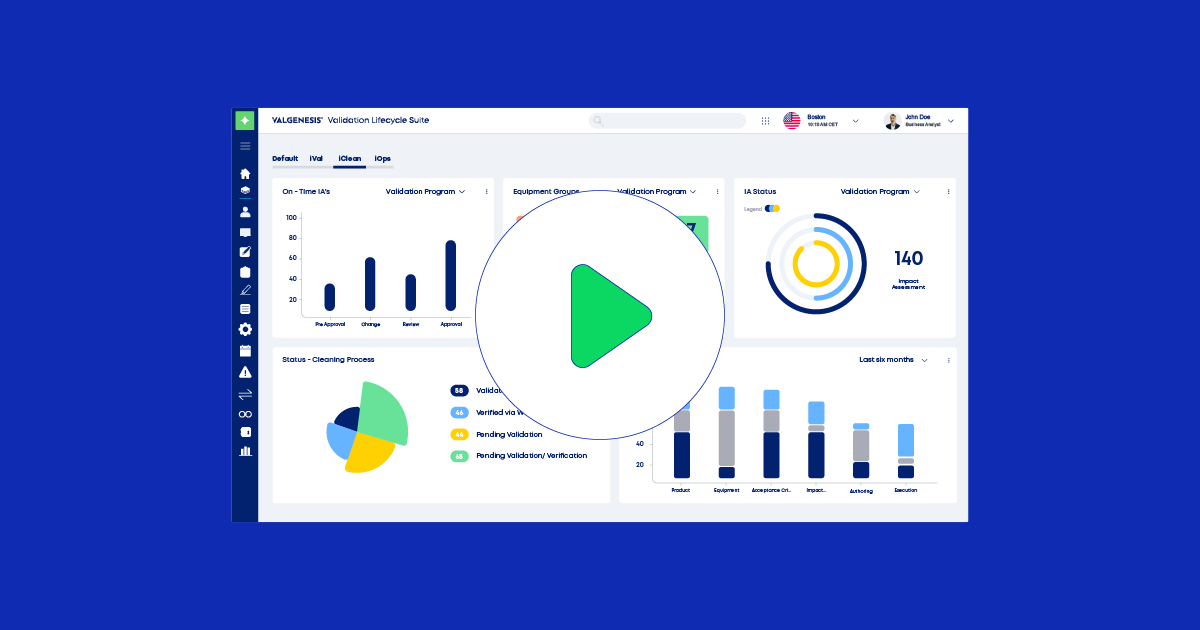
Content Video
Cleaning Validation: What Regulators Expect (And Where Teams Slip)
0:02 - Cleaning validation: What regulators expect (And where teams slip) Cleaning validation exists to prevent cross contamination and protect product quality.
0:12 - Regulators expect written procedures, cleaning logs, risk assessments and science based limits.
0:18 - What gets teams into trouble is rarely the regulation itself, it's the manual work around it. Cleaning validation is not just about proving equipment was cleaned once.
0:28 - Regulators expect life cycle control from setting limits and worst case rationale to verifying cleaning effectiveness and staying inspection ready as products, equipment and processes change.
0:41 - This is where teams often slip.
0:43 - Manual calculations, weak worst case logic and fragmented data residue carryover and shared surface area calculations are slow and error prone.
0:52 - Worst case selection requires a science based risk based rationale.
0:56 - When data is spread across LIMS, MES, ERP and spreadsheets, updates and impact assessments get difficult without life cycle control and traceability risks build quickly.
1:07 - If your team is still relying on manual processes for cleaning validation, take a look at ValGenesis iClean.
1:15 - See how digital workflows, automated MACO calculations, and real time oversight can help you stay audit ready and move faster through changeovers.
1:23 - Visit valgenesis.com
Summary
Cleaning validation helps prevent cross contamination and protect product quality. Regulators expect written procedures, cleaning logs, risk assessments, science-based limits and life cycle control.
Teams often slip when calculations, worst-case logic and data are managed manually across LIMS, MES, ERP and spreadsheets. Digital workflows can support MACO calculations, traceability and audit readiness.
Key Takeaways
- Cleaning validation must be controlled across the life cycle, not treated as a one-time proof that equipment was cleaned.
- Manual residue carryover, shared surface area and MACO calculations increase the risk of slow or incorrect decisions.
- Weak worst-case rationale and fragmented data make updates, impact assessments and inspection readiness harder.
Who is this for
- Cleaning validation managers
- Quality assurance leaders
- Validation engineers
- Manufacturing operations managers
- Regulatory affairs professionals
- Process engineering teams
- Digital transformation leaders in life sciences
Relevant entities and links
- FDA: Validation of Cleaning Processes (7/93)
- eCFR / FDA regulations: 21 CFR 211.67 - Equipment cleaning and maintenance
- eCFR / FDA regulations: 21 CFR Part 11 - Electronic Records; Electronic Signatures
- European Commission: EudraLex Volume 4 Annex 15: Qualification and Validation
- ICH: Q9 Quality Risk Management
- FDA: Q9(R1) Quality Risk Management