Content Video
3 Ways Old-School Cleaning Validation Delays Your Production Schedule
[00:08] Ready to start the next batch, but the line isn’t cleared yet? Line clearance is the recorded check that the area, equipment, and documents are free of the last run and fit for use.
[00:22] Every extra minute at changeover reduces throughput. While the team finishes readiness checks and paperwork reviews, the batch stays on hold — pushing the schedule back, leaving equipment and crews waiting, and lowering overall equipment effectiveness.
[00:41] In a paper-based workflow, the cleaning record moves by hand: the operator signs, production verifies, and QA reviews for release. One missing initial or a wrong document number — and the batch is on hold.
[00:58] Using one blanket limit may not account for toxicity, dose, or route, so clean equipment can still ‘fail’ on paper, triggering re-cleans, extra swabs, and slower QC turnaround — and the schedule slips.
[01:17] Rigid cycles force downtime even when nothing has changed. A broad ‘worst case’ triggers re-work and testing backlog.
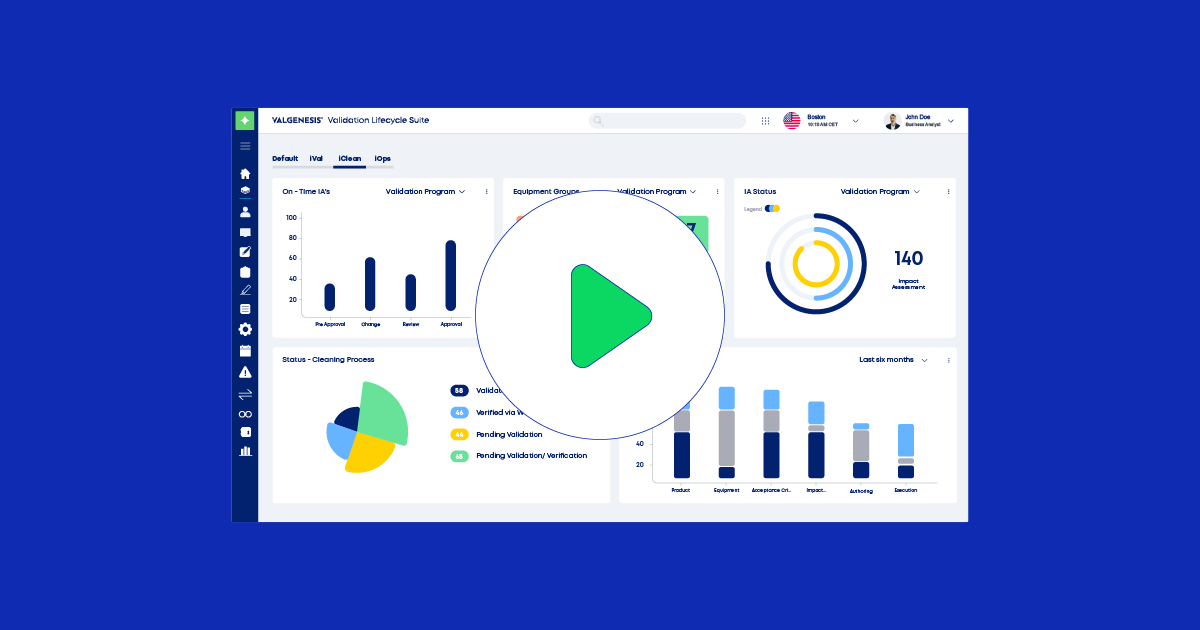
[01:30] Go digital and risk-based where e-records auto-check entries, the carryover limit comes from toxicology, and similar products are covered by one representative worst case — so only exceptions go to QA and release is faster.
[01:49] Here’s the shift: move from paper and blanket limits to a digital, risk-based cleaning validation. Operators complete e-records right at the line. Automatic checks catch missing data. Only exceptions go to QA, e-signatures route instantly, and release is faster — and audit-ready.
[02:10] Want faster, compliant changeovers? Go digital and risk-based for cleaning validation. Visit ValGenesis.com to book your demo today.
Summary
Old-school cleaning validation slows changeovers when teams rely on paper records and manual reviews. Small documentation errors can keep a batch on hold while QA rechecks and re-approves.
Blanket carryover limits and calendar-based revalidation can trigger needless re-cleans, extra swabs, and avoidable downtime. A digital, risk-based approach auto-checks records, routes e-signatures, and sends only exceptions to QA.
Key takeaways
• Paper workflows make release vulnerable to minor documentation mistakes, turning routine changeovers into schedule holds.
• One-size-fits-all limits can force re-tests and re-cleans even when equipment is effectively clean.
• Risk-based, digital cleaning validation speeds release by auto-checking entries and routing only exceptions to QA.
Who is this for
• Manufacturing and operations leaders managing production schedules and changeovers
• Cleaning validation and contamination control specialists
• Quality assurance teams responsible for batch release and documentation review
• Production supervisors and operators completing line-ready checks and cleaning records
• MSAT teams supporting changeover readiness and execution
• Analytical and QC teams handling swab testing and turnaround time
• Regulatory and GMP compliance professionals focused on inspection readiness
Relevant entities and links
• FDA — Guide to Inspections: Validation of Cleaning Processes (7/93): https://www.fda.gov/inspections-compliance-enforcement-and-criminal-investigations/inspection-guides/validation-cleaning-processes-793
• Health Canada — Cleaning validation guidelines (GUI-0028): https://www.canada.ca/en/health-canada/services/drugs-health-products/compliance-enforcement/good-manufacturing-practices/validation/cleaning-validation-guidelines-guide-0028/document.html
• EMA — HBEL guideline for shared facilities (PDF): https://www.ema.europa.eu/en/documents/scientific-guideline/guideline-setting-health-based-exposure-limits-use-risk-identification-manufacture-different-medicinal-products-shared-facilities_en.pdf
• ICH — Q9(R1) Quality risk management (PDF): https://database.ich.org/sites/default/files/ICH_Q9-R1_Document_Step2_Guideline_2021_1118.pdf
• PIC/S — PI 006-3 (includes Cleaning Validation): https://picscheme.org/docview/3447
• FDA — Data Integrity and Compliance With Drug CGMP: Q&A: https://www.fda.gov/regulatory-information/search-fda-guidance-documents/data-integrity-and-compliance-drug-cgmp-questions-and-answers