Removing Bias from Risk Assessment
Summary
Pharmaceutical risk assessments can be shaped by personal judgment, which can lead to inconsistent decisions that may miss patient-safety and product-quality risks.
This paper presents a digital, knowledge-based Quality Risk Management approach aligned with ICH Q9(R1), linking risk tools with CPV manufacturing evidence to refine assumptions over time.
Key takeaways
- Bias in risk assessment can come from personal experiences, cultural background, and professional affiliations, and it can skew how risks are identified and interpreted.
- A digital QRM system plus a manufacturing intelligence platform can connect initial risk assumptions to real CPV data (deviations, OOS, OOT, alarms) to support risk reviews.
- Data-linked risk reviews can adjust estimated Occurrence values, define new failure modes when needed, and support post-approval change discussions with regulators.
Who is this for
- Quality Risk Management (QRM) leads and facilitators
- QA leaders and Quality Systems managers
- Process Validation and Continued Process Verification (CPV) owners
- Manufacturing science and technology (MSAT) teams
- Regulatory Affairs professionals handling post-approval changes
- Process/production engineers and operations excellence teams
- Data/IT teams implementing digital quality and manufacturing intelligence tools
Download your Industry Insight
Removing Bias from Risk Assessment
Traditional risk assessment methods often struggle to keep pace with the growing complexity of technology and operations. One of the most significant challenges that the pharmaceutical industry confronts is the inherent subjectivity embedded within risk assessment processes. Subjectivity, in this context, refers to the influence of personal biases and intuitions on the evaluation of risks, potentially leading to inconsistent results and decisions that may not adequately safeguard patient safety and product quality. As the industry strives for continuous improvement and heightened regulatory scrutiny, it becomes imperative to address this subjectivity head-on and replace it with a systematic, data-driven approach that instills confidence in our risk management endeavors.
This article outlines an innovative framework encompassing a digital, knowledge-based approach that aligns with the revised guidelines set forth by the International Council for Harmonization of Technical Requirements for Pharmaceuticals for Human Use (ICH) in their ICH Q9(R1) document, by leveraging technology, fostering a robust knowledge base of risks, and establishing a dynamic feedback loop between commercial manufacturing stages and initial risk assumptions.
Objectively Acknowledging Subjectivity
Bias in pharmaceutical product development risk assessment refers to skewed judgment due to preconceived notions, cultural influences, or personal preferences of those involved. Such biases stem from diverse sources like personal experiences, cultural backgrounds, and professional affiliations. These biases substantially impact identifying, analyzing, and interpreting risks, distorting evaluations and decision-making. Thus, countering bias in risk assessment is crucial for dependable outcomes. Employing transparent methods, diverse viewpoints, and independent review helps curtail bias effects, promoting objective risk assessment. ICH Q9 revision accentuates reducing subjectivity in risk management, enhancing scientifically grounded decisions.
This update introduces sections on “Formality in QRM,” “Risk-based decision-making,” “Minimizing Subjectivity,” and “QRM’s Role in Addressing Product Availability Risks Due to Quality/Manufacturing Issues.”
These new chapters support and justify novel data and technology-driven approaches to answer the need to mitigate the impact of bias and subjectivity in QRM.
A Data-Driven Risk Assessment Approach
Our approach to reduce bias involves using a framework of digital tools for risk assessment and manufacturing insights. These tools tap into existing knowledge and evolve through iterative risk refinement. A digital QRM system offers templates, workflows, interconnected tools, and a knowledge repository, cutting subjectivity, while a digital platform for manufacturing intelligence aggregates and interprets evidence from diverse sources.
The advantages of these systems will be most noticeable in later stages of product development, especially Stage 3 (Continued Process Verification) per FDA’s Process Validation guidance. Here, systematic data collection, trend analysis, spotting deviations like OOS, OOT, and alarms, becomes feasible and a robust source of evidence to retrofit the initial risk assumptions.
Having successfully identified and mapped both sources of risk and evidence, with the implementation of such framework, organizations can now harness the complete potential of their data to elevate the robustness of their risk management processes.
These are some of the advantages of adopting a data-driven risk assessment approach:
1. Generation of a CPV Program
The initial step in CPV plan design involves selecting variables to measure during manufacturing, achieved through a criticality assessment of process parameters, material attributes, and quality attributes. Leveraging QRM tools like cause-effect matrices, FMEA, and action plans not only facilitates knowledge building and criticality assessment of parameters, but also directly influences the identification of parameters to include in the CPV plan. This determines the data collection for manufacturing-stage processes.
2. CPV Plan Management
Following the establishment and execution of a digital CPV plan, the organization gains the ability to collect and process data, converting it into actionable knowledge that can be linked with the initial risk assessment data. This connection empowers specific actions, such as the risk review advocated by ICH Q9. For instance, it enables the verification of estimated Occurrence values for potential failure modes. Through a digital platform that captures data from specific process parameters tied to potential failure modes, a comparison can be drawn between the actual frequency of deviations or out-of-spec occurrences and the initially estimated occurrence of the potential failure mode. Any disparities can trigger two potential responses:
- Recommending a review and increase of an initially low estimated occurrence value based on the observed frequency of the failure mode, as depicted in.
- Suggesting a review and decrease of an initially high estimated occurrence value based on the absence of issues linked to the failure mode.
In both scenarios, these data-driven risk reviews exemplify mechanisms for continuous enhancement of the defined control strategy.
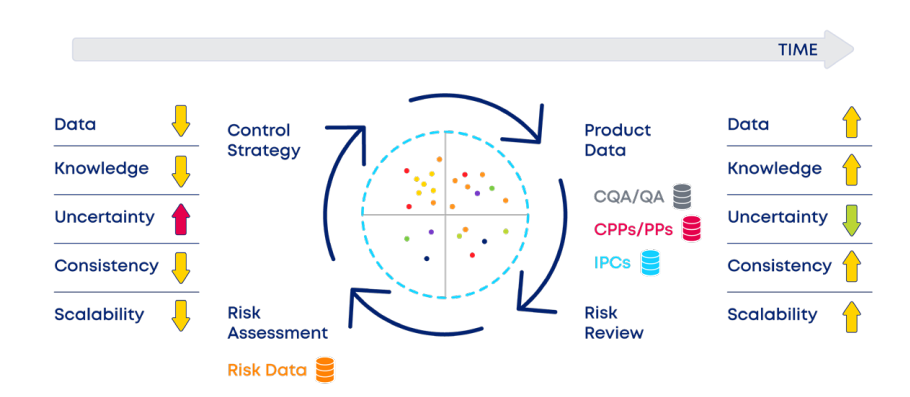
Fig.1 A retrofitting loop between a digital QRM and a digital manufacturing insight platform
3. Process Deviation Management
This digital approach not only suggests a risk review for estimated Occurrence of identified deviations (failure modes), but also proposes defining new failure modes based on previously unidentified issues or deviations. Any measured variable deviation, equipment, operator, or procedure failure is recognized and monitored as an issue, allowing for comparison with the initially defined risks. If it aligns with an existing failure mode, this issue prompts a review of its Occurrence value. If no match is found with existing failure modes, the issue triggers an FMEA review, leading to the definition of a new failure mode and subsequent implementation of new controls. This exemplifies a data-driven risk review, aiding continuous improvement of the control strategy and overall QRM practices.
4. Regulatory Support
A further application of a data-driven risk management approach lies in leveraging QRM to bolster regulatory interactions, particularly in the post-approval changes process. Once a product is in commercial manufacturing, assuming a CPV plan is operational, the capacity to employ real evidence to validate proposed changes becomes vital. With well-defined conditions, clear parameter criticality understanding, and a robust control strategy in place, the initial analysis of process criticality and risk assessment for change impact is streamlined. Utilizing captured data provides substantial backing for this impact assessment and evidence-based rationale for revising and continuously monitoring the required control strategy adjustments to accommodate the process change.
Take-Away Message
Technology innovation often outpaces regulations and work practices. Considering QRM and the recently published ICH Q9(R1), embracing technology, data, and digital tools becomes imperative to enhance and streamline QRM practices. Introducing a data-driven risk management approach should serve as a catalyst for change management, enabling organizations to unlock QRM’s potential as a continuous improvement driver beyond mere regulatory compliance. To achieve this, organizations must establish an integrated approach that marries risk and data, aided by digital platforms offering a holistic view of the product’s lifecycle. Such platforms provide a structured means for generating, storing, analyzing, and managing knowledge over time.
References
- ICH Q9 (R1), Quality Risk Management, International Conference on Harmonisation of Technical Requirements for Registration of Pharmaceuticals for Human Use, November 2023.
- Guidance for Industry – Process Validation: General Principles and Practices, Food and Drug Administration, January 2011.
Table of Contents


