Fast-Tracking Biosimilars Approval: How to Reduce Time-to-Market


Summary
This brief explains how biosimilar developers can shorten approval timelines by using the FDA totality-of-evidence model: extensive analytical comparison, plus targeted non-clinical and clinical studies.
It proposes a stepwise, risk-based comparability plan that weighs each quality attribute’s impact and uncertainty, using multi-parametric and multivariate analysis to reduce residual uncertainty and support submissions.
Key takeaways
-
Biosimilar approval relies on integrating analytical, non-clinical, and clinical results under a totality-of-evidence model, with analytics as the foundation.
-
Clinical study needs are product-specific and depend on remaining uncertainty after analytical characterization.
-
A risk-based, multi-parametric/multivariate comparability method can help manage large analytical datasets and assess whether minor differences are clinically meaningful.
Who is this for
-
Regulatory affairs professionals working on biosimilar submissions
-
CMC leads and technical development managers
-
Analytical development scientists (physicochemical and functional assays)
-
Quality/validation and comparability assessment teams
-
Biostatisticians and data scientists supporting multivariate analytics (MVDA)
-
Clinical development and clinical operations staff planning abbreviated programs
-
Program/project managers coordinating biosimilar development timelines
Download your Industry Insight
Fast-Tracking Biosimilars Approval: How to Reduce Time-to-Market
Global Biosimilars Market: Overview
Over the past few years, there has been a significant growth in the global biosimilar market.
Some of the key enablers contributing to this growth are their cost-effectiveness, the growing prevalence of chronic diseases, rising pressure to reduce healthcare expenditure, with patent expiry of several blockbuster drugs.
However, the biosimilar pipeline is robust. It continues to grow in the U.S., Europe, and the Asian-Pacific region. According to a recent estimate, there are more than 1000 biosimilars in any stage of the pipeline, representing an annual growth of 21% from 2016.
Totality-of-Evidence Framework
According to the FDA, the approval of a biosimilar should be based on the integration of different information using a totality-of-evidence approach.
The totality-of-evidence paradigm describes the sum of analytical, non-clinical and clinical studies conducted to justify regulatory approval of a biosimilar. The foundation of this approach is an extensive analytical comparison of both biosimilar and reference products to establish molecular similarity using physicochemical and functional assays.
By leveraging established knowledge and experience that the reference medicine is safe, pure and potent, an abbreviated clinical program is sufficient to establish that the biosimilar is highly similar to the reference medicine and has no clinically meaningful differences in terms of safety and effectiveness.
The extent of clinical studies required for the demonstration of biosimilarity is product-specific, depending on the degree of molecular similarity and remaining residual uncertainty following analytical domain characterization.
Given the size and complexity of biological drugs as well as the biological nature of the manufacturing process, these minor differences are expected to be found when performing the comparison of both products, therefore it is important to assess if they have impact in clinically relevant quality attributes.
Streamlining Demonstration on Biosimilarity
There is no single method solely decisive for the final conclusion on biosimilarity of a certain candidate. However, it is fairly easy to understand why reliable comparability assessments using classical statistical approaches are, in practice, very difficult to perform.
Any product characterization exercise should be based on a comprehensive set of analytical techniques, commonly referred as an "analytical package". These analytical packages include different types of data for multiple quality attributes derived from several analytical techniques.
To handle this using an univariate approach is an overwhelming and extremely time-consuming task.
In this view, and consistent with the concepts of fingerprint-like similarity and of residual-risks, we suggest the use of multi-parametric and multivariate approaches to extensively compare the complete domains of the biosimilar and reference products.
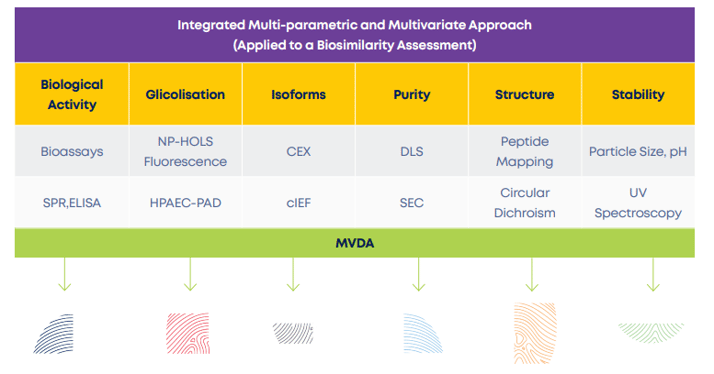
Fig. 1 - ValGenesis Approach to Comparability & Biosimilarity Assessments
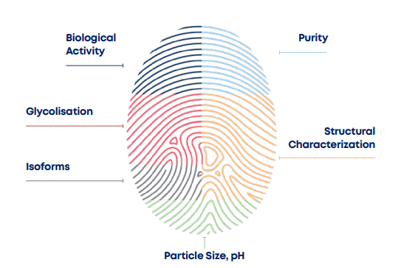
Fig. 2 - Fingerprint-like similarity
The comparability exercise is supported by a stepwise and risk-based approach that considers both the impact and uncertainty of each quality attribute on clinical outcomes.
The result is a mitigated residual uncertainty and an assessment of the minor differences to determine if they are clinically meaningful, establishing the link between analytical and clinical domains. The robustness of this approach is strengthened since it is fully consistent with FDA totality-of-evidence, therefore, it helps streamlining submission processes to regulatory agencies.
References
- Market Research Future. Global Biosimilars Market Overview.
- O'Shea, T. (2020, Jan, 2022). Overview of the Biosimilar Landscape. Pharmacy Times.
- Menezes, J.C., Loia, A.C., Leitão, C.S. (2019). Biosimilarity Assessments The Totality of Evidence Framework. BioProcess International.
- Cohen, H.P., Lamanna, W.C., Schiestl, M. (2018). Totality of Evidence and the Role of Clinical Studies in Establishing Biosimilarity. In: Gutka, H., Yang, H., Kakar, S. (eds) Biosimilars. AAPS Advances in the Pharmaceutical Sciences Series, vol 34. Springer, Cham. DOI: 10.1007/978-3-319-99680-6_22
Table of Contents


