


When people first ask, “What is CMC in pharma?” the answer seems simple: Chemistry, Manufacturing, and Controls (CMC) is the discipline that ensures new drugs are consistently safe, effective, and high quality. In reality, CMC is one of the most complex areas of drug development. It requires aligning data, processes, and teams across formulation, analytics, risk management, manufacturing, and regulatory strategy. Managing this ecosystem means confronting challenges unique to each company, market, geography, or regulatory context.
As someone who has led CMC strategy at a major biopharma company, I’ve seen these challenges from both sides. Internally, CMC teams juggle mountains of data and documentation while staying focused on their true mandate: building consistent, reliable processes that ensure quality and compliance. Externally, life sciences companies face pressure to bring therapies to market faster to keep up with demand. The key to meeting external pressures isn't chasing speed directly — it’s applying strong science- and risk-based practices internally. When CMC teams prioritize consistency, quality, and good Quality by Design (QbD) principles, they not only strengthen compliance but also naturally achieve faster, smoother submissions.
To manage this complexity, many organizations turn to QbD, a framework meant to embed quality into every stage of development. The problem? Too often, QbD is still executed manually — through spreadsheets, emails, and disconnected systems. Instead of accelerating CMC, manual QbD introduces delays, errors, and daily frustrations.
The Realities of Manual QbD
Delays that compound over time
In CMC, delays are costly and often invisible until they’ve already derailed timelines. Manual QbD processes create three common bottlenecks:- Disconnected systems: Formulation data in one database, analytical results in another, risk assessments in Word documents. Every handoff becomes a time sink.
- Version confusion: Teams spend days reconciling “final” documents that don’t match — burning time that should be spent analyzing results or refining processes.
- Waiting games: When subject matter experts juggle competing priorities, one missing input can stall an entire stage of CMC development.
Errors that put quality at risk
The core idea of quality by design in pharma is to anticipate and mitigate risks before they affect product quality. But manual execution introduces risks of its own:- Copy-paste mistakes: Moving data between spreadsheets introduces transcription errors.
- Unclear rationales: Without embedded logic or traceability, design decisions can appear arbitrary to regulators.
- Lost context: When changes happen in silos, there’s no clear history of why parameters were adjusted.
Ongoing frustrations for every stakeholder
The inefficiency of manual QbD doesn’t just impact timelines and compliance — it erodes morale:- Scientists and engineers spend hours formatting templates instead of analyzing data.
- QA and regulatory teams endure endless back-and-forth to track down missing justifications.
- Leaders lack real-time visibility into risks, bottlenecks, or project progress.
When every project feels like reinventing the wheel, teams burn out, and institutional knowledge is lost. This is one of the biggest hidden costs of relying on manual methods.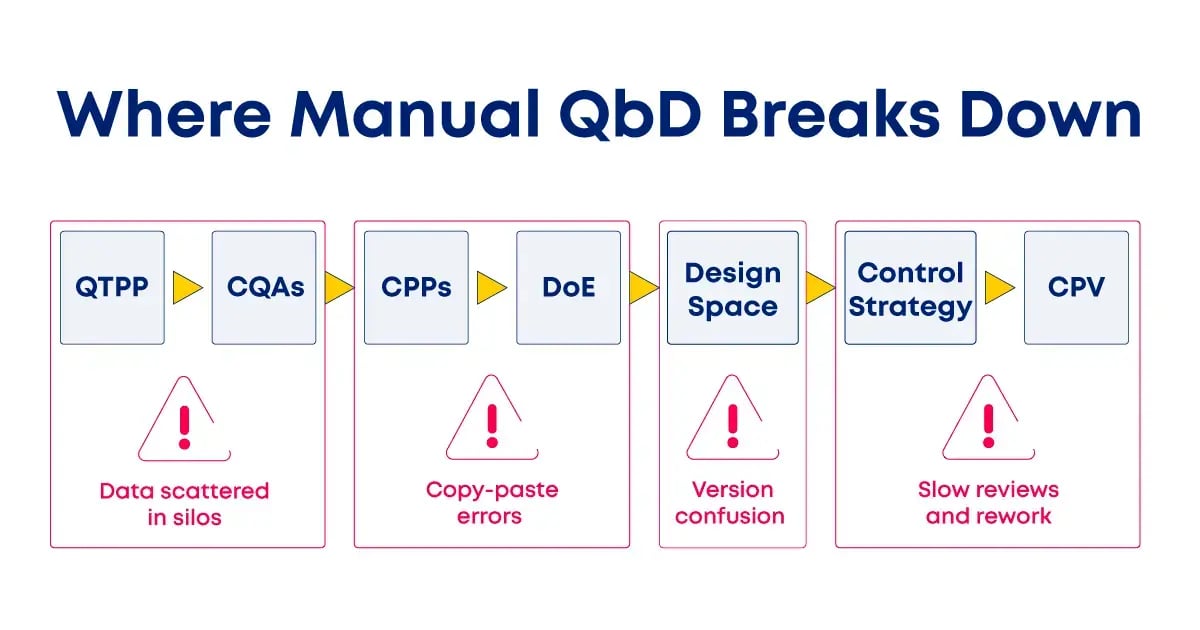
A Better Way: Digital Intelligent QbD Frameworks
Fortunately, the industry is moving forward. Digital QbD frameworks, especially those enhanced with artificial intelligence (AI), are transforming CMC:- Automation eliminates repetitive data handling and ensures end-to-end traceability.
- Integrated workflows connect risk assessments, design space definitions, and control strategies into one seamless environment.
- AI-driven insights detect inconsistencies, highlight optimization opportunities, and accelerate decision-making.
- Real-time dashboards give stakeholders a transparent, shared view of progress — no more chasing status updates.
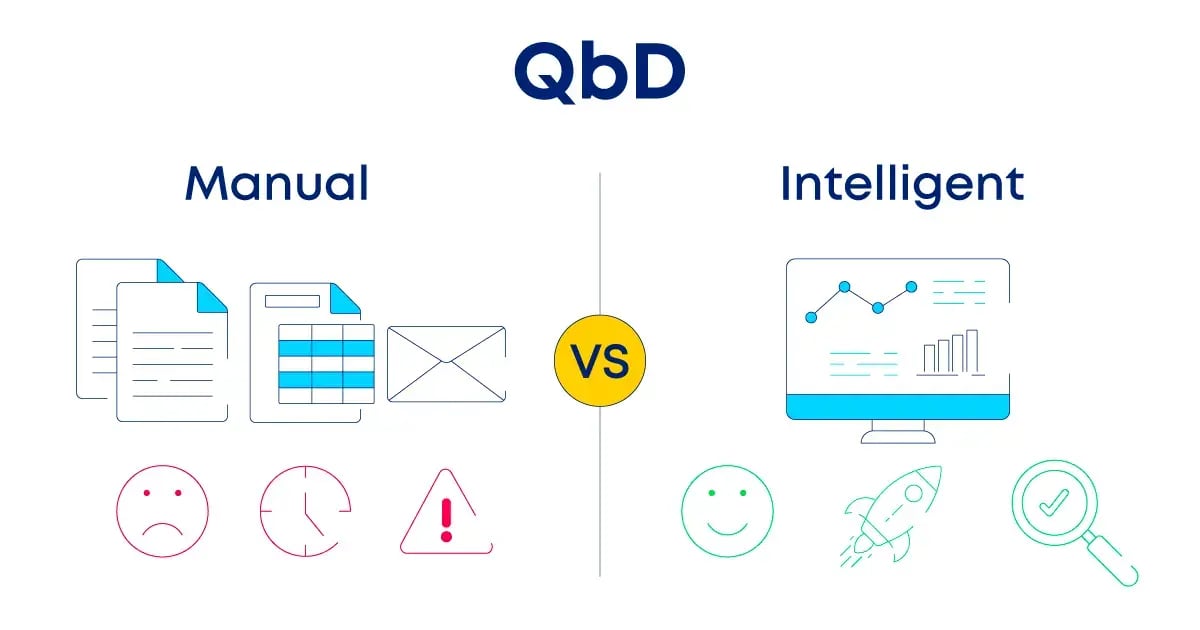
As I’ve seen firsthand, moving from manual to intelligent QbD compresses timelines, reduces rework, and makes regulatory submissions more robust and defensible. For organizations navigating CMC in drug development, it’s more than a process upgrade — it’s a competitive advantage.
Why Now? Regulatory Expectations and Market Pressures Are Raising the Bar in CMC Development
The shift from manual to intelligent QbD isn’t just about efficiency. It’s about enabling CMC teams to meet today’s demands: faster development, smarter risk management, and greater regulatory confidence.By adopting an intelligent framework, life sciences companies can:
- Shorten the time from development to submission.
- Improve data integrity and reduce regulatory risk.
- Build repeatable, scalable processes that strengthen institutional knowledge.
- Free scientists and engineers to focus on innovation, not administration.
The future of CMC manufacturing will be defined by organizations that can blend scientific rigor with intelligent digital tools.
Bottomline: What It All Means for CMC in Drug Development
If you’re still managing QbD manually, you’re not just working harder — you’re slowing your organization down and exposing it to risk. Manual QbD leads to delays, errors, and frustrations that compound at every stage of CMC development.
Intelligent QbD frameworks deliver what manual methods never could: speed, accuracy, visibility, and confidence. For organizations exploring how to modernize CMC in pharma, the message is clear: manual belongs to the past. The future of CMC in drug development is intelligent, integrated, and designed for success.
Watch the video to learn how ValGenesis iCMC™ transforms QbD efficiency.
Table of Contents


Related Blog Posts