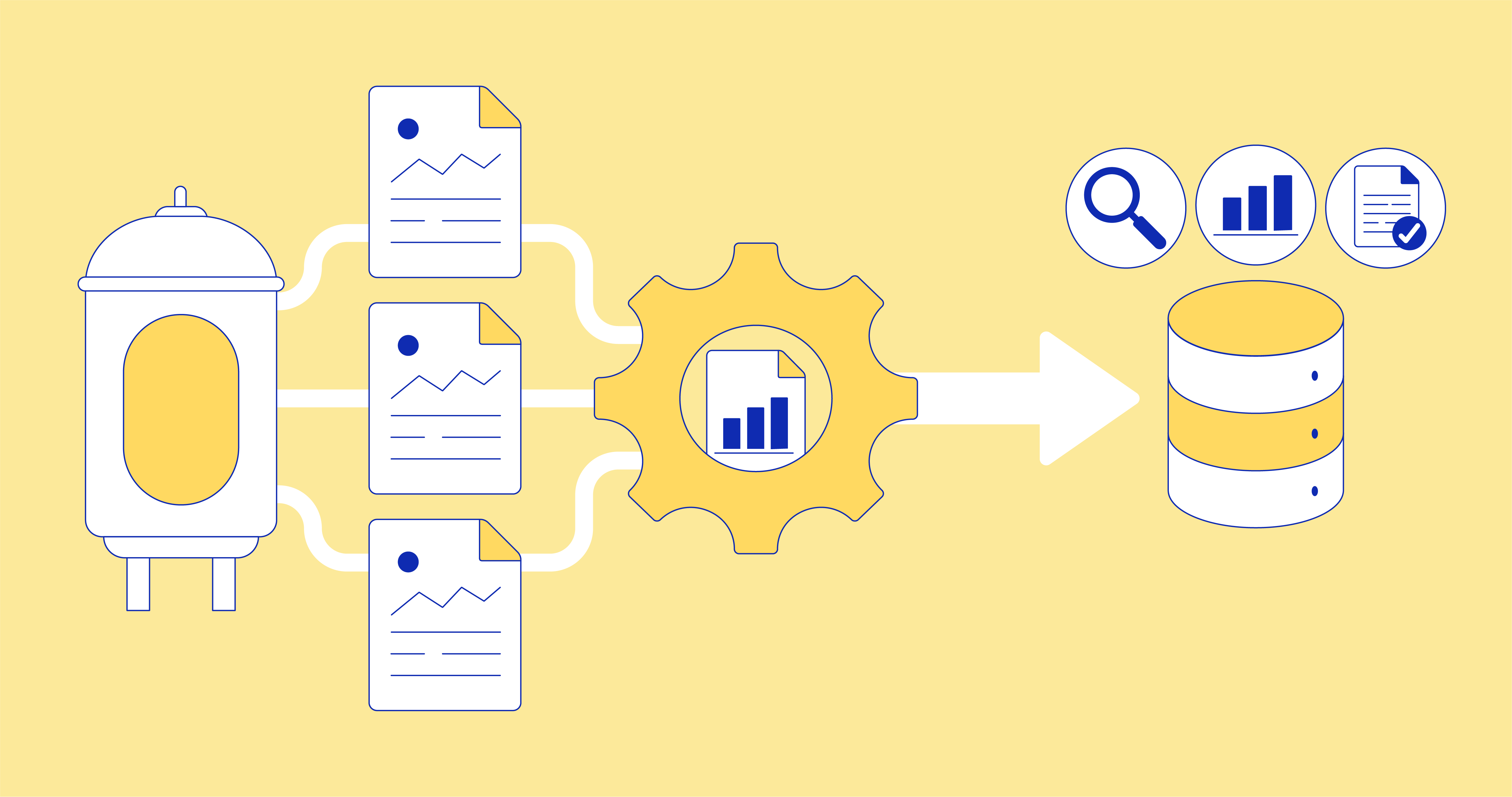
Every commercial batch generates new evidence about process performance, variability, and product quality. Over time, these data should deepen process understanding and support better-informed decisions throughout the product lifecycle ( U.S. Food and Drug Administration [FDA], 2011). Continued process verification (CPV) provides the framework for turning that accumulating evidence into ongoing process insight, yet in many organizations, much of its potential value remains difficult to access because CPV still relies heavily on manual data collection, analysis, and reporting.
Manufacturers may already collect extensive data from historians, LIMS, MES, laboratory systems, and other sources. The challenge is what happens to those data afterward. Teams extract and prepare datasets, perform statistical analyses, investigate signals, create charts, and compile the results into periodic CPV reports. These reports provide essential evidence of process performance, but when the underlying data, analyses, and conclusions remain distributed across spreadsheets, systems, and documents, valuable process knowledge can become difficult to access and reuse continuously.
Digitalization and automation can change that model by turning CPV data from periodic documentation into reusable lifecycle knowledge.
When CPV Data Become Documentation
A document-centric CPV process can still provide meaningful scientific analysis and meet important quality objectives, but it also creates recurring manual effort. Each reporting period may require teams to gather data from multiple sources, prepare datasets, repeat analyses, and review historical reports to understand current performance.
The limitation becomes more apparent as manufacturing data accumulate. A trend identified today may need to be compared with previous batches, investigations, or process changes. If those insights are primarily preserved in static reports, teams may know the information exists without having an efficient way to bring it into the current analysis. The organization continues generating knowledge, but accessing and reusing that knowledge depends on people repeatedly finding, interpreting, and reconnecting information.
Digitalization provides a different foundation by keeping process data structured, governed, and available beyond an individual reporting cycle. Automation builds on that foundation by reducing the repetitive work required to move those data through monitoring, analysis, investigation, and reporting.
Automation Makes CPV Data Continuously Usable
CPV automation is about more than generating reports faster. Data from relevant source systems can be brought into a governed environment through appropriately controlled interfaces or data imports, configured statistical methods can be applied consistently, and process performance can be evaluated as new data become available. When signals or emerging variability require attention, teams can use appropriate statistical analyses, including multivariate methods where justified, to investigate the available evidence without repeatedly rebuilding the analytical foundation.
This changes where scientists, engineers, and quality professionals spend their time. Instead of repeatedly extracting and analyzing data, recreating charts, and assembling information for each reporting cycle, they can focus more attention on interpreting process behavior and determining its significance. Automated reporting and governed workflows can further reduce administrative effort while maintaining the controls, review, and approvals expected in a regulated environment.
The operational impact can be substantial. Laboratório Teuto, for example, reduced periodic CPV reporting time from two weeks to three days after replacing a manual ERP-to-Excel process with digital CPV technology from ValGenesis. The company also reduced the number of people involved in CPV from 16 to five while strengthening data integrity through controlled access and audit trails (ValGenesis, 2024).
Making CPV data continuously usable, however, addresses only part of the lifecycle challenge. Interpreting commercial process performance also depends on knowledge created before CPV begins.
Commercial Process Data Need Development Context
During process development, CMC teams build extensive knowledge about how a product and its manufacturing process are expected to behave. They identify and refine critical quality attributes (CQAs) and critical process parameters (CPPs), assess risks, study relationships among process variables, establish operating ranges, and develop the control strategy (International Council for Harmonisation of Technical Requirements for Pharmaceuticals for Human Use [ICH], 2009). Knowledge gained during scale-up, technology transfer, and process qualification further establishes the commercial process. This knowledge provides important context for determining what should be monitored during commercial manufacturing and how observed process behavior should be interpreted.
When development knowledge and commercial process data are managed separately, that context can be difficult to carry forward. A CPV signal may show that a parameter is changing, but understanding its significance may require teams to return to development reports, risk assessments, process descriptions, and other sources. Conversely, knowledge gained from commercial manufacturing may accumulate in CPV reports without being easily connected back to the process knowledge established during development.
Connecting CMC process knowledge and CPV digitally creates greater lifecycle continuity. Process knowledge established upstream can provide context for downstream performance, while commercial evidence can contribute to the organization’s evolving understanding of the process (ICH, 2008).
Connecting Process Knowledge Across Development and Manufacturing
A more connected lifecycle approach allows knowledge developed upstream to remain relevant as a process moves into commercial manufacturing. Development knowledge can provide context for evaluating process performance, while insights generated through CPV can contribute to investigations, risk assessments, process changes, technology transfer, and other lifecycle activities. Instead of maintaining development knowledge and manufacturing data separately, organizations can create greater continuity between what they learned while developing the process and what they continue to learn at commercial scale.
That continuity becomes increasingly valuable as a process evolves. Emerging variability can be evaluated within broader process context, historical performance can support comparisons following process changes, and governed lifecycle knowledge can remain available as processes are transferred, scaled, or adapted across sites. The value comes not simply from collecting more data, but from preserving the context that allows those data to contribute to process understanding over time.
From CPV Reporting to Lifecycle Knowledge
Controlled documentation remains an essential output of CPV, but it does not have to be the final destination for the data and knowledge generated through the program. Every batch adds evidence about process behavior, every investigation adds context, and every analysis can strengthen understanding of how the process performs over time. Digitalization and automation allow more of that information to remain connected and reusable after an individual reporting cycle is complete.
The opportunity is larger than automating an existing CPV reporting process. When commercial process data remain connected to the knowledge developed upstream, CPV becomes more than a recurring exercise in documenting process performance and providing ongoing assurance that the process remains in a state of control—it becomes an ongoing source of process knowledge that can support better-informed decisions throughout the product lifecycle.
Table of Contents


