The Future of Cleaning Validation


Summary
Cleaning validation proves manufacturing equipment is cleaned well enough to prevent cross-contamination and protect patients. Regulators are issuing more cleaning-related observations, raising expectations for science- and risk-based programs.
This paper explains today’s cleaning validation building blocks and the move to a lifecycle model with continued process verification. It then shows how digitization, dashboards, and statistical monitoring (including TACT data and multivariate tools) support faster decisions, stronger control, and audit readiness.
Key Takeaways
- Cleaning validation is shifting from one-time qualification to a lifecycle model: design, performance qualification, and continued process monitoring.
- Risk tools such as worst-case product/equipment selection, HBEL-based limits, and MACO calculations are central to modern CV programs.
- Digitized CV and digital CPV can standardize assessments, automate calculations and documentation, and detect early cleaning process drift using trend alarms and statistical analysis.
Who is this for
- Quality assurance (QA) leaders and compliance managers
- Validation engineers and validation managers
- MSAT / technical operations teams
- Manufacturing operations / production supervisors
- Regulatory affairs and inspection readiness teams
- Process engineers responsible for CIP/WIP systems
- IT, CSV, and data integrity specialists supporting digital quality systems
Download your Industry Insight
The Future of Cleaning Validation
Cleaning validation (CV) has been discussed by industry experts and regulators since the FDA introduced 21 CFR 210 and 211 in 1978, emphasizing the avoidance of cross-contamination and the protection of patient safety.
In recent years, agencies like the FDA have issued an increasing number of cleaning- and cross-contamination-related observations, signaling stricter regulatory expectations for cleaning strategies.
This Industry Insight reviews the current and traditional approaches to CV, including an overview of the regulatory landscape and the key components of a CV program. It also examines the challenges life sciences companies face in balancing asset efficiency with the need to comply with regulatory expectations for science- and risk-based CV strategies using a lifecycle management approach. In today’s pharmaceutical and biopharmaceutical environment, operational flexibility is needed to introduce new products and equipment technologies, making agile assessments of CV impacts necessary.
The discussion concludes by exploring advancements in cleaning technology and the digitization of CV. These developments address the challenges of paper-based systems, enabling better management of large data sets and turning them into actionable insights. Such improvements strengthen cleaning control strategies, maintain the controlled state of cleaning processes, and support continuous improvement.
A Brief History of Cleaning Validation
The concept of cleaning validation (CV) has evolved over the decades, driven by increasing regulatory oversight and the need for stronger product safety. Initially, cleaning processes were largely unregulated, relying on general industry best practices rather than formal validation methods. As pharmaceutical manufacturing expanded and product complexity grew, regulators introduced stricter requirements to prevent cross-contamination and ensure product integrity.
This section reviews foundational principles of CV, its role in product quality and patient safety, and why CV remains a focus in operational facilities. It also reviews the regulatory landscape, including key guidelines and enforcement actions that shaped current CV practices.
What is cleaning validation and why is it important?
Cleaning validation is the process of verifying that the equipment, utensils, and facilities used in production are effectively cleaned to control cross-contamination and ensure patient safety, product efficacy, and quality. The goal is to establish practical, economical, and reliable cleaning methods that comply with current good manufacturing practices (cGMPs) and today’s regulatory landscape.
FDA regulations state: “Equipment and utensils shall be cleaned, maintained, and sanitized at appropriate intervals to prevent malfunctions or contamination that would alter the safety, identity, strength, quality, or purity of the drug product beyond the official or other established requirements”.
Cleaning validation is applied in pharmaceuticals, biotechnology, food, and medical devices. It involves documenting evidence that cleaning procedures consistently remove residues of previously manufactured products, cleaning agents, and microbial contaminants from equipment contact surfaces to predefined acceptable levels.
By reducing contaminants to acceptable levels, manufacturers prevent cross-contamination between products. A product free from physical, chemical, or microbiological contamination maintains its expected quality and supports patient safety.
Failure to control cross-contamination has led to documented cases of patient injuries or fatalities, including recent incidents.
Why discuss cleaning validation in an operational facility?
Managing CV effectively is essential for operating pharmaceutical manufacturing facilities. This process helps ensure equipment is free from contaminants that could compromise product quality or patient safety.
Key reasons to focus on CV include:
-
Patient Safety: Residual contamination from previous batches or cleaning agents can pose health risks, particularly for parenteral and inhalable medicines.
-
Product Safety and Quality: Preventing contamination maintains product quality. Cleaning validation ensures residues are removed, avoiding cross-contamination.
-
Regulatory Compliance: Cleaning validation supports cGMP requirements. A well-documented and science-based process is fundamental to inspections. Noncompliance can result in warning letters, import alerts, or other penalties.
-
Reputation and Trust: Robust cleaning validation practices help maintain a manufacturer’s reputation and build trust among customers and stakeholders.
-
Operational Efficiency: Effective cleaning validation can minimize batch rejections, reduce downtime, and improve productivity.
-
Product Integrity: Rigorous cleaning validation helps ensure products meet quality target product profiles (QTPPs) consistently, preventing contamination that could affect stability, quality, or safety.
Cleaning validation regulations and guidelines
This section summarizes cleaning validation requirements from major regulatory bodies, including the FDA, European Medicines Agency (EMA), Health Canada, and Agência Nacional de Vigilância Sanitária (ANVISA).
FDA warning letters show regulators’ focus on validation-related violations, including cleaning validation. Over the last decade, 25 to 30% of FDA warning letters referenced validation-related issues (not exclusively cleaning validation), making validation the most frequently cited category.
Between 2022 and 2023, cleaning-related observations were among the top 10 issues cited in FDA Form 483 notices, with 68 instances specifically referencing 21 CFR 211.67(a) (see Table 1). Form 483 notifies a company’s management of objectionable conditions that may constitute violations of the FD&C Act, such as “cleaning/sanitizing/maintenance.”
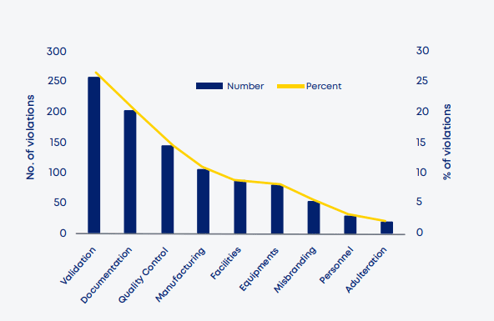
Figure 1. Number of validation-related violations cited in FDA warning letters from 2010 to 2020.
Table 1. Number of objectionable conditions cited in FDA Form 483s issued in 2022–2023.
| Reference Number | Short Description | Frequency |
|---|---|---|
| 21 CFR 211.22(d) | Procedures not in writing, not fully followed | 152 |
| 21 CFR 211.192 | Investigations of discrepancies, failures | 114 |
| 21 CFR 211.100(a) | Absence of written procedures | 86 |
| 21 CFR 211.160(b) | Scientifically sound laboratory controls | 84 |
| 21 CFR 211.63 | Equipment design, size, and location | 74 |
| 21 CFR 211.67(a) | Cleaning, sanitizing, maintenance | 68 |
FDA regulations in Section 111.27(d) of 21 CFR state that manufacturers “must maintain, clean, and sanitize, as necessary, all equipment, utensils, and any other contact surfaces used to manufacture, package, label, or hold components or dietary supplements”. Additionally, Section 820.70(e) of 21 CFR states that manufacturers “shall establish and maintain procedures to prevent contamination of equipment or product by substances that could reasonably be expected to have an adverse effect on product quality”.
The EMA defines cleaning validation similarly and expects justification when grouping similar equipment for validation. EMA guidance also addresses health-based exposure limits (HBEL) for contaminants, and a Q&A emphasizes the need for HBELs for all medicinal products, regular reassessment, and integration into quality risk management .
ANVISA describes cleaning validation as documented evidence that an approved cleaning procedure reproducibly removes residues from previous products and cleaning agents and reduces microbial load to a level established as safe for preventing contamination of subsequent products.
Health Canada’s Cleaning Validation Guide (GUI-0028) covers cleaning requirement assessments, selection of agents and methods, acceptance criteria development, analytical evaluation of cleaning effectiveness, and documentation requirements.
Additional guidance sources referenced include PDA Technical Report 29 (APIs) and PDA Technical Report 49 (biotechnology products), the ISPE cleaning validation lifecycle guidance (2020 release noted), ASTM E3106, WHO, PIC/S, and APIC.
Current Practices in Cleaning Validation
Cleaning validation has evolved from a compliance-driven requirement to a more scientific, risk-based process intended to support product safety and manufacturing efficiency. Regulatory agencies now expect robust strategies that meet compliance and include ongoing monitoring and improvement.
This section describes the components of modern cleaning validation practices, factors that affect a validated process, challenges when deviations occur, and the industry shift from traditional approaches to a lifecycle model.
Basic elements of a cleaning validation strategy
A structured cleaning validation strategy is intended to ensure repeatable and effective cleaning processes. It includes how cleaning procedures are developed, tested, and maintained over time.
Cleaning validation documentation
Manufacturers maintain a cleaning validation documentation package within their quality management systems. This package typically includes:
-
Cleaning Validation Master Plan (CVMP): Outlines overall strategy and approach, responsibilities, procedures, acceptance criteria, and documentation requirements.
-
Cleaning Validation Protocol (CVP): Instructions for conducting a validation study, including objectives, methods, acceptance criteria, sampling plans, and testing.
-
Cleaning Validation Report (CVR): Summary of validation study results, methods, results, conclusions, and recommendations.
-
Cleaning Records and Logs: Traceable records for cleaning execution, including dates, personnel, equipment, agents used, procedures followed, and deviations.
-
Standard Operating Procedures (SOPs): Cleaning procedures, disassembly, agents/methods, rinsing, and inspection criteria.
-
Analytical Methods: Methods developed or validated to detect and quantify contaminants.
Who benefits from digital cleaning validation?
-
QA: Improved compliance, traceability, audit readiness
-
MSAT/Tech Ops: Faster product introductions, easier impact analysis
-
Validation Engineers: Reduced protocol generation time, automated risk logic
-
Operations/Production: Fewer cleaning-related deviations, reduced downtime
-
IT/Compliance: Centralized data, simplified validation of CV systems
Cleaning validation strategy: worst-case assessments
For multi-product manufacturing lines grouped into equipment clusters, manufacturers often use a worst-case approach:
-
Worst-Case Product: Validate cleaning for the product with the highest risk (hardest to clean or most toxic), then apply to other products using the same equipment.
-
Worst-Case Equipment: Identify the hardest equipment to clean within a group.
-
Risk Assessments: Formal risk assessments to cover potential risks while balancing efficiency and safety.
Elements of a cleaning validation plan
A plan addresses potential contaminants:
-
Chemical contaminants: residues from APIs or cleaning agents
-
Physical contaminants: airborne particles, decomposition residues, ancillary materials
-
Microbiological contaminants: bacteria, mold, pyrogens
Key considerations include:
-
Establishing residue limits using criteria such as 10 PPM, dose-based thresholds, or toxicological data (NOEL, ADE, PDE). The lowest calculated limit is typically used unless justified otherwise.
-
Calculating maximum allowable carry over (MACO), accounting for sampling methods, equipment surface area, and contaminants.
-
Performing visual inspections first, then rinse sampling or swabbing based on equipment complexity and risk.
-
Defining sampling locations based on equipment design, focusing on harder-to-clean areas.
Situations impacting the validated status
Situations that may require revalidation include:
-
New products with unique properties
-
Changes to the equipment train (new/replaced units)
-
Changes to cleaning agents, concentrations, or methods
-
Changes to processes, formulations, or batch sizes
-
Cleaning failures/deviations requiring investigations and corrective actions
-
Changes in manufacturing sequence affecting contamination risks
-
New analytical methods or updated detection limits (LoQ, LoD)
Challenges when impact situations arise
Traditional cleaning validation often focuses on process qualification and may be less effective when scientific and risk principles are not applied, which can lead to inefficiencies, recurring failures, and limited post-validation monitoring.
Modern practices follow the FDA’s 2011 Process Validation Guidance with a lifecycle management model:
-
Design (Stage 1): risk evaluations, experiments, analytical method selection
-
Performance Qualification (Stage 2): validation under expected operating conditions
-
Continued Process Monitoring (Stage 3): ongoing verification and continuous improvement
The Future of Cleaning Validation
Cleaning validation is evolving with advances in automation, digitalization, and real-time monitoring. As expectations change, manufacturers are adopting risk- and science-based approaches to improve efficiency, support compliance, and strengthen process control.
This section covers Pharma 4.0, cleaning validation lifecycle management, and digitization with continued process verification (CPV), including how automation and real-time monitoring support proactive decisions and process optimization.
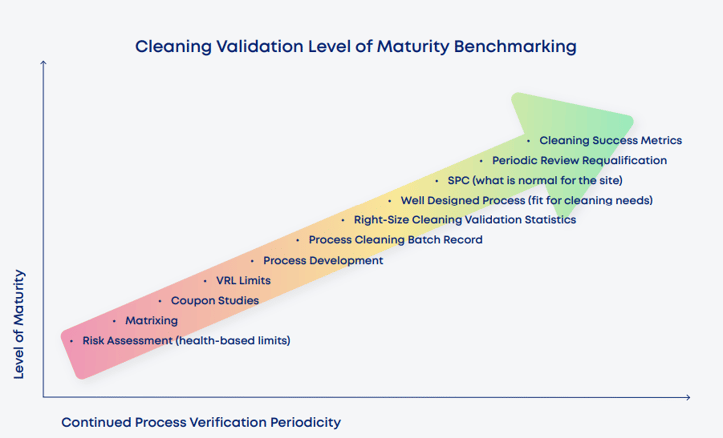
Figure 2. Cleaning validation level of maturity. Source: Gorsky, Hanf, Hartman, & Long, 2017.
At a high level:
-
Stage 1 captures and documents process knowledge and establishes a strategy for cleaning process control.
-
Stage 2 includes design and qualification of utilities/equipment, establishing the validation strategy, and conducting performance qualification.
-
Stage 3 uses statistical analysis of cleaning performance with periodic verification of cleaning effectiveness. The paper references a Diagnose, Analyze, Improve, Measure, and Control (DAIMC) framework to support ongoing improvement.
Transitioning to a lifecycle approach requires the site to have resources and technologies early in the development of cleaning procedures to support design, qualification, and monitoring through the product lifecycle.
Pharma 4.0 as an enabler for next-generation cleaning validation
Industry 4.0 is described as the fourth industrial revolution, using advanced technologies to create integrated, autonomous, self-organizing manufacturing systems with minimal human intervention.
The paper describes the progression from Industry 1.0 (19th-century commercial-scale machinery) through Industry 3.0 (continuous manufacturing and process analytical technology). It notes that digital maturity in the Industry 4.0 era has changed medicine manufacturing. A Deloitte survey is cited, stating 82% of biopharma executives expect this trend to continue, with digital transformation spending projected to exceed $10 trillion globally in the post-pandemic era (Deloitte, n.d.). The paper also references ISPE’s Digital Plant Maturity Model (DPMM) for benchmarking facilities based on digitalization, automation, and data integration.
Industry 4.0 is presented as an opportunity to improve operations, with cleaning tied to overall equipment effectiveness (OEE). Advanced clean-in-place (CIP) and wash-in-place (WIP) technologies are described as IoT-enabled, producing data that can be analyzed in real time using digital platforms, replacing paper-based management across the cleaning lifecycle.
Cleaning validation lifecycle management: risk-, science-, and data-driven approach
Regulators increasingly expect scientific and risk-based cleaning validation aligned with lifecycle management principles, as outlined in the FDA’s 2011 Process Validation Guidance (FDA, 2011).
Digitization is described as supporting the move to lifecycle management with two benefits:
-
Comprehensive documentation: scientific and risk-based assessments (product admissible limits and worst-case evaluations) to meet expectations and support patient safety.
-
Data-driven risk management: integrates data from early development (Stage 1) through continued monitoring (Stage 3), supported by workflows and data inputs that refine risk assessments over time.
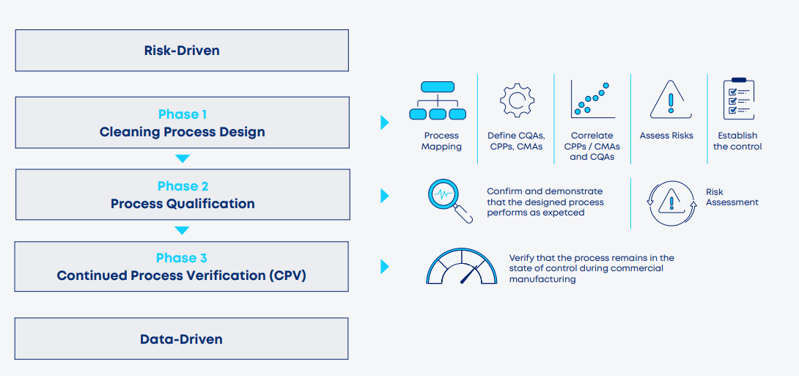
Figure 3. Key elements to consider in each stage of a risk- and data-driven cleaning validation lifecycle.
Digitization of cleaning validation
Scientific and risk-based CV strategies can be complex and time-consuming with paper or Excel-based systems, affecting OEE and raising data integrity and compliance concerns. Incorporating Industry 4.0 principles, digitizing cleaning validation is presented as offering several benefits.
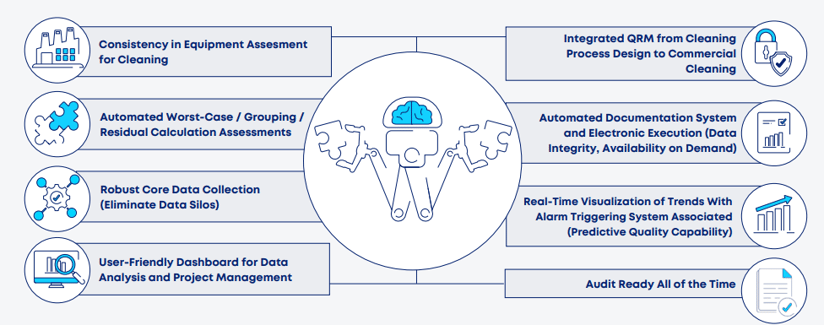
Figure 4. Benefits of digitizing cleaning validation.
The paper states a CPV plan can be developed following Stage 1 to Stage 3. In Stage 3, data from each cleaning iteration/cycle is analyzed through the CPV plan, including process parameters described as time, action, concentration, and temperature (TACT) and quality attribute measurements. Integrated into a digital framework, this supports process monitoring, efficiency, and compliance.
Requirements for Digital CPV
The paper lists key requirements:
-
Ensure data integrity
-
Automated CPV
-
Robust, scalable workflow
-
Access to data at any time using dashboards and alarm systems
-
Fast, on-time periodic reports
A digital CPV application is described as enabling rapid periodic report generation and real-time analysis of large data sets. Statistical tools are described as helping detect early deviations from a controlled state and enabling proactive management.
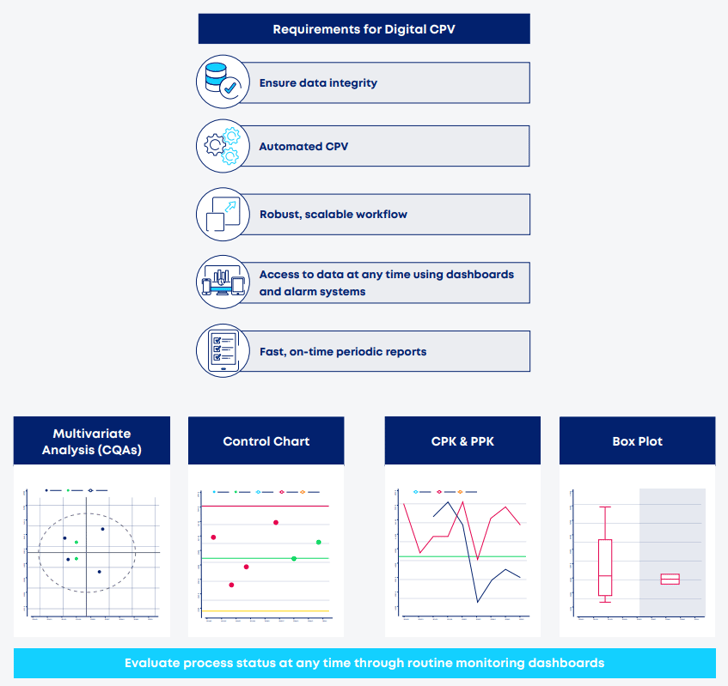
Figure 5. Requirements for digital CPV (top) and examples of statistical tools for a CPV plan (bottom).
Practical example: detecting drift and triggering actions
In the example described:
-
A multivariate Principal Component Analysis (PCA) scores plot identifies drift in cleaning process behavior.
-
Cleaning cycle #6 falls outside confidence interval limits established from preselected reference cleaning cycles for the worst-case equipment and product combination.
-
After detecting drift, control charts for that cleaning cycle can be reviewed to look for deviations in TACT parameters, with an example of CIP inlet pressure.
-
A root cause analysis can then be initiated, and preventive actions defined before the cycle fails to meet acceptance criteria.
The paper states the digital platform should support alarms based on predefined business rules (for example, alarms when three consecutive cycles show an upward trend in a quality attribute such as rinse or swab data). It links this to FDA Process Validation Guidance points: understanding sources of variation, detecting variation, assessing impact, and controlling variation in a risk-appropriate manner. The ASTM E3106-18 guide is also cited as addressing the use of statistical process control (SPC) and connecting data and risk.
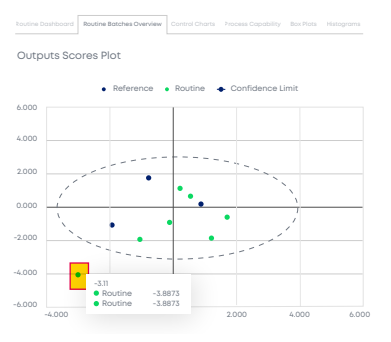
Figure 6. PCA plot for cleaning CPV used for detection of outlier.
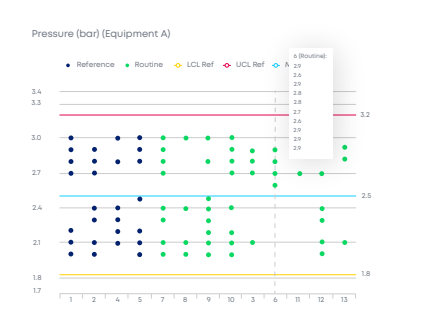
Figure 7. Statistical process control for cleaning cycle that deviated from expected behavior.
Conclusion
The paper states that the future of cleaning validation includes advanced technologies and a move toward a risk-, science-, and data-driven approach aligned with FDA process validation guidance.
It describes a need for agile, efficient, compliant CV processes that can adapt to changes in product portfolios and equipment configurations. It states that a digital CV system can help manage complexity while maintaining compliance and audit readiness.
It also states that digitizing CV supports real-time performance monitoring and optimization of cleaning operations. Building a CPV plan with integrated statistical tools and multivariate analysis supports proactive monitoring, early deviation detection, and preventive actions. The paper links this to supporting continuous improvement and higher operational efficiency.
Getting Started With Digital Cleaning Validation
Whether modernizing an existing CV program or preparing a new facility, the paper suggests:
-
Conduct a cleaning validation maturity assessment to benchmark current practices and documentation quality.
-
Identify manual or high-risk pain points, such as impact assessments, MACO calculations, or protocol tracking.
-
Pilot a digital CV platform, selecting a site or product line and evaluating ROI and usability.
-
Align stakeholders across QA, MSAT, and operations so benefits are represented in the business case.
-
Plan for integration with existing systems, such as equipment inventory, QMS, or validation lifecycle tools.
The paper states digital transformation in CV is a journey, but operational and compliance benefits can begin quickly.
References
- ASTM International. (2022). ASTM E3106: Standard guide for science-based and risk-based cleaning process development and validation.
- Agência Nacional de Vigilância Sanitária (ANVISA). (2022). Instrução Normativa IN No 138, de 30 de Março de 2022.
- Allison, G., et al. (2012). Technical Report No. 29 (Revised 2012): Points to consider for cleaning validation.
- Active Pharmaceutical Ingredients Committee (APIC). (2021). Guidance on aspects of cleaning validation in active pharmaceutical ingredient plants.
- Becker, Z. (2022, May 10). Emergent destroyed up to 400M COVID-19 vaccines… Fierce Pharma.
- Bicksler, R., et al. (2010). Technical Report No. 49: Points to consider for biotechnology cleaning validation.
- Chapman, K. (2021, June 29). Sartan contaminant recall hits generics manufacturers. Royal Society of Chemistry.
- CHMP. (2014). Guideline on setting health-based exposure limits… European Medicines Agency.
- Deloitte. (n.d.). Biopharma digital transformation: Gain an edge with leapfrog digital innovation.
- European Medicines Agency. (2018). Questions and answers on implementation of risk-based prevention of cross-contamination…
- European Medicines Agency. (n.d.). EudraLex Volume 4… Annex 15: Qualification and validation.
- Gorsky, I., Hanf, M., Hartman, C., & Long, M. (2017). How clean is clean in drug manufacturing… American Pharmaceutical Review.
- Health Canada. (2021). Cleaning validation guide (GUI-0028).
- ISPE. (n.d.). ISPE guide: Cleaning validation lifecycle - Applications, methods, and controls.
- PIC/S. (2018). Guideline on setting health-based exposure limits…
- Rivera, E. (2021). Cleaning validation program maintenance in a process life-cycle model. ISPE.
- Rathore, A. S., Li, Y., Chhabra, H., & Lohiya, A. (2022). FDA warning letters… Journal of Pharmaceutical Innovation.
- U.S. FDA. (2008). Guidance for industry: CGMP for phase 1 investigational drugs.
- U.S. FDA. (2010). 21 CFR 820.70(e): Production and process controls.
- U.S. FDA. (2011). Guidance for industry: Process validation - General principles and practices.
- U.S. FDA. (2020). 21 CFR 111.27(d): Equipment and utensils requirements.
- U.S. FDA. (2024). 21 CFR 211.67(a): Equipment cleaning and maintenance.
- Walsh, A. (2014). Cleaning validation for the 21st century…
- Walsh, A., et al. (2018). Health-based exposure limits… Pharmaceutical Online.
- Walsh, A., & Canhoto, A. (2020). Introduction to the ASTM E3106… Pharmaceutical Online.
- WHO. (2010). Annex 2: WHO good manufacturing practices for active pharmaceutical ingredients.
Table of Contents


