
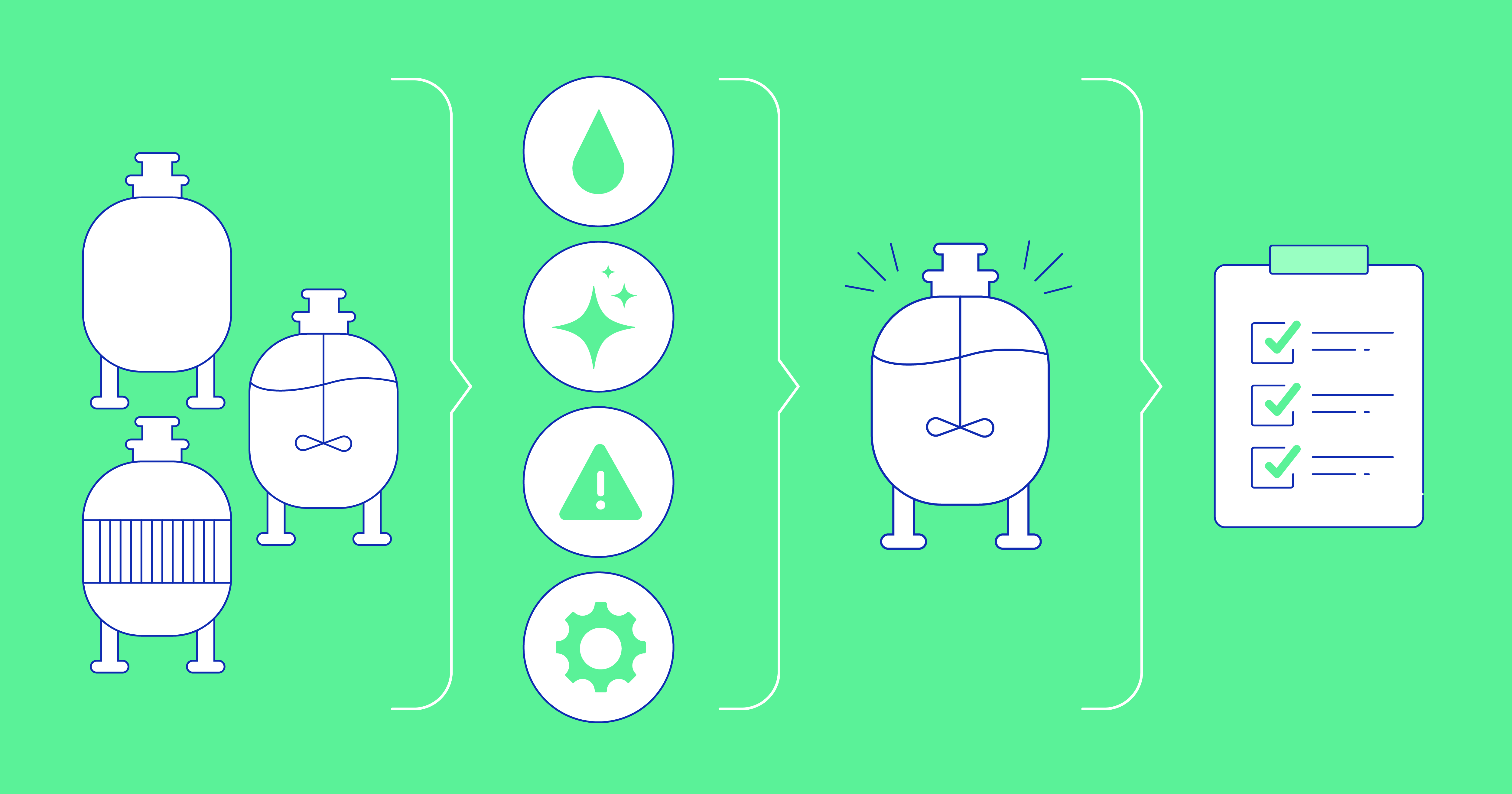
Cleaning validation scope expands quickly in multiproduct facilities.
A multiproduct facility may have dozens of products, multiple equipment trains, different cleaning procedures, and hundreds of possible product-equipment combinations. Treating every combination as a completely independent validation case may appear conservative, but it can also create repeated studies that increase workload even when the additional studies do not materially improve the validation rationale.
Why Worst-Case Selection Requires Scientific Justification
Worst-case selection provides another approach. Products, equipment, or cleaning situations with comparable characteristics can be evaluated as groups, with validation focused on the scenario that presents the greatest relevant challenge.
The principle is well established. EU GMP Annex 15 allows similar equipment to be grouped when the selected equipment is justified and states that a worst-case product approach should have a scientific rationale. It identifies solubility, cleanability, toxicity, and potency as potential criteria for determining the worst case (European Commission, 2015).
The key requirement is a documented scientific justification. Worst-case selection should show why the selected scenario is sufficiently challenging and representative of the other scenarios within the defined group, rather than simply serving as a way to reduce the number of studies. It is a risk-based decision about whether one challenging scenario provides meaningful evidence for the other scenarios it represents.
Start With the Cleaning Risk Being Evaluated
There is rarely one characteristic that defines the worst case for every cleaning validation decision.
A product with a low permitted daily exposure (PDE), for example, may present a significant carryover concern because very little residue can be tolerated. Another product may have a less restrictive exposure limit but be more difficult to remove during cleaning. One may determine how little residue can be accepted, while the other may present the greater cleaning challenge.
The important point is that the worst case depends on the specific risk being evaluated. A useful assessment therefore starts by defining what makes one scenario more challenging or consequential than another before applying the criteria used to rank them.
EU GMP Annex 15 supports this risk-based approach by requiring consideration of variable factors that can influence cleaning effectiveness and the use of worst-case situations where those factors are identified (European Commission, 2015).
Base the Ranking on Factors That Affect Cleaning Performance
A practical worst-case assessment can bring several types of information into the decision.
Product and residue characteristics: These factors indicate whether residue is likely to dissolve, disperse, dry, adhere, or persist after the approved cleaning process.
Toxicity and potency: Health-based information helps teams understand the consequences of carryover and the amount of residue that may be acceptable. Health-based exposure limits such as PDE or provide a scientifically based foundation for assessing cross-contamination risk in shared facilities (European Medicines Agency, 2014).
Equipment characteristics: The same product may present different cleaning challenges on different equipment. Surface materials, geometry, accessibility, dead legs, valves, seals, difficult-to-drain areas, and manual cleaning requirements can all influence cleaning effectiveness.
EU GMP Annex 15 specifically requires justification when similar equipment is grouped and one item is selected for cleaning validation (European Commission, 2015).
Cleaning-process conditions: The approved cleaning process can change which scenario represents the worst case. Time, temperature, cleaning-agent concentration, mechanical action (such as spraying, agitation, or scrubbing), flow, rinse conditions, operator involvement, and dirty hold time can change the challenge being validated.
A strong worst-case model brings the relevant factors together instead of allowing one convenient metric to determine the answer (U.S. Food and Drug Administration 2026).
Use Scoring to Support the Rationale, Not Replace It
Scoring can help make worst-case decisions repeatable, but the final score is useful only when the criteria, weighting, and evidence are clear.
ICH Q9(R1) notes that subjectivity can enter quality risk management through poorly designed scoring scales, assumptions, differences in risk perception, and inadequately defined risk questions. It recommends controlling subjectivity through appropriate risk-management tools and relevant data and knowledge (International Council for Harmonization of Technical Requirements for Pharmaceuticals for Human Use, 2023).
For cleaning validation, that means teams should be able to answer questions such as:
-
Why was each criterion included?
-
What evidence supports the rating?
-
Are all criteria equally important, or are some weighted differently?
-
What happens when two products have similar overall scores but very different risk profiles?
-
Does the ranking apply to every equipment train and cleaning method, or only to a defined group?
-
What conditions would require a separate worst case?
The goal is not to create the most sophisticated scoring model. It is to make the reasoning behind the ranking consistent, explainable, and supported by the available evidence.
Where Worst-Case Selection Can Reduce Over-Validation
Over-validation can occur when teams repeatedly validate similar scenarios even though a more challenging, well-supported representative case already covers them.
Consider a product family manufactured on the same equipment using the same validated cleaning procedure. If the products can be grouped using relevant scientific criteria and one product presents the most challenging combination of cleanability and carryover risk, that product may be selected as the representative worst case.
This can focus validation effort on the scenario that presents the greatest cleaning challenge instead of automatically applying the same level of validation to every lower-risk member of the group.
Grouping still has defined limits. A lower-ranked product may still require separate assessment if it introduces a different residue-removal challenge, equipment configuration, formulation characteristic, cleaning agent, operating condition, or risk that the existing worst case does not represent.
Risk-based prioritization works when comparable scenarios can be grouped with a clear rationale and the selected worst case provides an appropriate challenge for that specific group. The efficiency comes from removing genuinely redundant work while preserving validation evidence where the risks are materially different.
Review the Ranking When Inputs Change
A worst-case assessment can be well supported when it is approved and still become outdated as conditions change.
A new product may have lower solubility. Toxicological information may lead to a revised PDE. A formulation change, harder-to-clean equipment geometry, or revision to the cleaning procedure or cleaning agent could all change the original ranking.
EU GMP Annex 15 specifically states that when a worst-case product model is used, the impact of new products should be assessed. More broadly, its change-control requirements call for quality risk management to evaluate the effect of planned changes on validation and determine whether validation, verification, or requalification is needed (European Commission, 2015).
A lifecycle approach keeps the ranking connected to the assumptions and data that created it. When those inputs change, the impact on the current grouping and worst-case selection should be assessed before the existing strategy is assumed to remain valid.
Control the Data and Rules Behind the Ranking
Worst-case assessments are often manageable when a facility has a small number of products. Maintaining them becomes harder as portfolios, equipment families, cleaning procedures, and sites expand.
Spreadsheets can calculate rankings, but teams still need to control the criteria, source data, versions, approvals, and relationships behind the result. When values change, someone must identify which assessments depend on them and whether the selected worst case has changed.
A structured digital approach can make that decision logic more visible.
ValGenesis iClean™ supports worst-case product evaluation using criteria including ADE/PDE, potency, solubility, toxicity, and cleanability. Business-rule-driven decision trees can apply defined assessment logic consistently while maintaining cleaning validation data and related changes within a controlled workflow.
Keeping the ranking, supporting criteria, represented products and equipment, and subsequent changes connected makes the basis for the decision easier to maintain, review, and defend over time.
Focus Validation Effort Where the Challenge Is Greatest
Worst-case selection is most useful when it helps teams distinguish where validation evidence adds value from where it simply repeats what is already known. Clear grouping, meaningful criteria, documented rationale, and ongoing reassessment make that distinction possible.
The selected worst case should provide an appropriate challenge for the defined group and a clear basis for why the remaining scenarios are adequately represented. When a product, equipment configuration, cleaning condition, or other risk falls outside that basis, separate assessment may be needed. This keeps validation effort focused without assuming that one worst case can represent every scenario.

Table of Contents


